
Retail Store Fixture Design: How to Balance Beauty and Bulletproof Durability

Retail fixture design only works when beauty and durability operate on equal footing. Your fixtures will get touched, bumped, leaned on, and subjected to every shopping cart in the tri-state area—so they’d better look good doing it.
We’ve seen it happen more times than we can count: a designer specifies gorgeous custom millwork for a flagship store, only to watch it show wear within six months of heavy foot traffic. Or the opposite—a retailer installs industrial-grade fixtures that could survive a zombie apocalypse but make the space feel like a warehouse rather than a destination.
The truth is, retail fixture design isn’t about choosing between stunning and strong. It’s about understanding which materials, construction methods, and design strategies let you have both. And in today’s retail environment—where 72% of all sales still occur in physical stores—getting this balance right directly impacts your client’s bottom line.
In this article, you’ll learn:
- Why fixtures are strategic business assets (not just product holders)
- How to evaluate durability requirements for different retail environments
- A side-by-side comparison of TFL, HPL, solid wood, veneer, and other materials
- Which design trends are reshaping fixture specifications in 2026
- Common specification mistakes and how to avoid them
- A practical checklist for specifying fixtures that last
Why Retail Fixture Design Is a Strategic Business Decision
Let’s be honest: fixtures don’t always get the respect they deserve in the design process. They’re sometimes treated as afterthoughts—the functional bits that hold products while the “real” design happens on walls and ceilings.
That’s a mistake. And the data proves it.
Beyond Aesthetics: Fixtures as Brand Ambassadors
Think of fixtures as your client’s silent salesforce. They guide customers through the space, highlight key products, communicate brand values, and shape every interaction a shopper has with merchandise. According to Scube Fixtures’ retail design guide, fixtures should be treated as strategic assets that guide customer flow, communicate brand story, and directly impact sales.
We recently worked with a specialty apparel retailer who was struggling with inconsistent brand perception across locations. Same products, same pricing, same staff training—but vastly different customer experiences. The culprit? Fixture inconsistency. Some stores had upgraded to modern modular systems while others still ran original fixtures from a decade earlier. The worn, dated fixtures weren’t just an eyesore; they were actively undermining brand trust.
Fixtures tell customers what kind of brand they’re dealing with before a single word is spoken. A luxury brand with scuffed laminate displays sends mixed signals. A budget retailer with unnecessarily ornate fixtures confuses price expectations. The materials, finishes, and condition of fixtures all contribute to what retail psychologists call “atmospheric effects”—the subconscious cues that shape purchasing behavior.
The ROI Reality: How Store Design Impacts Sales
If you need ammunition for convincing clients to invest in quality fixtures, here’s your arsenal.
Research from King Retail Solutions shows that most store remodels deliver a 7% to 10% sustained sales increase. Many retailers see an initial bump as high as 40%, settling around 20% over time. One standout case showed a 70% sales spike in a single category after fixture redesign.
Meanwhile, design-focused companies achieve sales per square foot 10 to 20 times higher than industry averages. Customer experience improvements—which fixtures directly influence—can lead to 5.7 times more revenue compared to companies with poor CX, according to research cited by TruRating.
The message is clear: fixtures aren’t overhead costs. They’re revenue drivers. And the quality of those fixtures—their appearance, durability, and adaptability—directly determines return on investment.
The Durability vs. Aesthetics Tension—And Why It’s a False Choice
When we evaluate retail fixture design strategies today, the goal is no longer choosing sides—it’s designing systems that achieve both performance and visual impact simultaneously. Here’s where we need to challenge some outdated thinking. For years, the industry operated under an assumption: you could have beautiful fixtures or durable fixtures, but getting both meant spending significantly more.
That assumption no longer holds. Advances in laminate technology, engineered surfaces, and composite materials have collapsed the old tradeoffs. Today’s high-performance materials can deliver designer aesthetics with commercial-grade durability—often at lower total cost of ownership than traditional options.
What “Durability” Actually Means in High-Traffic Retail
Before specifying materials, we need to define what “durability” means for each project. It’s not a single metric. Durability encompasses:
- Scratch resistance: Can the surface withstand keys, jewelry, and merchandise being dragged across it?
- Impact resistance: Will it survive shopping carts, stock carts, and the occasional dropped display item?
- Stain resistance: Can spills, cosmetics, food residue, and cleaning chemicals be removed without damage?
- Moisture resistance: Will humidity, spills, or cleaning protocols cause warping, swelling, or delamination?
- Fade resistance: Will the finish hold up under retail lighting and any UV exposure?
- Chemical resistance: Can it withstand disinfectants and cleaning agents without degradation?
- Edge durability: Will edges chip, peel, or show wear over time?
A fixture in a high-end jewelry store faces different durability challenges than one in a grocery checkout lane. The jewelry display needs scratch resistance and pristine appearance but sees relatively gentle handling. The grocery fixture needs to survive constant contact with wet items, heavy cleaning, and endless cart bumps—but minor surface imperfections are less critical.
We always start projects by mapping the specific durability requirements for each fixture type and location. This prevents both over-specification (wasting budget on unnecessary performance) and under-specification (guaranteeing premature replacement).
The Aesthetic Expectations of Modern Shoppers
Today’s consumers have high visual standards shaped by exposure to design-forward brands across every category. Research from Excal Design on retail trends confirms that customers associate attractive displays with higher product quality and value.
But “attractive” doesn’t mean ornate. The dominant aesthetic trends favor clean lines, warm natural materials (or convincing reproductions), and flexible systems that look intentional rather than cluttered. Shoppers respond to:
- Consistency across the store environment
- Materials that feel appropriate to the brand positioning
- Fixtures that enhance rather than compete with merchandise
- Signs of quality and care in construction details
The good news? These aesthetic goals align well with durability priorities. Clean, simple designs hide wear better than complex ornamental ones. Quality materials photograph better and maintain appearance longer. And consistent systems make replacement and maintenance more manageable.
Retail Display Materials: A Designer’s Comparison Guide
Now let’s get into the specifics. Material selection is where durability and aesthetics either come together or fall apart. We’ll examine the most common options, their strengths, limitations, and ideal applications.
Thermally Fused Laminate (TFL): The Workhorse
Thermally fused laminate has become the go-to choice for high-volume retail fixtures, and for good reason. TFL is created by fusing a decorative paper with resin directly onto a substrate (usually particleboard or MDF) using heat and pressure. Because the laminate bonds directly to the core, TFL is naturally peel-resistant—a significant advantage over surface-applied materials.
Strengths:
- Excellent scratch, stain, and moisture resistance
- Cost-effective for large-scale rollouts
- Wide range of colors, woodgrains, and textures
- Easy to clean and disinfect
- Consistent appearance across production runs
- Lower environmental impact than solid wood in many applications
Limitations:
- Edges require banding (potential wear point)
- Cannot be refinished if damaged
- Substrate limitations affect structural applications
- Some designs may read as “commercial” in luxury contexts
Best for: High-traffic retail environments, multi-location rollouts requiring consistency, food service and grocery, healthcare retail, any application where cleanability is paramount.
At KML Designer Finishes, we’ve seen TFL specified increasingly for mid-market and even premium retail applications as print technology has improved. Today’s TFL woodgrains are remarkably convincing, and the performance benefits make them hard to ignore for practical retail environments.
High-Pressure Laminate (HPL): Premium Performance
High-pressure laminate takes laminate construction a step further. HPL fuses the decorative paper to multiple layers of kraft paper under significantly higher pressure and heat, creating a denser, more durable surface material. This laminate sheet is then adhered to a substrate.
According to National Business Furniture, HPL is constructed to resist stains, scratches, and heat—making it the preferred choice for major commercial installations.
Strengths:
- Superior scratch and impact resistance compared to TFL
- Excellent heat resistance
- Extremely durable surface for high-abuse applications
- Premium appearance options including realistic textures
- Can be formed around curves and edges
Limitations:
- Higher cost than TFL
- Requires adhesive bonding to substrate (potential failure point if improperly manufactured)
- Thicker profile may affect some designs
- Still cannot be refinished
Best for: Checkout counters and POS areas, heavy-use display surfaces, hospitality-adjacent retail, any fixture seeing constant direct contact.
Solid Wood and Veneer: When Natural Beauty Matters
Solid wood and wood veneer occupy different points on the cost-performance spectrum, but both deliver authentic natural aesthetics that no laminate perfectly replicates.
Solid wood provides unmatched warmth and character. It can be refinished repeatedly, develops attractive patina over time, and carries sustainability credentials when responsibly sourced. However, solid wood responds to humidity, leading to potential warping and cracking. It also represents a significant cost investment.
Wood veneer offers a middle path—a thin layer of real wood (typically 1/32 to 1/16 inch) bonded to a stable substrate. This delivers natural wood appearance at lower cost than solid wood, with improved dimensional stability. However, veneer is more susceptible to scratching than laminate and cannot withstand the same chemical exposure.
Best for: Luxury retail where natural materials justify premium pricing, specialty environments where warmth is essential to brand positioning, lower-traffic boutique settings, accent pieces within a larger fixture program.
Metal, Glass, and Composite Options
Beyond wood-based materials, designers have an expanding palette of options:
Metal fixtures (steel, aluminum, brass) deliver industrial-modern aesthetics and exceptional durability. Powder-coated metals resist chipping and fading better than painted alternatives. GLW Detroit notes that powder-coated metals are easier to clean and less likely to chip than plated or painted options.
Glass and acrylic provide visibility and premium perception. Tempered glass offers safety and durability; acrylic provides similar aesthetics with lighter weight and higher impact resistance.
Engineered stone and solid surfaces work well for high-end checkout counters and display surfaces requiring both durability and visual impact.
Recycled and sustainable composites address growing environmental expectations while often delivering competitive performance characteristics.
Quick-Reference Material Comparison
When evaluating materials for a specific project, consider these factors:
For maximum durability: HPL or powder-coated metal
For cost efficiency at scale: TFL
For natural aesthetics: Wood veneer (moderate traffic) or solid wood (low traffic)
For cleanability: TFL, HPL, or solid surface materials
For sustainability messaging: FSC-certified wood, recycled content composites, or TFL (efficient material use)
For luxury perception: Solid wood, metal, glass, or premium HPL with textured finishes
Design Trends Shaping Retail Fixtures in 2026
Material selection doesn’t happen in a vacuum. The broader retail design landscape shapes client expectations and specification priorities. Here’s what we’re seeing drive fixture decisions this year.
Modular and Flexible Systems
The days of installing fixtures and leaving them for a decade are over. 52% of global retailers have now adopted flexible fixture systems, and that number continues climbing.
Modular fixtures allow retailers to reconfigure layouts for seasonal rotations, promotional campaigns, and inventory changes without major capital investment. From adjustable shelving to configurable display components, flexibility has become a baseline expectation rather than a premium feature.
For designers, this means specifying systems rather than standalone pieces. The individual fixture matters less than how it integrates with the larger kit of parts. Durability considerations extend to connection points, adjustment mechanisms, and how materials perform through repeated reconfiguration.
Sustainability and Eco-Material Expectations
Sustainability is no longer a differentiator—it’s table stakes. Market analysis indicates a 40% shift toward eco-materials in fixture purchasing, driven by both consumer expectations and corporate ESG commitments.
This trend favors materials like TFL (which uses wood resources efficiently), recycled content composites, and FSC-certified wood products. It also emphasizes fixture longevity—sustainable design means specifying materials that won’t require premature replacement.
We advise clients to document the environmental credentials of their fixture programs. Even if sustainability isn’t the primary purchase driver, it’s increasingly a factor in brand perception and, in some sectors, regulatory compliance.
Tech-Integrated and Smart Fixtures
Technology integration is reshaping what fixtures can do. Randal Retail Group identifies tech-enabled fixtures as essential for 2026, including RFID-enabled shelving for inventory tracking, integrated digital signage, and interactive display elements.
For material specification, this adds considerations around cable management, heat dissipation, screen mounting, and integration with digital systems. Durability extends to how well fixtures protect and support technology components over time.
Brand Storytelling Through Fixture Design
Retailers increasingly view fixtures as storytelling tools. Industry analysis confirms that brands are using fixtures to showcase history, values, and product origins—creating immersive environments that connect customers emotionally.
This elevates material authenticity. Fixtures telling a craft story benefit from natural materials that reinforce that narrative. Fixtures supporting a technology brand might emphasize modern materials and clean engineering. The material becomes part of the message.
Matching Fixture Materials to Retail Environments
General principles only go so far. Different retail categories present distinct challenges that shape material selection.
High-Traffic vs. Boutique Settings
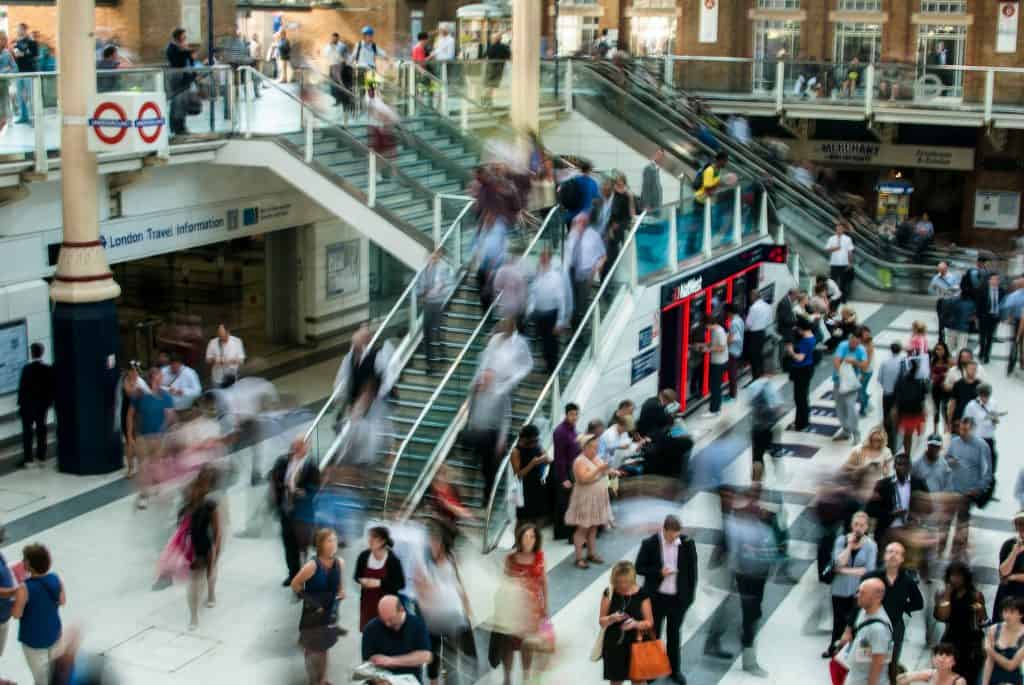
Traffic volume is the primary durability driver. A big-box store with 10,000 daily visitors needs fixtures that can absorb constant contact without showing wear. A boutique with 50 carefully curated visits per day can prioritize materials that might be impractical at scale.
For high-traffic environments, we typically specify TFL or HPL with PVC edge banding on all exposed edges. Metal accents should be powder-coated or stainless steel. Glass should be tempered and well-protected.
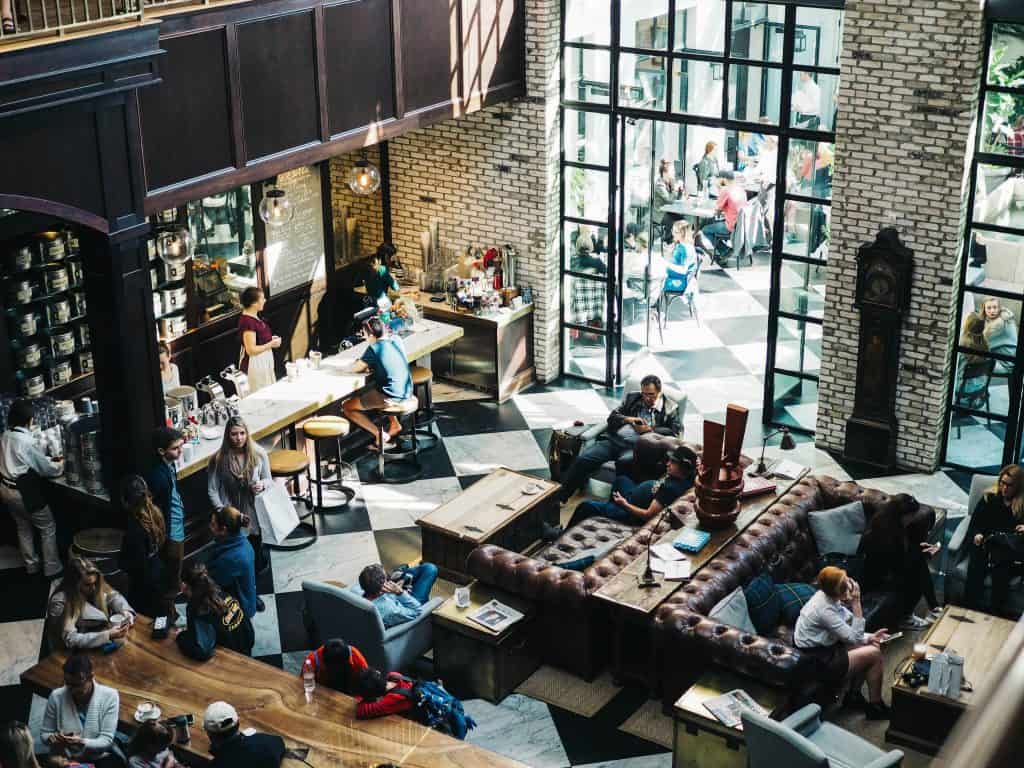
For boutique settings, the material palette expands. Wood veneer becomes viable for most applications. More delicate finishes can be considered. The calculus shifts from “what survives” to “what elevates the experience.”
Food and Beverage Retail Considerations
Food environments add moisture, temperature variation, and aggressive cleaning requirements. Industry analysis from Troy Ware Creative notes that wood-look finishes offer natural aesthetics with easier cleaning and better durability in high-traffic food service zones.
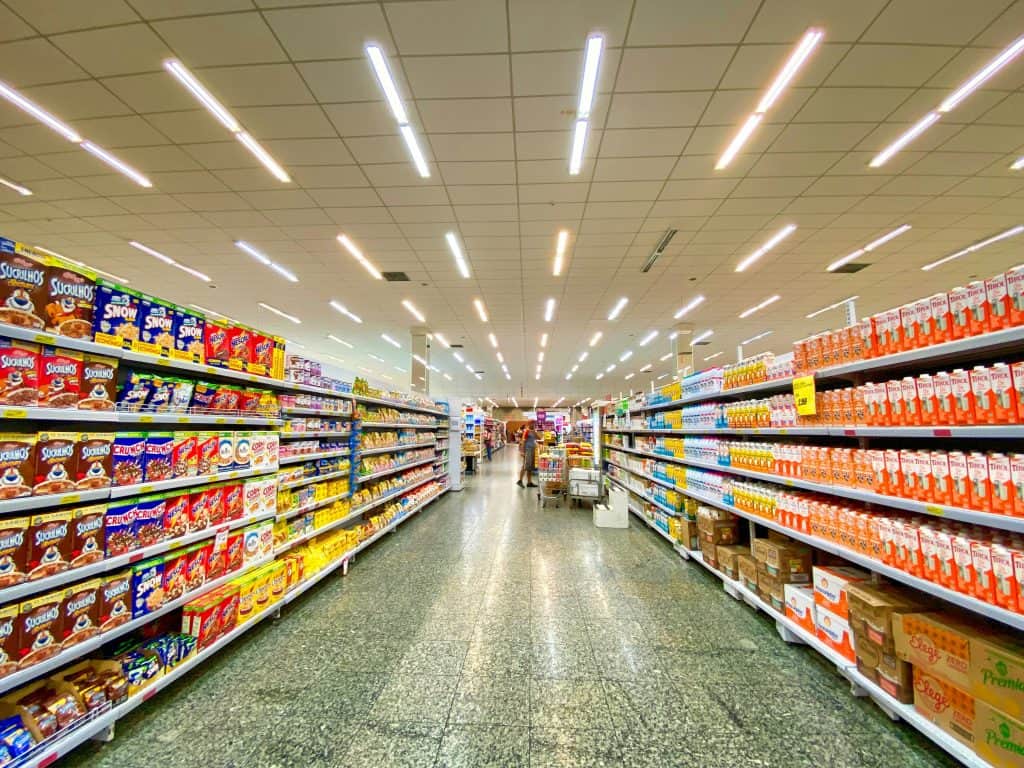
We recommend TFL or HPL for most food-adjacent fixtures. Solid surfaces work well for checkout and service counters. Wood and veneer should be limited to areas without direct food contact or heavy cleaning exposure. All fixtures should be specified with sealed edges and moisture-resistant cores where appropriate.
Apparel, Electronics, and Specialty Retail
Apparel retail often demands frequent reconfiguration for seasonal merchandise changes. Modular systems in durable materials allow ongoing flexibility without fixture replacement.
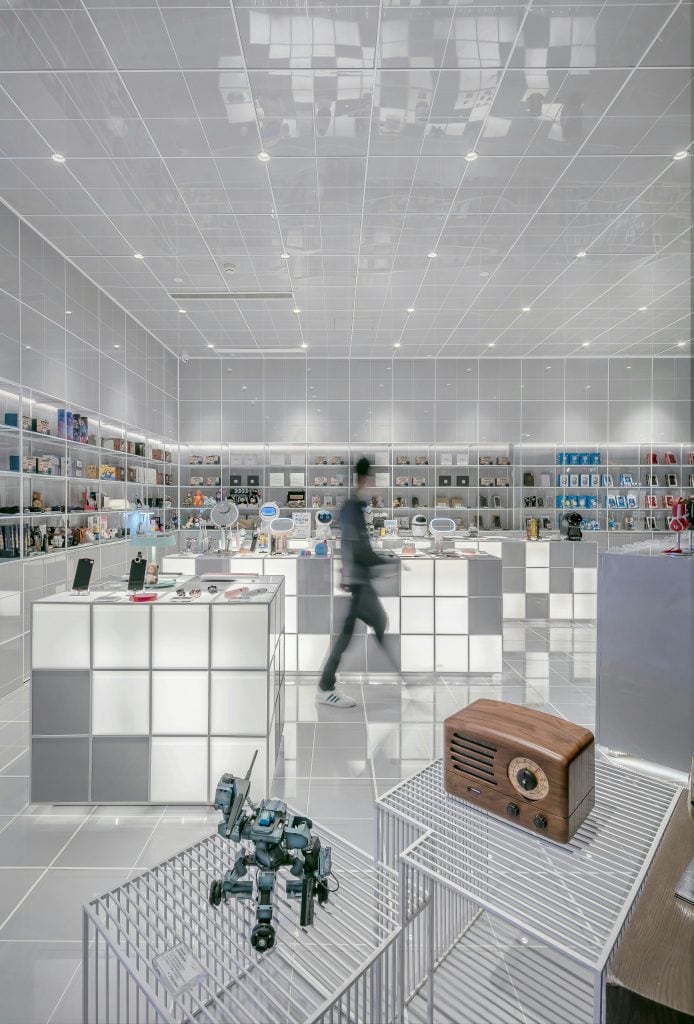
Electronics retail needs fixtures that protect high-value merchandise while enabling hands-on interaction. Materials should resist fingerprints, clean easily, and complement rather than compete with product aesthetics. Security integration adds complexity to specification.
Specialty retail (jewelry, cosmetics, sporting goods) each present unique requirements. Jewelry needs materials that won’t scratch products during handling. Cosmetics fixtures must resist staining from product testing. Sporting goods fixtures face impact and heavy merchandise loads. Each category demands tailored material selection.
Common Fixture Design Mistakes (And How to Avoid Them)
After years of specifying and evaluating retail fixtures, we’ve seen the same mistakes repeated. Here’s what to watch for—and how to prevent problems before they start.
Prioritizing Looks Over Longevity
The most common error: selecting materials based purely on showroom appearance without considering real-world performance. A beautiful finish that shows wear within months costs far more than specifying appropriate materials from the start.
Prevention: Always evaluate materials against the specific durability requirements for each application. Request wear testing data. Ask manufacturers about real-world performance in similar environments. Build in appropriate safety margins for heavily trafficked areas.
Ignoring Maintenance and Cleanability
Fixtures that look great on day one but become cleaning nightmares drain ongoing operational budgets and degrade customer experience over time.
Prevention: Consider the full maintenance picture during specification. What cleaning agents will be used? How often? Are there areas that will be difficult to access? TFL and HPL’s easy cleanability is a major advantage here—they can withstand aggressive cleaning protocols that would damage wood or veneer.
Underestimating Installation and Logistics
A well-designed fixture that’s impractical to ship, install, or reconfigure creates headaches that outlast any aesthetic benefit.
Prevention: Design for real-world logistics from the start. Consider flat-pack shipping for multi-location rollouts. Ensure connection points are durable enough for repeated assembly. Agility Retail emphasizes that fixtures designed for efficient CNC processing and knocked-down shipping can dramatically reduce total costs while maintaining quality.
Specifying Fixtures That Last: A Practical Checklist
Use this checklist when developing fixture specifications to ensure durability and aesthetics align:
Environment Assessment:
- What is the expected daily traffic volume?
- What types of contact will fixtures experience (hands, carts, merchandise)?
- What cleaning protocols will be used and how frequently?
- Are there moisture, temperature, or humidity considerations?
- Will fixtures be reconfigured regularly?
Material Selection:
- Does the primary material match durability requirements?
- Are edge treatments appropriate for expected wear?
- Will finishes resist the specific chemicals in cleaning products?
- Do materials support sustainability commitments?
- Is the aesthetic appropriate for brand positioning?
Construction Details:
- Are structural components adequately robust?
- Do connection points support expected reconfiguration?
- Is cable management integrated where needed?
- Are high-wear areas reinforced?
- Can damaged components be replaced without full fixture replacement?
Logistics and Lifecycle:
- Can fixtures be efficiently shipped and installed?
- What is the expected service life?
- What maintenance will be required?
- Are replacement parts readily available?
- What is the total cost of ownership over the fixture lifecycle?

FAQs
What’s the most durable material for retail fixtures?
High-pressure laminate (HPL) offers the best combination of scratch, impact, and stain resistance for most retail applications. For extremely heavy-use areas, powder-coated metal or stainless steel may be appropriate. The right choice depends on specific environmental demands.
How long should quality retail fixtures last?
Well-specified fixtures in appropriate materials should deliver 7 to 10 years of service with proper maintenance. Modular systems may last longer as individual components can be replaced. Budget fixtures or mismatched materials may require replacement in 3 to 5 years.
Is TFL or HPL better for retail fixtures?
TFL offers excellent performance at lower cost, making it ideal for large-scale rollouts. HPL provides superior durability for heavy-use areas like checkout counters. Many fixture programs use both—HPL where abuse is highest, TFL elsewhere.
Can laminate fixtures look high-end?
Absolutely. Modern TFL and HPL include remarkably convincing wood, stone, and textile textures. Proper specification of premium finishes, quality edge treatments, and thoughtful design details can achieve luxury aesthetics with commercial-grade performance.
How do I balance budget constraints with durability needs?
Focus investment on high-wear areas (edges, contact surfaces, checkout zones) while specifying cost-effective materials for lower-traffic applications. Consider total cost of ownership rather than initial price—durable materials often cost less over the fixture lifecycle.