
Wood-Forward Design: The Return of Natural Materials in Commercial Spaces
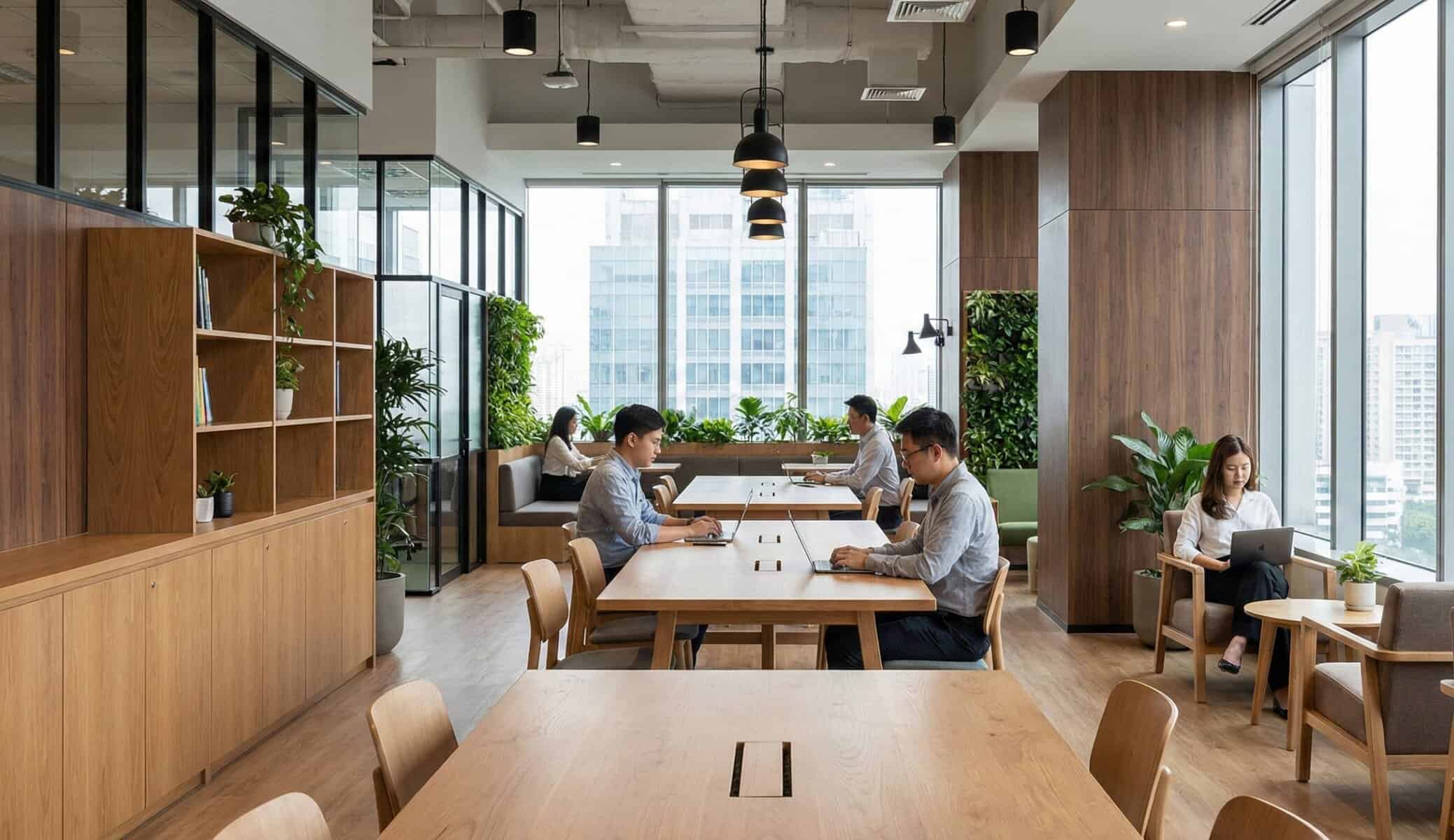
Walk into any cutting-edge commercial space today and you’ll notice something different—the cold, sterile aesthetic is out, and wood is back with a vengeance.
The shift isn’t subtle. Where gray walls and industrial concrete once dominated, warm oak, rich walnut, and honey-toned maple now create environments that feel less like offices and more like sanctuaries. This isn’t nostalgia driving design decisions. It’s science, economics, and a fundamental rethinking of how commercial spaces should make people feel.
In this article, you’ll learn:
- Why wood-forward design has become the dominant commercial interior trend
- The measurable productivity and wellness benefits of natural materials
- How modern TFL technology delivers authentic wood aesthetics with superior performance
- Practical strategies for specifying wood-forward designs across commercial sectors
- Common mistakes that undermine wood-forward projects and how to avoid them
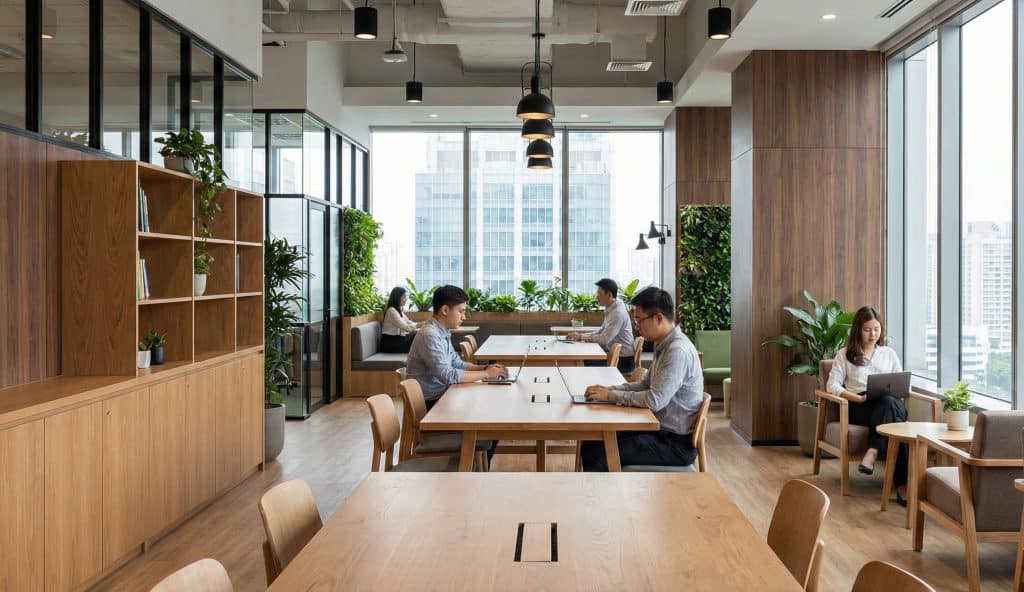
The Wood Renaissance in Commercial Design
From Sterile Gray to Warm Walnut: What Changed
The commercial design world spent the better part of a decade worshipping at the altar of minimalism. Gray dominated color palettes. Exposed concrete became shorthand for “serious business.” Metal and glass communicated efficiency and modernity. The result? Spaces that looked impressive in photographs but felt cold to inhabit.
According to research from Gensler’s 2023 UK Workplace Survey, employees increasingly value spaces that feel balanced and diverse rather than austere and uniform. The pandemic accelerated this shift. When workers had the choice between home offices filled with personal touches and corporate environments that felt institutional, many chose to stay home.
Design firms responded. The movement toward wood-forward design isn’t a superficial style change—it’s a strategic response to measurable employee preferences and performance data.
Why 2025 Belongs to Natural Materials
Multiple trend forecasts identify natural materials as the defining characteristic of commercial interiors in 2025. Construction Specialties’ annual design forecast predicts softer wood tones and warmer palettes will dominate, moving away from darker, colder finishes that characterized recent years.
The reasons are practical. Companies compete for talent in a market where workplace experience matters. Retail environments fight for attention in a world dominated by online shopping. Healthcare facilities recognize that healing environments actually accelerate healing. Hospitality brands understand that Instagram-worthy interiors drive bookings.
Wood solves multiple problems simultaneously. It creates visual warmth, adds tactile interest, connects occupants to nature, and communicates authenticity—all while meeting the performance requirements of commercial applications when specified correctly.
The Numbers Behind the Movement
Interior designers trust data. The Human Spaces global research study surveyed thousands of office workers across multiple countries and found that environments incorporating natural elements showed:
- 6% higher productivity rates
- 15% increased creativity scores
- 15% higher reported wellbeing levels
- 33% of workers said workplace design influenced their employment decisions
Research published in the International Journal of Workplace Health Management demonstrated that employees exposed to natural materials and natural light reported higher engagement and productivity compared to those in conventional office environments.
These aren’t marginal improvements. A 6% productivity gain across an entire workforce translates to substantial economic value—often far exceeding the cost difference between standard and wood-forward specifications.
The Science of Wood in the Workplace
Biophilic Design: More Than Just Pretty Surfaces
Biophilia—literally “love of life”—describes the innate human tendency to seek connections with nature. Biologist Edward O. Wilson popularized the concept in the 1980s, but its application to commercial design is relatively recent.
Biophilic design encompasses more than adding plants to reception areas. It involves incorporating natural materials, natural patterns, natural light, and organic forms throughout the built environment. Wood serves as one of the most powerful biophilic elements because it engages multiple senses simultaneously.
According to research from the University of Exeter, employees working in environments with natural elements performed better on memory and attention tests compared to those in plant-free, material-sterile spaces. The visual presence of wood grain, the subtle texture under fingertips, even the way wood absorbs sound differently than hard surfaces—all contribute to creating environments that feel fundamentally more comfortable.
Productivity Gains You Can Measure
The business case for wood-forward design rests on quantifiable outcomes. ISS World’s research on biophilic design found that offices incorporating natural elements saw nearly 20% fewer sick days compared to conventional environments.
The productivity improvements manifest in several ways. Natural materials reduce cognitive fatigue—the mental exhaustion that comes from processing harsh, artificial environments. Wood surfaces provide visual complexity that’s interesting without being overwhelming. The variation in grain patterns gives eyes something to rest on during moments of mental processing.
Herman Miller’s 1995 test of biophilic design at their manufacturing facility demonstrated dramatic results. After incorporating natural lighting and wood elements, productivity doubled and retention soared. The facility’s energy costs dropped as natural light reduced artificial lighting needs, while workers reported feeling more connected to their work environment.
Stress Reduction Through Material Connection
Stress costs businesses billions annually through reduced productivity, increased healthcare costs, and employee turnover. Material choices directly impact workplace stress levels.
Studies show that natural materials like wood produce measurable reductions in blood pressure and cortisol levels. The Human Spaces research found that 67% of office workers reported that naturally-lit environments with outdoor-inspired colors made them happier at work.
Wood’s stress-reducing properties likely stem from evolutionary psychology. Humans spent millennia in natural environments where trees meant shelter, fuel, and safety. Our nervous systems still recognize wood as a signal of security and comfort, even when that wood takes the form of thermally fused laminate on office cabinetry.
Employee Retention and Workplace Satisfaction
The Human Spaces study revealed that one-third of employees said workplace design would influence their decision to accept or leave a job. In competitive labor markets, that matters.
Wood-forward environments signal that organizations value employee experience. They communicate warmth, thoughtfulness, and investment in creating spaces people want to inhabit. This psychological impact translates to measurable retention improvements.
Harvard Business Review research found that views of outdoor spaces and natural light ranked as more important to employees than on-site cafeterias, fitness centers, or childcare facilities. Wood-forward design delivers similar psychological benefits by bringing natural elements indoors.

What Wood-Forward Design Actually Looks Like
Beyond Accent Walls: Comprehensive Natural Integration
Early attempts at wood-forward design often involved a single dramatic element—a reclaimed wood accent wall in the lobby, perhaps. Today’s approach integrates wood more comprehensively throughout the space.
Successful wood-forward projects layer natural materials at multiple scales. Cabinetry establishes the foundational wood presence. Desktops and work surfaces bring wood into daily tactile contact. Wall paneling creates rhythm and visual warmth. Even smaller elements like shelving, millwork details, and furniture contribute to the overall natural material narrative.
This layered approach prevents wood from reading as a superficial trend application. Instead, it becomes integral to the space’s character and function.
Texture, Tone, and Tactile Experience
Modern wood-forward design goes beyond visual appearance to emphasize authentic tactile experience. This is where thermally fused laminate technology has revolutionized commercial applications.
Advanced TFL manufacturing creates surfaces that don’t just look like wood—they feel like wood. Embossed-in-Register (EIR) technology synchronizes texture with printed grain patterns, so your fingers encounter ridges and valleys exactly where visual grain patterns suggest they should exist.
Material Intelligence describes how TFL panels can carry deep stone and wood textures, including the feel of unfinished, raw wood, with more texture options than any other engineered surface material. This tactile authenticity elevates TFL from a budget alternative to a performance-driven choice that happens to be cost-effective.
Balancing Wood with Contemporary Elements
Wood-forward doesn’t mean wood-only. The most successful commercial projects balance natural materials with contemporary elements that prevent spaces from feeling rustic or dated.
Clean-lined metal accents provide visual contrast. Large expanses of glass maintain openness while wood adds warmth. Neutral upholstery allows wood tones to command attention without overwhelming. Strategic use of solid colors creates moments of visual rest between wood-rich areas.
The goal is contemporary warmth rather than cabin aesthetic. Wood should feel like a deliberate design choice rather than a throwback to different era.
From Mid-Tones to Rich Walnuts: The 2025 Palette
Color trends within wood-forward design continue evolving. RTA Cabinet Store’s 2025 wood trend analysis identifies mid-tone woods as the sweet spot—not too dark, not too light, bridging warm and cool undertones.
Ash, beech, walnut, and oak lead the palette. These mid-tones integrate easily into neutral color schemes without fading into the background. They complement both warmer and cooler accent colors, offering flexibility across diverse project requirements.
Darker woods are experiencing a resurgence as well, particularly in “latte decorating” schemes that embrace rich, coffee-inspired depth. Lighter woods with warm undertones continue performing well in minimalist-leaning applications.
The key is avoiding single-tone monotony. Successful projects often incorporate two to three complementary wood tones that create visual interest through subtle variation.
The TFL Solution: Authenticity Meets Performance
How Modern TFL Achieves Wood Realism
Thermally fused laminate has traveled light-years from its origins as basic melamine board. Early TFL came in white, almond, and gray—colors chosen for economy rather than aesthetics. It was relegated to cabinet interiors and student furniture where cost mattered more than appearance.
Today’s TFL delivers visual and tactile authenticity that challenges even trained eyes. The transformation stems from technological advances in décor paper printing, resin formulation, and press plate engineering.
High-resolution rotogravure and digital inkjet printing create grain patterns sourced from scans of actual wood veneers. The same designs used in high-pressure laminate translate to TFL, allowing seamless coordination between surfaces. KML Designer Finishes offers over 800 color and design options, spanning the full spectrum from golden oaks to exotic species, ensuring designers find wood tones that match specific project visions.
Embossed-in-Register Technology and Synchronized Textures
The breakthrough that elevated TFL from substitute to solution is synchronized embossing. Steel press plates create physical texture during the thermal fusion process, and when this texture aligns perfectly with the printed grain pattern, something remarkable happens—visual and tactile information match.
Your eyes see a knot in the wood grain. Your fingers feel a depression in that exact location. The cognitive dissonance that reveals fake wood disappears. The surface reads as authentic because it behaves authentically.
Wilsonart’s LUJO Collection demonstrates this technology at its peak, featuring three-dimensional designs with realistic ticking and natural variations that create modern authenticity. These aren’t approximations of wood—they’re sophisticated interpretations that capture wood’s essential characteristics while delivering performance that natural wood cannot match in commercial applications.
The Touch Test: Tactile Authenticity
Designers specify materials that occupants will interact with daily. The touch experience matters as much as visual appearance, particularly for work surfaces, cabinetry, and wall panels that people encounter repeatedly.
Modern TFL passes the touch test. Matte finishes with dimensional grain textures feel like lightly sanded hardwood. Velvet finishes deliver the sensation of raw, unfinished wood with subtle reflective qualities. Linear textures add directional interest that guides the hand naturally along the grain.
Composite Panel Association research confirms that surface textures created by embossed steel plates heighten realism by engaging tactile senses alongside visual perception. This multisensory experience creates the material connection that drives biophilic benefits.
800+ Options: Finding Your Perfect Wood Match
Specification flexibility determines whether wood-forward design remains aspirational or becomes practical. Modern TFL catalogs offer unprecedented choice.
Need honey-toned maple for a healthcare project? Rich walnut for corporate offices? Weathered oak for hospitality? They exist in TFL, often with multiple finish options for each design. Plain sliced cuts showcase cathedral graining. Quarter sawn patterns deliver linear grain with distinctive flecking. Rift sliced versions provide consistent straight grain without flecking.
This variety allows designers to match wood choices to specific space narratives and functional requirements rather than accepting whatever standard options manufacturers happen to stock.
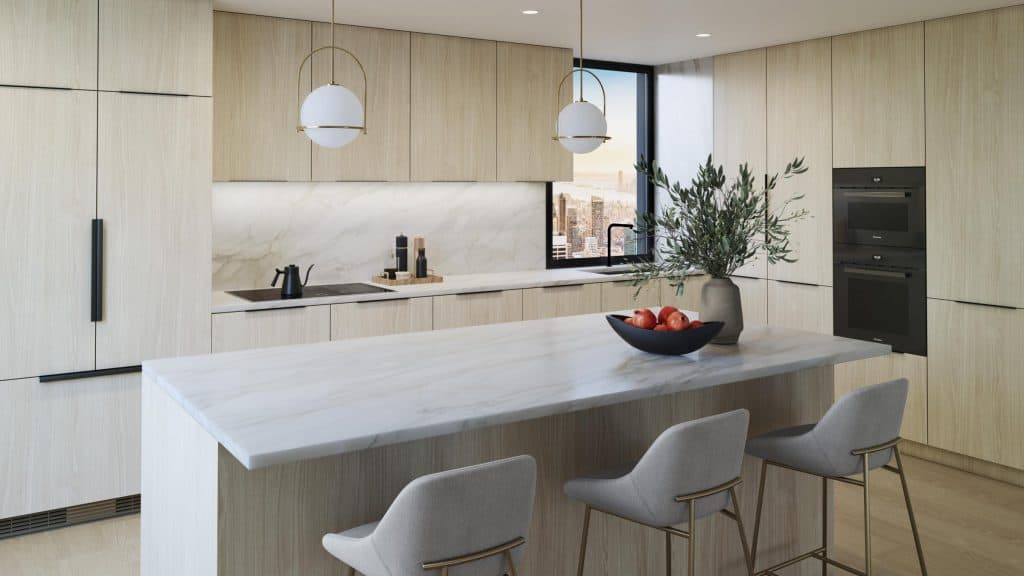
Wood-Forward Applications by Space Type
Corporate Offices: Creating the Homelike Workplace
The hybrid work era forces corporate real estate to justify itself. Workers choose where to work based partly on environmental quality, and wood-forward offices consistently outperform sterile alternatives.
Conference rooms lined with wood paneling feel less institutional and more collaborative. Private offices with wood-tone cabinetry create focused environments without the cold efficiency of metal and laminate. Open collaboration areas gain definition and warmth through strategic wood applications that zone space without erecting barriers.
The “return to work” challenge becomes easier when offices don’t feel like returning to prison. Wood-forward design creates environments that compete favorably with home offices by offering professional amenities wrapped in residential warmth.
Healthcare: Healing Through Natural Connection
Healthcare facilities pioneered biophilic design research because outcomes matter measurably. Patient recovery rates, length of stay, and satisfaction scores all improved in rooms with natural views and natural materials.
Wood-forward design in healthcare manifests in waiting areas that reduce pre-appointment anxiety, patient rooms that promote rest, and staff areas that combat the burnout endemic to medical professions. The challenge lies in balancing natural aesthetics with stringent hygiene requirements.
TFL solves this tension. Its non-porous surface resists bacterial growth while requiring minimal maintenance. Unlike real wood, it withstands repeated cleaning with hospital-grade disinfectants without degrading. Wilsonart TFL panels meet GREENGUARD Gold certification for low emissions, ensuring indoor air quality in environments where vulnerable patients spend extended time.
Hospitality: Guest Experience and Material Choice
Hotels, restaurants, and entertainment venues use design to create memorable experiences that justify premium pricing and drive social media sharing. Wood-forward interiors photograph beautifully while conveying warmth and authenticity that guests respond to emotionally.
Boutique hotels increasingly favor wood-rich aesthetics that distinguish them from standardized chain properties. Restaurant interiors use wood to create the comfortable, lingering atmosphere that encourages longer stays and higher per-table revenue. Coffee shops employ wood tones to establish the “third place” environment that builds customer loyalty.
Hospitality demands durability that matches residential aesthetics. TFL delivers both. It withstands the wear patterns of high-traffic commercial environments while maintaining appearance over years of service. When damage does occur, panel replacement costs a fraction of refinishing solid wood installations.
Retail: Drawing Customers Into Warmer Environments
Retail faces existential pressure from e-commerce. Physical stores must offer experiences that online shopping cannot replicate. Environment plays a crucial role in creating that differentiation.
Wood-forward retail design combats the sterile warehouse aesthetic common in big-box stores. It creates the comfortable, browsing-friendly atmosphere that encourages exploration rather than transactional efficiency. Fixtures and display systems in wood tones feel curated rather than industrial, elevating merchandise through environmental association.
Higher-end retail has always understood material quality as brand communication. Wood-forward design brings this principle to broader retail categories, allowing mid-market brands to punch above their weight through thoughtful environmental design.
Durability Meets Design Philosophy
Why Real Wood Often Falls Short in Commercial Settings
Solid wood and wood veneers carry undeniable appeal. They also carry undeniable limitations in commercial applications.
Real wood scratches, dents, stains, and varies unpredictably in color and grain pattern. It expands and contracts with humidity changes, creating gaps in casework and warping in panels. It requires regular maintenance, periodic refinishing, and eventual replacement as wear accumulates.
Commercial environments subject surfaces to abuse residential spaces rarely encounter. Cleaning protocols involve harsh chemicals. Traffic patterns concentrate wear in predictable zones. Temperature and humidity swing more dramatically in conditioned commercial spaces than in homes.
Real wood fails these tests regularly. The beautiful veneer that looks perfect at installation shows wear patterns within months. The solid wood desktop that photographs beautifully arrives with color variation that doesn’t match the approved sample. The maintenance costs that seemed reasonable during specification balloon during occupancy.
Scratch Resistance, Moisture Performance, and Maintenance Reality
Modern TFL matches or exceeds high-pressure laminate for scratch and wear resistance—vastly outperforming solid wood and veneer. The melamine resin system that bonds décor paper to substrate creates a hard, dense surface that resists the daily abuse of commercial use.
Spilled coffee wipes away without staining. Dragged furniture leaves no marks. Cleaned surfaces maintain appearance without requiring special products or techniques. The non-porous face resists moisture penetration that would swell and distort wood-based alternatives.
Facility managers appreciate materials that look good without demanding attention. TFL delivers precisely this combination—wood aesthetics without wood maintenance burdens.
Sustainable Cores: Recycled Content That Supports the Narrative
Wood-forward design aligns naturally with sustainability narratives, but only when material specifications support the story authentically.
KML Designer Finishes offers TFL panels with cores made from 100% recycled western pine—pre-consumer recycled product that delivers environmental benefits without compromising performance. These cores cut cleanly during fabrication while keeping wood waste out of landfills and reducing demand for virgin timber.
Particleboard and MDF cores increasingly incorporate recycled wood fiber. Manufacturing processes minimize formaldehyde emissions through No Added Formaldehyde (NAF) and Ultra-Low-Emitting Formaldehyde (ULEF) technologies that meet California Air Resources Board (CARB) requirements—the nation’s strictest air quality standards.
FSC Certification and Environmental Storytelling
Organizations pursuing LEED certification or communicating environmental commitments need materials with verifiable sustainability credentials. FSC (Forest Stewardship Council) certification provides that verification for wood-based products.
FSC certification ensures wood fiber comes from responsibly managed forests that maintain biodiversity, respect indigenous rights, and support local communities. As an FSC-certified manufacturer, KML can provide documentation supporting green building certification and corporate sustainability reporting.
This matters beyond regulatory compliance. Employees and customers increasingly evaluate organizations based on environmental performance. Material choices communicate values. Wood-forward design supported by genuine sustainability credentials tells a coherent story about organizational priorities.
Specification Strategy for Wood-Forward Projects
Coordinating Surfaces: Panels, Edges, and HPL Pairings
Successful wood-forward projects maintain visual consistency across surface types. Cabinet faces, work surfaces, wall panels, and exposed edges should relate harmoniously rather than competing for attention.
Modern TFL manufacturers publish cross-reference guides showing design matches across product lines. The same woodgrain available in TFL translates to HPL for high-wear horizontal surfaces, 3DL for formed elements, and edgebanding for exposed panel edges. This coordination prevents the disjointed appearance that undermines design intent.
Specification strategy balances performance requirements with aesthetic goals. Use TFL for vertical surfaces and low-impact horizontal applications. Specify HPL where wear resistance demands it. Apply 3DL where curved forms require conformable materials. Ensure all selections reference the same design family so surfaces read as unified rather than assembled from whatever was available.
Horizontal vs. Vertical Applications
TFL excels in vertical applications and low-impact horizontal surfaces. Cabinetry, wall panels, shelving, and decorative elements all suit TFL perfectly. Desktop surfaces with light use—private offices, conference tables with protective mats—work well with TFL.
Heavy-use horizontal surfaces benefit from HPL’s superior impact and wear resistance. Reception desks, kitchen counters, high-traffic work surfaces—these applications justify HPL’s additional cost through extended service life.
Understanding these distinctions prevents both over-specification (using expensive HPL where TFL would perform adequately) and under-specification (using TFL where wear patterns will quickly degrade appearance).
Budget Allocation: Where Wood Delivers Maximum Impact
Budget constraints affect every project. Strategic allocation multiplies available resources.
Prioritize wood applications in spaces where occupants spend time and make contact. Conference rooms see heavy use and create strong impressions—invest here. Reception areas communicate organizational character to visitors—invest here. Collaborative zones where employees gather benefit from warm, natural environments—invest here.
Secondary spaces—storage areas, service corridors, back-of-house functions—can use standard finishes without undermining the wood-forward narrative. Concentrate wood presence where it creates measurable experience improvements rather than distributing it uniformly across all surfaces.
Lead Times and Project Planning
Standard TFL designs ship quickly—often within three days for locally stocked options. Custom colors, specialized finishes, or large quantities may require longer production windows.
Early specification and material selection prevent schedule surprises. Engage manufacturers during design development rather than waiting until construction documents. Confirm availability for preferred designs. Identify acceptable substitutes if first choices face supply constraints.
This proactive approach prevents the rushed decisions that compromise design quality when delivery dates collide with construction schedules.
Common Pitfalls and How to Avoid Them
The “Too Much Wood” Problem
Wood-forward design becomes wood-overwhelming when every surface carries wood tones. Visual rest matters. Eyes need variety to maintain interest.
Break wood-heavy areas with solid colors, glass expanses, or neutral textiles. Let wood command attention in specific zones while other areas provide visual breathing room. Vary wood tones subtly to create layering rather than monotony.
Think of wood as the melody in music composition—essential but supported by harmony and rhythm from other elements.
Mixing Wood Tones Without Creating Chaos
Multiple wood tones create visual richness when coordinated thoughtfully. They create chaos when selected randomly.
Limit projects to two or three wood tones maximum. Ensure tones share either warm or cool undertones to maintain cohesion. Use one wood tone as dominant, others as accents in smaller doses.
Test combinations in actual lighting conditions before committing. Wood tones shift dramatically under different light sources. The warm oak that looked perfect under natural daylight may read completely differently under LED task lighting.
Lighting Considerations for Natural Materials
Wood responds to light quality. Warm LED temperatures (2700K-3000K) enhance wood’s natural warmth. Cool temperatures (4000K+) can make wood tones appear muddy or lifeless.
Natural daylight changes throughout the day, causing wood tones to shift in appearance. This variation creates visual interest but requires careful planning so wood maintains appeal across lighting conditions.
Layer lighting types—ambient, task, accent—to create dimensional lighting that reveals wood’s texture and grain complexity. Flat, even lighting eliminates the shadow play that makes wood surfaces visually engaging.
Avoiding the Basic “Builder-Grade” Look
The difference between sophisticated wood-forward design and basic builder-grade finishes often comes down to specificity. Generic oak in standard finish reads as economical. Carefully selected oak with synchronized texture reads as intentional.
Invest design effort in material selection. Review physical samples rather than relying on digital representations. Specify finishes precisely rather than accepting manufacturer standards. These small investments prevent the bland, generic appearance that undermines wood-forward design intent.
Quality edgebanding matters enormously. Exposed edges with poorly matched or thinly applied edge treatments reveal TFL as a laminated product rather than solid material. Properly applied, color-matched edgebanding maintains the illusion of solid construction even under close inspection.
FAQs
Q: How does TFL compare to real wood veneer for commercial applications?
A: TFL surpasses veneer in durability, consistency, and maintenance requirements while delivering comparable visual appeal. Veneer requires periodic refinishing and is vulnerable to moisture damage and scratches. TFL maintains appearance with basic cleaning and resists commercial wear patterns that degrade veneer quickly. Cost differences favor TFL significantly, especially when lifecycle costs include maintenance.
Q: Can wood-forward design work in modern or industrial-style spaces?
A: Absolutely. Wood-forward design succeeds across aesthetic styles when balanced appropriately. Modern spaces benefit from wood warmth that prevents cold minimalism. Industrial environments gain refinement through natural material contrast against metal and concrete. The key is selecting wood tones and finishes that complement rather than conflict with the overall design language.
Q: What sustainability certifications should I look for in TFL products?
A: Prioritize FSC certification for responsible forestry, CARB compliance for formaldehyde emissions, and GREENGUARD Gold for indoor air quality. Look for recycled content in substrate cores—ideally 90-100% recycled material. Environmental Product Declarations (EPDs) provide transparent lifecycle data. These certifications support LEED credits and corporate sustainability goals while ensuring genuine environmental performance.
Q: How do I specify TFL to ensure color consistency across large projects?
A: Request dye lot matching when ordering. Specify that all material for visible surfaces in the same space should come from a single production run. Order samples from actual production lots rather than showroom displays. Build slight color variation into design expectations—TFL maintains better consistency than natural wood but isn’t perfectly uniform across production runs.
Q: What’s the expected lifespan of TFL in commercial applications?
A: Properly specified TFL lasts 15-20 years in typical commercial applications without requiring refinishing. High-traffic areas may show wear sooner but still outlast wood veneer alternatives. Lifespan depends on application type, maintenance practices, and environmental conditions. Vertical applications generally outlast horizontal surfaces. Regular cleaning with appropriate products extends service life significantly.