
The Complete Guide to TFL Panels: Transform Commercial Spaces with Surface + Substance

If 80% of commercial office furniture relies on one material you might be calling by the wrong name, it’s time we properly introduced you to TFL panels—the climate-positive MVP quietly revolutionizing how designers balance beauty, budget, and planet.
Thermally fused laminate has evolved from utilitarian cabinet interiors to the surface solution dominating modern commercial design. Whether you’re specifying furniture for a bustling healthcare facility, designing millwork for a boutique hotel, or value-engineering a multi-floor office build-out, understanding TFL’s capabilities separates savvy designers from those leaving performance and profit on the table.
Article Main Points:
• TFL panels use heat and pressure to bond decorative paper directly to composite wood cores, creating an inseparable surface that cannot delaminate
• Performance rivals vertical-grade HPL for scratch and stain resistance while costing 20-40% less and delivering up to 79% labor savings versus wood veneer
• TFL is climate-positive, storing more carbon than its production releases while utilizing post-industrial sawmill waste
• Applications span office furniture, healthcare casework, hospitality millwork, retail fixtures, and educational environments
• Design options include 800+ colors, synchronized embossed textures, and supermatte finishes that fool even experienced woodworkers
• Maintenance requires only soap, water, and soft cloths—no special treatments or VOC-heavy finishes needed
What Are TFL Panels? Decoding Thermally Fused Laminate
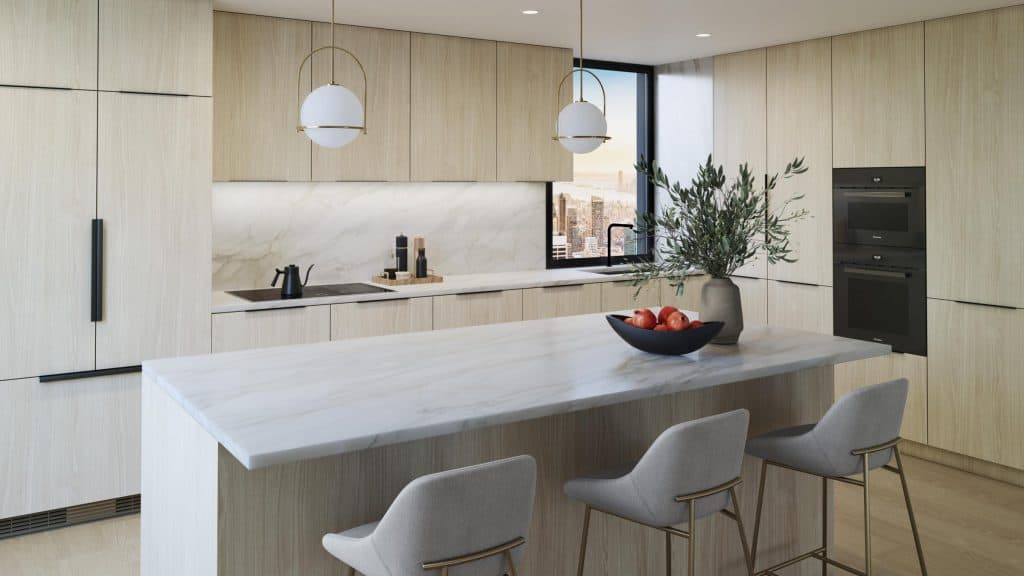
Let’s cut through the acronym fog. TFL stands for Thermally Fused Laminate, a decorative panel material that’s essentially particleboard or MDF wearing a beautifully printed, impossibly durable outfit that’s molecularly bonded—not glued—to its surface.
The magic happens when resin-impregnated decorative paper meets heat and pressure in a continuous press. Unlike traditional laminates that require adhesive application as a separate step, TFL’s melamine resin actually melts and flows into the substrate, creating a chemical bond that makes delamination physically impossible.
The Science Behind the Surface: How TFL Is Made
Picture a high-tech assembly line where composite wood panels roll through a press alongside decorative paper saturated with thermosetting melamine resin. As temperatures rise and pressure intensifies, the resin activates and cross-links with the substrate. Engraved steel plates simultaneously emboss realistic textures—wood grain cathedrals, leather pebbling, or velvety supermatte finishes—directly into the melting resin.
The décor paper itself weighs between 60 and 130 grams per square meter. It’s the same paper used in high-pressure laminates, which means you can match TFL panels to HPL countertops or 3DL door fronts with zero visual compromise.
Panels emerge from the press fully finished on both faces, ready for CNC machining and edge banding. No spraying, curing, or VOC-intensive finishing required.
TFL vs. Melamine: Clearing Up the Name Game
Here’s where it gets confusing. You’ll hear TFL called melamine, TFM (thermally fused melamine), LPL (low-pressure laminate), or even MFC (melamine-faced chipboard) depending on which decade your supplier learned the business.
They’re all referring to the same material family. The decorative face contains melamine resin, hence the nickname. But “TFL” has become the industry-standard term because it accurately describes the thermal fusion manufacturing process that separates this material from adhesive-applied overlays.
Core Components: Substrate + Decorative Face Explained
TFL consists of two essential elements working in harmony:
The Substrate: Typically particleboard (most common) or MDF (medium-density fiberboard). Both offer consistent, uniform strength without the defects and variability of solid wood. Special cores add moisture resistance for humid environments, fire ratings for code compliance, or enhanced screw-holding strength for heavy-use applications.
The Decorative Face: Printed or solid-color paper treated with melamine resin. The paper carries the visual design—woodgrain, stone texture, solid color, or geometric pattern. The resin provides the durability, creating a surface that’s scratch-resistant, moisture-resistant, and stain-resistant.
Think of the substrate as the structural athlete and the decorative face as the weather-resistant, photogenic exterior. Together they deliver performance and aesthetics neither could achieve alone.
How TFL Panels Stack Up Against the Competition
Material selection shouldn’t feel like solving a Rubik’s cube blindfolded. Let’s break down how TFL compares to its closest competitors so you can specify with confidence.
TFL vs. HPL: When to Choose Which Laminate
High-pressure laminate (HPL) is TFL’s older, tougher sibling. Both use melamine-based decorative papers, but HPL adds multiple layers of kraft paper and applies significantly higher pressure during manufacturing. This creates a thicker, more impact-resistant surface.
Choose TFL when:
• Budget constraints require cost-effective durability • Specifying vertical surfaces like cabinets, wall panels, or furniture • Working on office casework or low-to-moderate traffic areas • Pre-finished panels streamline your fabrication timeline
Choose HPL when:
• Horizontal surfaces face heavy impact (countertops, reception desks) • Maximum scratch and moisture resistance trumps cost • Extreme durability justifies the 20-40% price premium • Shorter lead times with smaller minimum order quantities matter
The sweet spot? Use TFL for vertical and protected surfaces, then specify matching HPL for high-impact zones. Most suppliers offer cross-reference programs that let you maintain design consistency while optimizing performance and budget.
TFL vs. Wood Veneer: The Durability + Cost Reality Check
Real wood veneer holds undeniable cachet, but commercial environments are rarely kind to delicate materials. TFL delivers up to 79% labor cost savings compared to veneer while outperforming it in moisture resistance, consistency, and cleanability.
Veneer requires careful selection, skilled application, and VOC-intensive finishing. It’s vulnerable to moisture, shows wear in high-traffic zones, and offers zero guarantee you’ll find a match when replacing damaged components five years later.
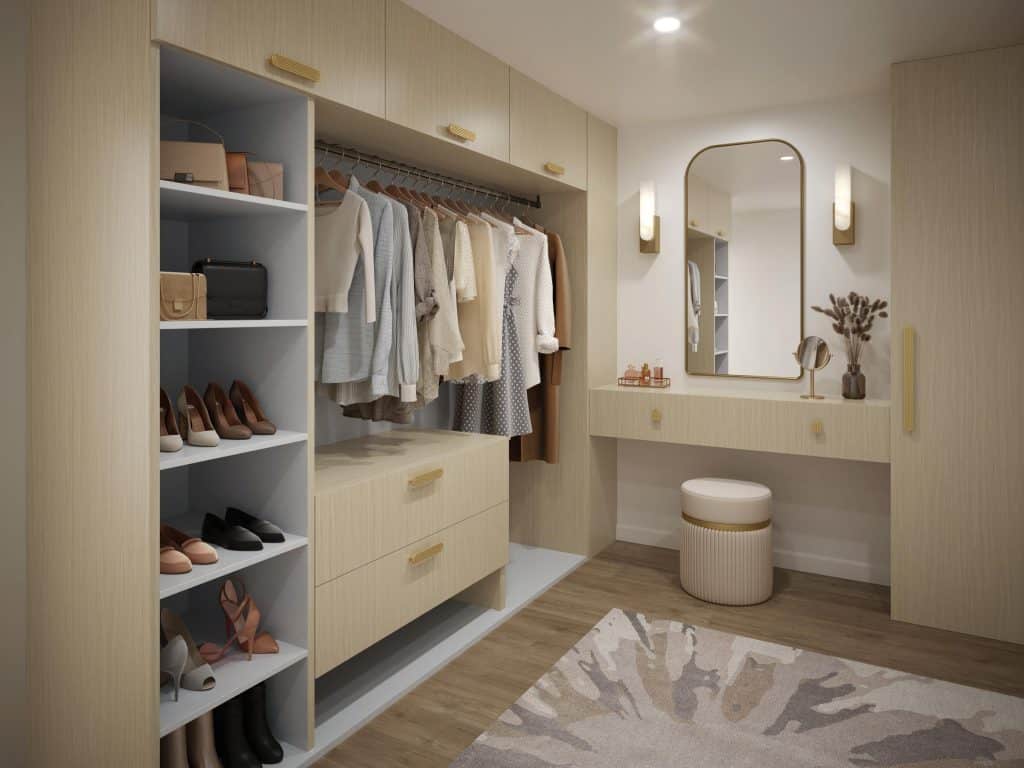
TFL replicates the same walnut, oak, or teak aesthetics without harvesting rare hardwoods. The surface withstands commercial cleaning protocols. And you can order exact color matches decades after initial installation because printed designs don’t depend on nature’s variability.
For residential showrooms or executive suites where prestige matters more than practicality, veneer still reigns. For commercial spaces where durability pays the bills, TFL wins decisively.
Performance Matrix: Scratch, Stain, and Moisture Resistance
TFL’s melamine surface delivers wear and scratch resistance comparable to vertical-grade HPL. Translation: it stands up to daily office abuse, survives healthcare cleaning protocols, and shrugs off retail fixture wear.
Scratch Resistance: Good to excellent, depending on surface finish. Textured surfaces hide minor scratches better than high-gloss options.
Stain Resistance: Excellent. The non-porous melamine surface prevents liquid penetration. Coffee, markers, and common office culprits wipe away with damp cloths.
Moisture Resistance: Very good. Panel faces resist water and humidity far better than wood veneer. Special moisture-resistant cores are available for high-humidity applications like coastal installations or locker room millwork.
Heat Resistance: Moderate. Use trivets for hot items. TFL isn’t engineered for direct heat contact like specialized countertop materials.
The only performance caveat: TFL edges require protective banding where substrate is exposed. Unsealed particleboard or MDF edges absorb moisture and show wear. Quality edge banding solves this completely.
Why Designers Specify TFL for Commercial Projects
TFL’s commercial dominance isn’t accidental. It’s the rare material that checks boxes for performance, aesthetics, sustainability, and budget simultaneously.
Office Environments: The 80% Market Share Story
Walk through any corporate office, coworking space, or government facility built in the past decade. Those workstations, conference tables, storage systems, and panel dividers? There’s an 80% chance they’re TFL.
Office furniture manufacturers embraced TFL because it processes efficiently on CNC equipment, arrives pre-finished, and offers design flexibility their clients demand. Designers specify it because it delivers the wood aesthetics decision-makers expect at price points procurement departments approve.
Modern TFL textures have evolved beyond the bland whites and grays that once limited the material to budget applications. Today’s synchronized embossing and high-fidelity printing create surfaces that convince even skeptical executives they’re touching real wood.
Healthcare + Hospitality: Cleanability Meets Aesthetics
Healthcare facilities need surfaces that survive daily disinfection without degrading. TFL’s non-porous melamine face withstands frequent cleaning with hospital-grade solutions. Optional antimicrobial additives provide additional infection control.
Hospitality designers appreciate TFL’s ability to deliver high-end aesthetics across hundreds of guest rooms while maintaining consistency and budget. When that one table inevitably gets damaged, you can fabricate an exact replacement using the same CNC files and TFL batch—impossible with natural materials.
Retail + Education: Budget-Friendly Durability at Scale
Retail fixtures face constant interaction, restocking wear, and occasional abuse. TFL surfaces handle the punishment while maintaining their appearance. Store planners can specify bold colors and textures that reinforce brand identity without breaking fixture budgets.
Educational institutions need furniture that survives everything from elementary school energy to university all-nighters. TFL delivers the durability schools require at the pricing taxpayers and tuition budgets can support.
The Sustainability Case for TFL Panels
In an industry drowning in greenwashing, TFL’s environmental credentials stand up to scrutiny. It might be the only building material that’s genuinely climate-positive today—not in some aspirational 2040 roadmap, but right now.
Climate-Positive Materials: More Than Marketing Speak
Climate-positive means storing more carbon than you release. Trees absorb atmospheric carbon as they grow. Half of wood’s chemical composition is sequestered carbon that stays locked up until the wood decomposes or burns.
TFL’s composite wood cores capture that carbon in a durable, long-lasting format. The material stores more carbon than manufacturing releases. Unlike natural wood that degrades in commercial applications, TFL’s decades-long lifespan extends that carbon sequestration considerably.
One global TFL manufacturer achieved PricewaterhouseCoopers-certified carbon neutrality by documenting their forests’ carbon capture, production facility emissions, and finished products’ carbon storage. That level of third-party verification separates legitimate environmental leadership from marketing spin.
Carbon Sequestration + Resource Efficiency
TFL’s environmental story improves when you consider what it’s made from. The particleboard and MDF cores utilize post-industrial waste—sawmill residuals, wood chips, shavings, and sawdust that once rotted in yards or burned as disposal waste.
This waste stream conversion delivers multiple environmental wins:
• Low-value pulpwood stays in forests instead of being harvested for appearance products • Sawmill byproducts become valuable commodities instead of disposal problems • Rare hardwoods avoid harvest because printed TFL replicates their aesthetics • No VOC-intensive staining or finishing processes pollute air or water
Manufacturing efficiency matters too. Producing TFL requires a fraction of the energy, water, and feedstock compared to alternatives. It takes seven times more resources to produce plastic panels, three times more for glass, and 17 times more for steel than for TFL’s MDF substrate.
Certifications That Matter: FSC, CARB II, and Beyond
Greenwashing skeptics should look for third-party certifications that verify environmental claims:
FSC Certification: Forest Stewardship Council certification confirms wood fiber comes from responsibly managed forests. Look for FSC-C019364 or similar codes from reputable manufacturers.
CARB II / TSCA Title VI Compliance: These regulations set the world’s strictest formaldehyde emission limits. Compliant TFL panels emit less formaldehyde than natural wood or a bowl of fruit—literally. The formaldehyde-based resins that give composite panels their strength meet rigorous safety standards.
LEED Credits: TFL contributes to LEED certification through recycled content, low-emitting materials, and regional material sourcing where applicable.
EPDs (Environmental Product Declarations): These documents provide transparent lifecycle analysis data, allowing designers to make informed comparisons.
For projects pursuing Living Building Challenge, WELL Building Standard, or other advanced green certifications, verify your TFL supplier provides the detailed documentation these programs require.
TFL Design Possibilities: Colors, Textures, and Trends
Remember when TFL meant choosing between beige, off-white, or if you were feeling adventurous, gray? Those days are dead. Modern TFL offers design possibilities that rival—and often exceed—natural materials.
From Supermatte to Synchronized Embossing
Texture transforms TFL from convincing to “wait, that’s not real wood?” The latest innovations create haptic experiences that engage our sense of touch as powerfully as the visuals engage our eyes.
Synchronized Embossing: The texture aligns precisely with the printed grain. Where the image shows a wood pore, you feel a tiny depression. Where the grain rises, the texture rises. This registration between visual and tactile eliminates the disconnect your brain uses to identify fake materials.
Supermatte Finishes: These velvety, ultra-low-gloss surfaces feel luxurious and hide fingerprints and minor scratches. They’re surprisingly durable despite their delicate appearance, thanks to advanced melamine formulations.
Nanotextures: Microscopic surface variations replicate the feel of raw, unfinished wood. Combined with realistic printing, they create surfaces that fool industry veterans.
Combination Textures: Matte and gloss areas on the same panel create visual interest and dimension. Think of a wood surface where the grain shows subtle sheen while surrounding areas stay matte.
Lisa White of WGSN trend forecasting calls this the “hungry fingers” phenomenon—consumers tired of slick smartphone screens craving tactile materials they can touch and experience physically. TFL’s advanced textures address this psychological need perfectly.
2025 Trends: Biophilic Design Meets Imperfect Beauty
Current design movements align perfectly with TFL’s capabilities:
Biophilic Design: Bringing nature indoors improves focus, lowers heart rate, and enhances mood. TFL’s photorealistic wood reproductions deliver these biophilic benefits while outperforming natural wood in durability.
Imperfect Aesthetics: Designers embrace wood’s natural “flaws”—knots, cracks, mineral streaks, weathering. TFL captures these characteristics from reclaimed barn boards, bog-recovered logs, and industrial salvage without the structural weaknesses those materials carry.
Warm Minimalism: Color palettes favor warm woods in honey tones through deep browns, often paired with matte blacks or soft whites. TFL manufacturers offer curated collections matching this aesthetic.
Geometric Naturalism: Fractals, organic curves, and nature-inspired patterns appear in both woodgrain layouts and abstract designs. TFL’s printing flexibility supports these creative directions.
Customization Options: 800+ Colors and Counting
Major TFL suppliers offer staggering variety. KML Designer Finishes stocks over 800 colors, 8+ finishes, and 10+ core options—and they’re representative of the industry, not outliers.
This variety enables:
• Exact brand color matching for corporate environments • Coordinated palettes across mixed materials (TFL casework, HPL surfaces, 3DL doors) • Custom designs via digital printing for signature projects • “No-repeat” large-format patterns for seamless wall installations
Most suppliers publish cross-reference guides showing which designs are available across multiple materials. Specify the same oak pattern for TFL vertical surfaces, HPL countertops, and edge banding without visual seams or compromises.
Installation + Fabrication Best Practices
TFL’s performance depends on proper handling and installation. Follow these practices to ensure your specifications deliver expected results.
Pre-Installation Checklist: Acclimation and Handling
TFL panels are hygroscopic—they absorb and release moisture based on ambient conditions. Panels pressed in one humidity level and installed in drastically different conditions can warp or bow.
Acclimation Protocol:
• Deliver panels to installation site 48-72 hours before fabrication • Store flat in the environment where they’ll be installed • Maintain room temperature conditions matching expected use • Unwrap panels but keep them covered to prevent damage • Allow stabilization before cutting or machining
Handling Tips:
• Store panels horizontally on flat surfaces • Use minimum three support points for large panels • Protect faces and edges during transport • Inspect for shipping damage before fabrication begins
Edge Banding Essentials: Protecting Your Investment
TFL’s only vulnerability is exposed substrate edges. Quality edge banding seals this weakness and completes the design.
Edge Material Options:
• PVC (polyvinyl chloride): Most common, available in 1-3mm thickness • ABS (acrylonitrile butadiene styrene): More environmentally friendly than PVC • Polypropylene: Heat-resistant option for demanding applications
Application Methods:
Traditional glue application: Hot-melt adhesive applied by edge banding machines creates strong bonds but visible glue lines can yellow over time.
Laser edge banding: Uses laser-activated polymeric layer in the edge material itself. Creates nearly invisible joints with superior durability and moisture resistance.
Application Tips:
• Match edge material texture and color to panel face • Ensure consistent pressure during application • Trim and finish edges immediately while adhesive is warm • Inspect bond quality before assembly
CNC Machining Tips for Clean, Professional Results
Modern CNC equipment and TFL are perfect partners. The pre-finished panels machine cleanly without chipping when you follow basic protocols.
Tool Selection:
• Use carbide-tipped or diamond-coated bits • Sharp tools prevent chipping and extend tool life • Compression spiral bits produce cleanest edges
Machining Parameters:
• Higher RPMs with moderate feed rates minimize chip-out • Support panels fully to prevent vibration • Dust extraction prevents melamine buildup on cutting surfaces
Quality Control:
• Inspect edges before banding application • Address any chip-out or damage before assembly • Maintain CNC files for future replacement fabrication
Maintaining TFL Panels: The Low-Effort, High-Impact Approach
TFL’s maintenance simplicity might be its most underrated feature. No oils, no polishes, no specialty products—just basic cleaning delivers decades of good looks.
Daily Care: Soap, Water, and Microfiber Magic
Routine cleaning couldn’t be simpler:
Daily Dusting: Use soft, lint-free cloths or microfiber dusters to remove surface dust and debris.
Spill Management: Wipe immediately with dry cloths to prevent moisture from reaching substrate through joints or unsealed edges.
Regular Cleaning: Mild, non-abrasive all-purpose cleaner and soft cloth handle most soiling. A damp microfiber cloth with gentle soap removes fingerprints, smudges, and daily grime.
Stubborn Stains: Ammonia-based glass cleaner tackles coffee, markers, and tougher stains. Apply to cloth rather than directly on surface to control moisture.
What to Avoid: The “Don’t” List for TFL Longevity
TFL forgives most cleaning mistakes, but certain practices accelerate wear:
Never Use:
• Abrasive cleaners, powders, or scouring pads that scratch melamine surfaces • Steel wool or rough cleaning tools • Harsh chemicals like concentrated bleach or ammonia • Acidic or alkaline cleaners • Excessive water that can seep into substrate edges
Avoid:
• Letting spills sit—clean immediately • Placing hot items directly on surfaces without trivets • Cutting directly on surfaces without cutting boards • Sliding heavy objects that can scratch or gouge
Repairing Damage: When and How to Replace Components
Despite TFL’s durability, damage occasionally happens. The good news: if you’ve maintained your CNC files, you can fabricate exact replacements years later using the same design and settings.
Minor Scratches: Light surface scratches often blend into textured finishes. For deeper damage, replacement is more reliable than attempted repairs.
Edge Damage: Re-banding edges is possible when damage is isolated. Clean the edge, remove damaged banding, and apply fresh material.
Component Replacement: For damaged doors, drawer fronts, or panels, cut new components from fresh TFL stock. This is why maintaining digital fabrication files and knowing your TFL design specification matters—it enables seamless future repairs.
Cost Analysis: The Real Value of TFL Panels
Budget conversations need context. TFL isn’t “the cheap option”—it’s the smart value play that optimizes performance, aesthetics, and long-term costs simultaneously.
Upfront Savings: 79% Labor Cost Reduction vs. Veneer
Those labor savings aren’t marketing hyperbole—they’re documented in industry value engineering studies. Here’s why:
Veneer requires: • Careful substrate preparation • Skilled adhesive application • Pressing and curing time • Sanding and finishing • Multiple coats with drying time between applications • Quality control inspection • Touch-up and correction
TFL requires: • Acclimation • CNC cutting • Edge banding • Assembly
See the difference? TFL arrives ready for fabrication with no finishing steps. The labor hours you don’t spend on surface prep and finishing dramatically reduce project costs.
Material costs favor TFL too—typically 20-40% less than HPL and significantly less than quality wood veneer once you factor in finishing materials and labor.
Lifecycle Economics: Durability That Pays Dividends
Initial cost tells only part of the value story. Consider total cost of ownership:
Durability: TFL outlasts wood veneer in commercial settings. Its moisture resistance, scratch resistance, and stain resistance mean less frequent replacement.
Maintenance: Simple soap-and-water cleaning eliminates ongoing costs for specialty products or professional refinishing.
Consistency: Order exact color matches years later for renovations, expansions, or repairs. Try that with natural wood where every tree yields different grain and color.
Flexibility: Value engineer mixed-material projects by specifying TFL where it excels and HPL only where extreme durability justifies the cost.
A Florida closet designer with 24 years’ experience summarized it perfectly: “TFL gives you the most bang for your buck. They love the textures and can’t believe they’re not real wood. You only wipe it with a damp cloth—no furniture polish or oils needed. After 20 years in my house, I’ve never had a problem.”
Value Engineering Strategies for Mixed-Material Projects
Smart designers use TFL as their “go-to” material, then value engineer specific applications:
TFL for: • Casework and cabinets • Vertical surfaces and wall panels • Low-impact furniture components • Interior drawer and shelf surfaces
HPL for: • Countertops and work surfaces • High-impact horizontal surfaces • Reception desks and transaction counters
3DL for: • Shaped door fronts • Curved surfaces • Dimensional panel applications
Match designs across all three materials using supplier cross-reference programs. Your project maintains visual consistency while optimizing performance and budget for each application.
Real-World TFL Applications: Case Studies
Theory meets reality in these documented TFL success stories across diverse commercial applications.
Entertainment Venue Transformation: Neb’s Fun World
Tom England, third-generation owner of Neb’s Fun World in Toronto, wanted the 130,000-square-foot entertainment complex’s welcome center to feel like “the swankiest hotel in Vegas.” His vision required ultra-rich, dark colors with old-world craftsmanship vibes.
He discovered a TFL design combining rustic reclaimed wood with embossed leather texture—warm tones with varying mineralization levels. England specified 50 sheets knowing his in-house shop could machine it efficiently.
During construction, workers accidentally walked over a stacked panel repeatedly. When England discovered it, he was initially upset but decided to test the surface. It showed zero damage from foot traffic—an unintentional durability validation.
“People walking by can’t keep their paws off it,” England reported. “They want to touch that material. That’s when you know you’ve won.”
The project delivered high-end aesthetics at achievable cost, processed easily on CNC equipment, and withstood abuse that would have destroyed wood veneer or paint. England maintains CNC files so he can cut exact replacements if vandalism or wear requires future component replacement.
High-End Residential Closets: Florida’s Humidity Challenge
Heidi Perrigo designs closets and home offices for FineCraft Custom Cabinetry in Sarasota, serving homes valued from one to eight million dollars. She offers four material tiers, but recommends TFL woodgrains for most clients.
“They’re beautiful and give you the most bang for your buck,” Perrigo explained. “Humidity is always an issue near the water. I tell people I’ve had TFL in my house for 20 years with never a problem.”
Her clients love the textures and struggle to believe the surfaces aren’t real wood. The 16-color contemporary collection includes matching grain patterns that Perrigo coordinates with lighting and accessories for stunning results.
“The new TFL materials are much better than 10 or 20 years ago,” she noted. “We never have humidity issues, even in garages that aren’t air-conditioned. Occasionally I’ll use matching HPL for a garage workbench top, but TFL is tough enough for everything else.”
Maintenance simplicity seals the deal—customers appreciate wiping surfaces with damp cloths instead of fussing with furniture polish or conditioning oils.
Multi-Family Housing: Scaling TFL for 100+ Units
Developers building multi-family housing face unique challenges: deliver appealing units that withstand tenant turnover while hitting aggressive budget targets. TFL solves this equation elegantly.
A 200-unit student housing project near a major university specified TFL for all cabinetry, closet systems, and desk surfaces. The design team selected durable mid-tone woodgrain with moderate texture to hide minor wear.
Over three years, the property management team reported minimal component replacement despite typical student lifestyle wear. When a damaged door required replacement, they contacted the original fabricator who cut an exact match from retained TFL stock and CNC files.
The project demonstrated TFL’s scalability—consistent quality across hundreds of units, simple maintenance for property staff, and straightforward repair protocols that preserve asset value.
Specifying TFL: What to Ask Your Supplier
Smart specification starts with the right questions. Here’s what to discuss with your TFL supplier before finalizing selections.
Core Options: Particleboard, MDF, or Specialty Substrates?
Standard particleboard handles most applications, but specialty cores solve specific challenges:
Moisture-Resistant Core: Essential for coastal installations, humid climates, or applications near water sources. Enhanced core formulation resists moisture penetration and swelling.
Fire-Rated Core: Required for code compliance in certain occupancies. Verify fire rating documentation matches your project requirements.
Lightweight Core: Reduces shipping costs and installation labor for large projects. Particularly valuable for wall panel installations.
Enhanced Screw-Holding Core: Improves fastener retention for applications with repeated assembly/disassembly cycles or heavy hardware loads.
Ask your supplier which core options they stock versus special order. Lead times and minimum order quantities vary significantly.
Finish Selection: Matching Texture to Traffic Levels
More texture isn’t always better. Match surface finish to expected use:
High-Traffic Areas: Moderate textures hide minor scratches and wear better than high-gloss surfaces. Avoid ultra-matte finishes in commercial settings where frequent contact occurs.
Low-Contact Applications: Showcase stunning supermatte textures or high-gloss finishes on wall panels and protected surfaces where visual impact matters more than durability.
Cleaning Requirements: Healthcare and food service applications need surfaces that withstand aggressive cleaning. Verify your selected finish meets the durability standards your cleaning protocols demand.
Request physical samples before committing to large orders. Photography rarely captures texture accurately—you need to see and touch surfaces under your project’s lighting conditions.
Lead Times + MOQs: Planning for Project Timelines
TFL generally requires longer lead times than HPL but offers larger panel formats that may reduce total piece count:
Standard Colors: Often available from distributor stock with quick turnaround Custom Colors: May require minimum orders and extended lead times Special Cores: Add weeks to standard production schedules
Discuss: • Minimum order quantities for your selected designs • Lead times from order to delivery • Rush order availability and associated costs • Storage requirements if early delivery helps your schedule
Plan TFL procurement early in your project timeline. Last-minute changes become expensive when you’re working with manufactured panels rather than off-the-shelf materials.
The Future of TFL Panels in Commercial Design
TFL’s evolution continues accelerating as manufacturers invest in technology and respond to designer demands for enhanced performance and sustainability.
Digital Printing Innovations: No-Repeat Patterns at Scale
Traditional rotogravure printing produces beautiful results but creates repeating patterns as the engraved cylinders rotate. Large installations show this repetition, potentially breaking the illusion of natural materials.
Digital inkjet printing eliminates pattern repeat. Manufacturers can print unique panels where no two are identical—just like real wood. Large-format wall installations maintain complete authenticity without visible pattern repeats.
Current digital printing speeds lag rotogravure production rates, but technology improvements continue narrowing this gap. Expect digital printing to expand beyond custom projects into standard production as capabilities mature.
Enhanced Performance Options: Antimicrobial + Fire-Rated Cores
Market demands drive continuous material innovation:
Antimicrobial Surfaces: Embedded silver-ion or other antimicrobial technologies provide additional infection control for healthcare, food service, and educational applications. These additives don’t wear off with cleaning like surface-applied treatments.
Enhanced Chemical Resistance: Formulations specifically designed for laboratory, healthcare, or industrial applications where aggressive chemicals contact surfaces regularly.
Improved Impact Resistance: New melamine resin formulations aim to close the performance gap with HPL while maintaining TFL’s cost advantages.
Bio-Based Resins: Research into formaldehyde alternatives continues, though current bio-based binders struggle to match formaldehyde resins’ performance, stability, and cost efficiency.
TFL’s Role in Net-Zero Building Goals
As the construction industry pursues aggressive carbon reduction targets, TFL’s climate-positive status becomes increasingly valuable. Material selection significantly impacts building carbon footprints—choosing TFL over higher-embodied-carbon alternatives moves projects toward net-zero goals.
Forward-thinking manufacturers document their environmental performance with unprecedented transparency. Third-party-verified carbon accounting, detailed EPDs, and supply chain sustainability audits provide the data architects and developers need to justify material selections in green building certifications.
Expect continued innovation in forest management practices, manufacturing efficiency, and end-of-life recycling programs that extend TFL’s environmental leadership.
FAQs About TFL Panels
Q: Can TFL panels be used for kitchen countertops?
TFL works for light-duty residential countertops but isn’t ideal for commercial kitchen work surfaces. Its heat and impact resistance fall below heavy-use requirements. Specify matching HPL for countertops while using TFL for cabinetry to balance performance and budget.
Q: How long do TFL panels last in commercial settings?
Properly installed and maintained TFL easily lasts 15-20+ years in typical commercial environments. Healthcare and institutional installations from the 1990s remain in service, demonstrating long-term durability. Lifespan depends on traffic levels, cleaning protocols, and environmental conditions.
Q: Are TFL panels more sustainable than solid wood?
Yes, for several reasons: TFL utilizes post-industrial waste rather than harvesting trees, stores more carbon than its production releases, requires no VOC-intensive finishing, outlasts wood in commercial applications, and saves rare hardwoods from harvest through realistic reproductions.
Q: What’s the difference between TFL and melamine?
They’re the same material family with different terminology. “Melamine” refers to the resin in the decorative face. “TFL” describes the thermal fusion manufacturing process. The industry prefers “TFL” for clarity, but you’ll hear both terms used interchangeably.
Q: Do TFL panels require special installation tools?
No. Standard woodworking equipment handles TFL perfectly. CNC machines, table saws, and routers work well with sharp carbide-tipped or diamond-coated bits. Edge banding machines apply protective edges efficiently. No specialized tools beyond typical cabinet fabrication equipment are needed.