
Material Strategies for Co-Working Spaces: Flexible Design Guide
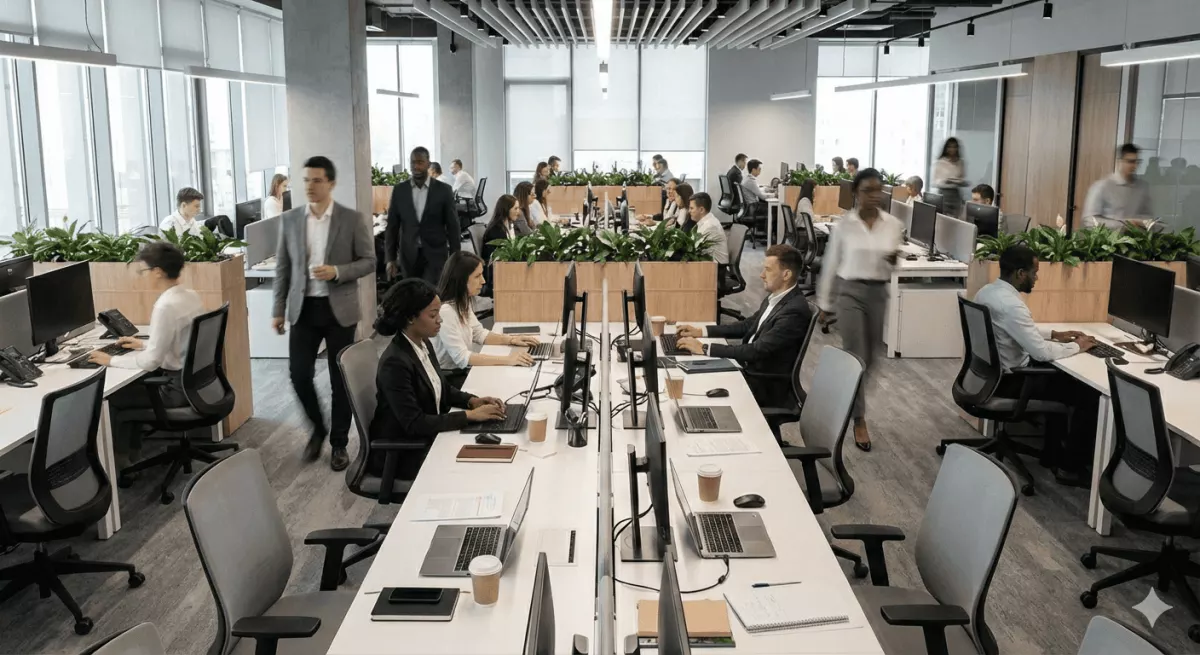
Material strategies for co-working spaces now play a critical role as the sector serves nearly 6 million members worldwide—and every single one of them expects surfaces that look fresh at 5 p.m. even after a full day of laptops, lattes, and last-minute client calls. We’ve watched this market explode over the past decade, and one thing has become clear: the material choices designers make today determine whether a space thrives or shows its age within months. Flexible workspaces demand a fundamentally different approach to specification than traditional offices. Users change daily. Cleaning cycles intensify. Every surface becomes a brand statement. And increasingly, enterprise clients arrive with sustainability checklists that would make a LEED consultant sweat.
In this article, you’ll learn:
- How the co-working boom is reshaping material specification requirements
- Durability strategies for surfaces that face multi-user intensity daily
- Acoustic material solutions that can reduce ambient noise by 30–50%
- Biophilic design approaches that support wellness certifications and member satisfaction
- How to specify flexible, reconfigurable material systems
- Sustainability certifications that enterprise clients now expect as baseline
- Zone-by-zone material recommendations for every area of a co-working space
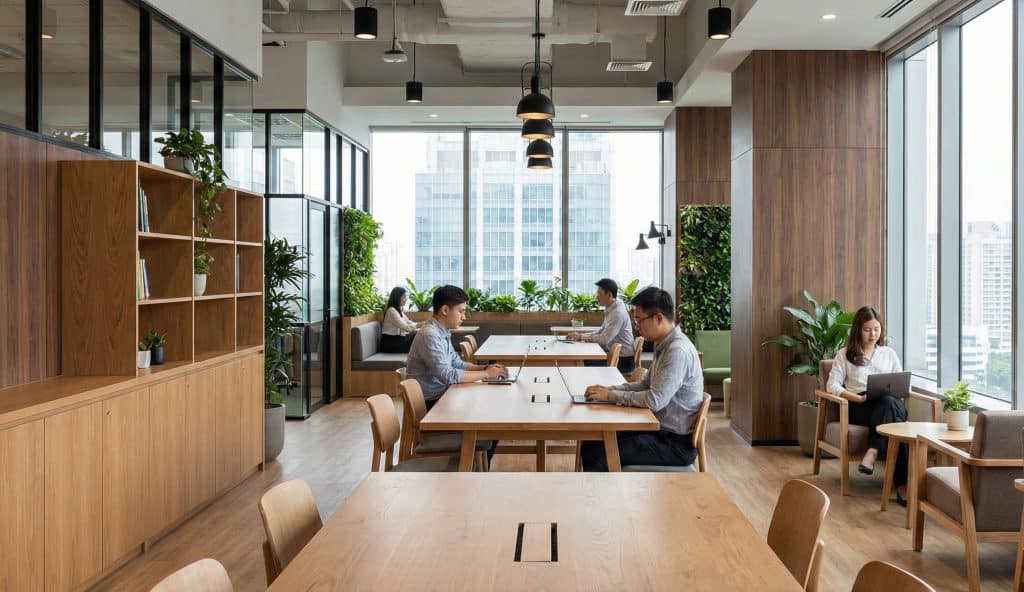
Material Strategies in Co-Working — A Market Built on Flexibility
Growth by the Numbers
The flexible workspace industry has moved far beyond its startup roots. According to Allwork.Space’s 2025 industry analysis, the United States now hosts approximately 8,420 co-working locations—up from just over 7,000 in mid-2024. The global market has reached roughly $21 billion, with projections suggesting continued expansion through the decade.
What’s driving this growth? Hybrid work has become the dominant model. Research indicates that 77% of companies now operate hybrid arrangements, and more than half of employees in remote-capable jobs prefer this flexibility. Major corporations like Allstate have made headlines by trading traditional headquarters for co-working memberships, as Workbar’s trend analysis notes. The message is clear: flexibility has shifted from perk to expectation.
What This Growth Means for Designers
For commercial interior designers, this expansion creates both opportunity and challenge. Co-working spaces face usage intensity that traditional corporate offices rarely experience. A single hot desk might serve three or four different members in a single day. Meeting rooms cycle through dozens of users weekly. Reception areas see traffic patterns closer to hospitality than office environments.
This intensity changes everything about material specification. We can’t simply transplant corporate office standards into co-working environments and expect success. The spaces demand materials engineered for durability, ease of maintenance, and rapid reconfiguration—all while projecting the sophisticated aesthetic that attracts premium memberships.
Understanding Flexible Workspace Typologies
Not all co-working spaces serve the same market or face identical material demands. Understanding these distinctions helps us specify appropriately.
Enterprise Flex
Enterprise flex operators like WeWork and Industrious target corporate teams seeking alternatives to long-term leases. These spaces emphasize polish, privacy, and acoustic control. Private offices and team suites dominate the floor plan. Materials must project professionalism while withstanding the demands of full-time occupancy. Think executive boardrooms meets startup energy.
Boutique and Lifestyle Co-Working
Smaller, design-forward operators differentiate through aesthetic identity and community programming. These spaces often embrace bolder design choices—statement colors, artisan materials, Instagram-worthy moments. The material palette skews warmer and more residential, though durability requirements remain intense given the community-focused programming that fills these spaces with events.
Hybrid Corporate Flex and Satellite Hubs
As 2727 Coworking’s market analysis observes, suburban and satellite hubs have emerged as a major growth category. Companies maintain memberships at multiple locations, allowing employees to work closer to home. These spaces require brand consistency across locations while adapting to diverse building conditions. Material specification must balance standardization with site-specific flexibility.
Hospitality-Adjacent Spaces
Hotel business centers, airport lounges, and mixed-use developments increasingly incorporate co-working elements. These environments blend hospitality expectations with workspace functionality. Materials must satisfy both worlds—the warmth and polish of a boutique hotel with the durability of a commercial office.
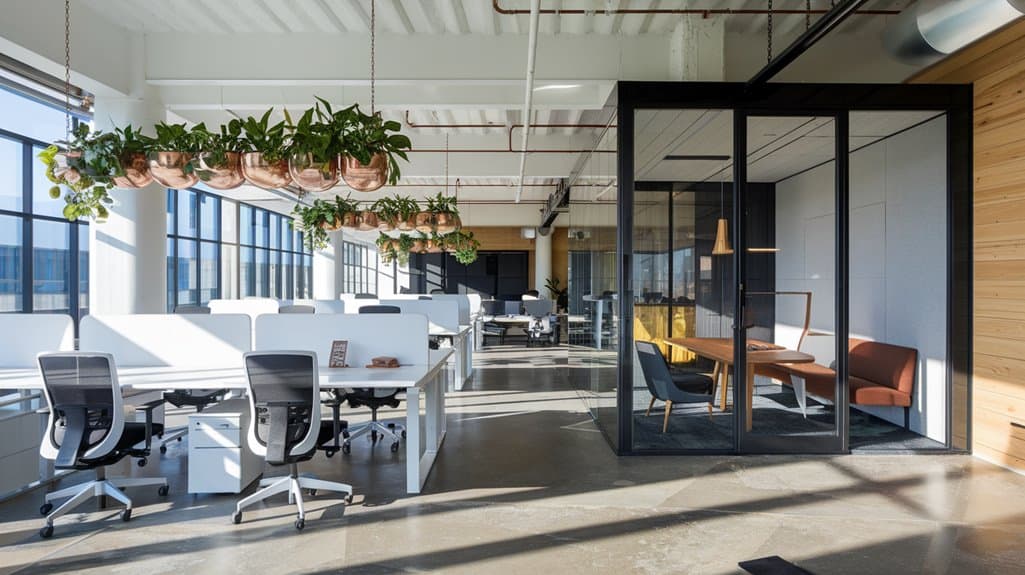
The Durability Imperative — Designing for Multi-User Intensity
Understanding Wear Patterns in Shared Environments
Traditional office furniture might serve the same employee for years. Co-working furniture serves dozens of different people weekly. This fundamental difference in usage pattern demands a complete rethinking of durability expectations.
Hot desks accumulate wear from laptops, bags, coffee cups, and constant cleaning. Chair arms see friction from hundreds of different users. Reception desks face the same intensity as hotel front desks. Every surface must withstand this multi-user reality while maintaining the aesthetic standards that justify premium membership pricing.
Surface Hardness and Abrasion Resistance
For horizontal surfaces facing heavy use, material selection must prioritize abrasion resistance. Laminate products carry AC ratings that indicate durability levels. As FlooringInc’s commercial guide explains, AC4 and AC5 ratings indicate suitability for commercial environments with heavy traffic. These products feature wear layers often infused with aluminum oxide that protect against scratches, dents, and scuffs.
High-pressure laminate (HPL) remains the gold standard for horizontal worksurfaces. Wilsonart’s technical documentation notes that their AEON Technology delivers three times the wear, scratch, and scuff resistance of standard laminates. For countertops, reception desks, and communal tables, this level of durability becomes essential.
Chemical and Stain Resistance
Co-working spaces face cleaning intensity that rivals healthcare environments. Hand sanitizer stations dot the floor plan. Cleaning crews wipe surfaces multiple times daily. Coffee spills happen constantly. Materials must resist not just physical wear but chemical exposure from cleaning agents.
Non-porous surfaces simplify maintenance and resist staining. Both HPL and thermally fused laminate (TFL) offer excellent chemical resistance when properly specified. We recommend confirming manufacturer cleaning guidelines during specification to ensure compatibility with the operator’s maintenance protocols.
Specifying Surfaces for Horizontal vs. Vertical Applications
A strategic approach pairs different materials based on application demands. HPL excels on horizontal surfaces—desks, countertops, tables—where impact resistance and edge durability matter most. TFL provides an excellent solution for vertical surfaces, furniture interiors, and millwork where extreme durability is less critical but design flexibility and budget efficiency matter.
KML’s TFL panels offer over 800 colors and 8+ finishes, allowing designers to achieve sophisticated aesthetics across vertical applications. The key advantage: TFL and HPL can share identical décor prints, enabling perfect color matching between horizontal worksurfaces and vertical millwork components. This coordination capability proves invaluable when specifying comprehensive furniture systems.
Acoustic Strategies — Material Solutions for Sound Management
The Open-Plan Acoustic Challenge
Open-plan co-working spaces present formidable acoustic challenges. As DeWalls’ acoustic analysis explains, modern offices feature hard, reflective surfaces that compound noise problems. Glass partitions, concrete floors, and exposed ceilings create environments where sound bounces continuously rather than being absorbed.
The consequences extend beyond mere annoyance. Research consistently links excessive office noise to reduced concentration, increased stress, and diminished productivity. For co-working operators, poor acoustics drive member complaints and churn.
Ceiling and Wall Treatments
Acoustic panels represent the most direct intervention for noise reduction. According to Material LogIQ’s acoustic solutions guide, treating ceilings with acoustic baffles or panels reduces reflections off hard surfaces and prevents conversations from traveling across spaces.
The specification targets matter: covering 25–35% of wall and ceiling surface area with sound-absorbing material can reduce ambient noise by 30–50%. PET felt panels have emerged as a popular choice, offering both acoustic performance and design flexibility. These materials absorb sound waves rather than reflecting them, converting acoustic energy into negligible heat.
Strategic placement amplifies effectiveness. Walls opposite glass partitions deserve priority treatment since glass reflects virtually all sound. Corridor-facing walls benefit from acoustic treatment to contain noise bleeding between spaces.
Flooring Choices That Reduce Noise
Hard flooring contributes more noise than many designers realize. Footsteps and chair movement create direct sound, while reflective floor surfaces add to reverberation. Carpet tile remains the acoustic flooring standard for co-working environments, absorbing both airborne sound and impact noise.
Where hard flooring aesthetics are preferred, acoustic underlayments can mitigate noise transmission. These products add resilience beneath the walking surface while maintaining design intent. The specification must balance aesthetic goals against acoustic performance requirements.
Furniture as Acoustic Infrastructure
Furniture selection directly impacts acoustic performance. High-backed sofas and modular seating systems serve dual purposes—providing comfortable collaboration areas while blocking sound transmission. Sound Zero’s acoustic guide recommends privacy pods and phone booths for accommodating calls and focused work without dedicated construction.
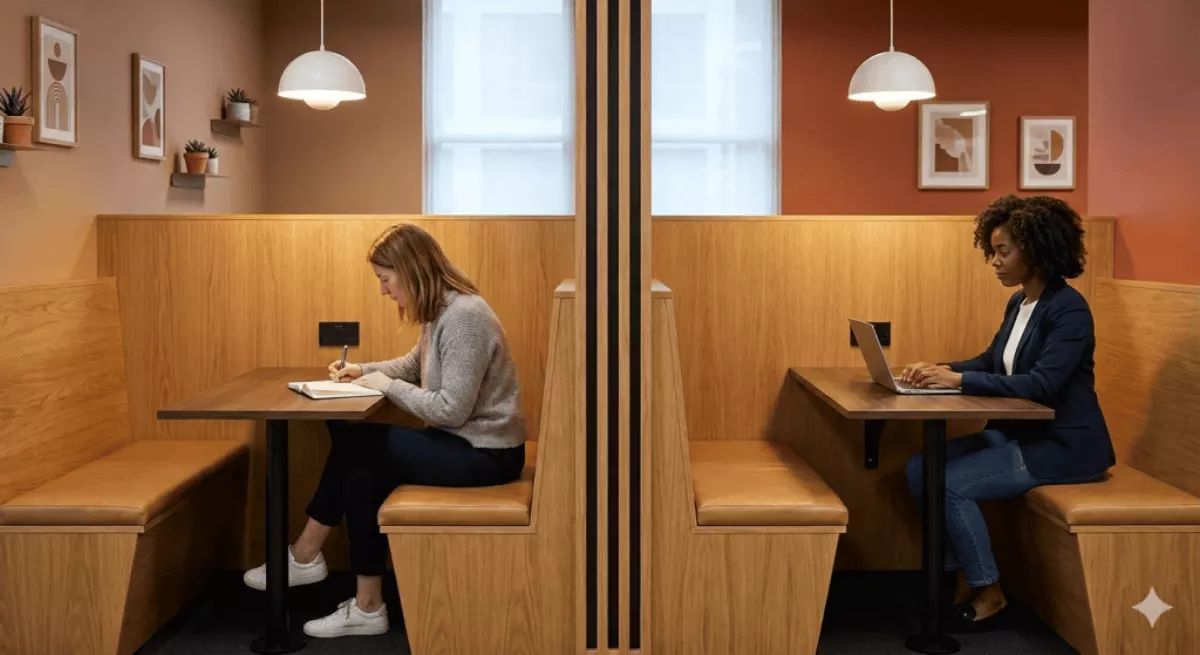
Booth seating creates semi-private zones within open floor plans. Upholstered surfaces absorb sound while the high backs block sightlines and reduce voice transmission. These furniture investments often prove more cost-effective than architectural acoustic treatments while maintaining the flexibility co-working environments require.
Sound Masking Technology Integration
Sound masking systems introduce low-volume ambient tones that obscure speech and reduce distractions. Commercial Acoustics’ technical analysis notes that combining sound masking with acoustic panels delivers maximum impact. The masking provides privacy for conversations while panels reduce overall noise buildup.
Material specification should anticipate sound masking integration. Ceiling systems need accommodation for speaker placement. Wall treatments should complement rather than conflict with masking system effectiveness.

Biophilic Design — Bringing Nature Into Flexible Workspaces
The Wellness Business Case
Biophilic design has moved from trend to expectation. The Human Spaces Report, surveying 7,600 office workers across 16 countries, found that employees in environments with natural elements reported 15% higher wellbeing and 15% greater creativity. Greenmood’s research synthesis notes that organizations can save approximately $2,000 per employee annually through reduced absenteeism alone when implementing biophilic strategies.
For co-working operators competing on member experience, these findings translate directly to business outcomes. Natural elements support recruitment of enterprise clients pursuing WELL certification. They also differentiate spaces in crowded markets where members can choose among dozens of options.
Natural Materials That Perform
Wood-grain surfaces rank among the most effective biophilic interventions. Research from Finland’s National Resources Institute and Tampere University found that participants showed lower anxiety and fewer negative emotions when performing tasks in wooden rooms compared to control environments.
TFL panels excel here. Modern manufacturing techniques produce wood-grain surfaces that convincingly replicate natural timber at a fraction of the cost. Embossed textures add tactile realism, creating surfaces that satisfy both visual and touch-based biophilic responses. For co-working environments requiring durability and budget efficiency, these engineered surfaces outperform natural wood while delivering similar psychological benefits.
Stone-look surfaces, cork, and bamboo patterns extend the natural material palette. Coordinating these across furniture, millwork, and wall applications creates cohesive biophilic environments without the maintenance complexity of natural materials.
Living Elements and Maintenance Realities
Living plants improve air quality while providing mood-boosting visual connections to nature. However, co-working operators face practical maintenance constraints. Preserved moss walls have gained popularity as low-maintenance alternatives that deliver visual biophilia without irrigation or ongoing horticultural care.
Strategic plant placement concentrates living elements where they create maximum impact—entry sequences, collaboration zones, and amenity areas. These high-visibility locations justify the maintenance investment while allowing simpler approaches elsewhere.
Daylighting and Views
Natural light ranks as the single most-requested workplace element globally. The Human Spaces Report found that 47% of workers worldwide have no natural light in their workspace, rising to 66% in the UK and US. Co-working spaces that maximize daylight access create immediate competitive advantage.
Material selection supports daylighting strategies. Glass partitions enable light penetration into interior zones while providing acoustic separation. Light-colored surfaces—white and pale wood tones—reflect natural light deeper into floor plates. Even window-adjacent workstations benefit from surface choices that minimize glare while maintaining brightness.
Flexibility as a Design Principle — Reconfigurable Material Systems
Modular Furniture and Millwork
The kit-of-parts approach has become essential for co-working environments. Spacebring’s design guide emphasizes that modular furniture enables spaces to reconfigure quickly as member needs evolve. Mobile desks, foldable walls, and movable partitions allow operators to transform layouts without construction.
Material specification must support this flexibility. Furniture components require durable surfaces that withstand repeated reconfiguration. TFL panels work well for modular furniture carcasses, providing consistent aesthetics across components while enabling efficient manufacturing. Coordinated edgebanding ensures professional appearance even as pieces combine in different arrangements.
Demountable Wall Systems
Demountable partitions offer architectural flexibility without permanent construction. These systems allow operators to resize private offices, create temporary meeting rooms, or open spaces for events. Glass-fronted options maintain visual openness while providing acoustic separation.
The material interfaces between demountable systems and permanent construction require careful specification. Transition details must accommodate repeated assembly and disassembly while maintaining aesthetic standards.
Power and Data Integration
Flexible workspaces demand flexible power access. In-furniture power systems allow workstations to relocate without rewiring. Wireless charging surfaces reduce cable clutter. USB integration at seating positions supports device-dependent members.
Material specification increasingly incorporates technology integration. Desktops must accommodate power grommets and cable management systems. Millwork designs require space for power distribution components. The most successful specifications treat power infrastructure as a design element rather than an afterthought.
Sustainability and Certification Pathways
Why Enterprise Clients Demand Green Credentials
Sustainability has shifted from differentiator to baseline expectation. Over 60% of co-working spaces had implemented sustainability initiatives by 2024, according to 2727 Coworking’s industry analysis. Enterprise clients arrive with ESG reporting requirements that demand documentation of sustainable practices.
Material selection directly impacts sustainability positioning. The surfaces, furniture, and finishes we specify either support or undermine operators’ environmental claims.
Key Certifications for Co-Working Surfaces
Several certifications signal sustainability performance:
- GREENGUARD Gold certifies low chemical emissions, supporting indoor air quality claims
- FSC (Forest Stewardship Council) certification indicates responsibly sourced wood fiber
- LEED credits accumulate through specification of certified materials
- WELL Building Standard addresses materials transparency and VOC restrictions
KML’s TFL panels align with these certification pathways. As an FSC Certified manufacturer with GREENGUARD Gold certified products, KML supports specification for projects pursuing LEED certification or WELL Building Standard compliance.
Low-VOC and Indoor Air Quality Considerations
Volatile organic compounds (VOCs) impact indoor air quality and occupant health. Biofilico’s WELL certification guide emphasizes that natural materials like wood and stone contain no VOCs, though finishes and adhesives require careful specification. GREENGUARD Gold certification provides third-party verification of low emissions.
For co-working environments where diverse populations share enclosed spaces, indoor air quality takes on heightened importance. Material specification should prioritize low-emission products throughout.
Technology Integration — Smart Surfaces and Infrastructure
IoT and Occupancy Sensing
The smart office market is projected to reach approximately $113.8 billion by 2030, according to The Flex Insights’ technology analysis. Occupancy sensors track space utilization, informing both real-time availability displays and longer-term planning decisions.
Material specification must accommodate sensor integration. Desks require mounting points for occupancy detection. Ceiling systems need accommodation for environmental monitoring. The surfaces themselves become platforms for technology deployment.
Integrated Power and Charging
Wireless charging has moved from novelty to expectation. Surfaces incorporating wireless charging pads eliminate cable clutter while supporting device-dependent workflows. USB ports integrated into furniture reduce reliance on outlet access.
These technologies require specific material accommodations. Wireless charging functions through certain surface materials but not others. Metal surfaces block wireless signals. Specification must verify technology compatibility with planned material selections.
Display and Collaboration Surfaces
Writable surfaces support spontaneous collaboration. Whiteboard laminates integrate directly into furniture and millwork, creating writable zones without separate board installations. Digital signage integration requires power and data accommodation within architectural millwork.
The trend toward “hotelification” of office spaces includes curated digital displays and ambient technology. Material specification increasingly addresses these hospitality-inspired elements.
Zone-by-Zone Material Specification
Entry and Reception
First impressions establish brand positioning. Reception areas warrant premium material investment—feature walls, statement millwork, distinctive lighting. High-traffic patterns demand durable flooring and counter surfaces that withstand constant use while maintaining aesthetic standards.
We recommend HPL for reception desk surfaces given their high-touch intensity. Feature walls can leverage TFL’s extensive color and texture palette for design impact at efficient price points.
Hot Desk and Open Areas
These zones face maximum usage intensity. Flooring must withstand constant foot traffic, chair movement, and cleaning cycles. Desk surfaces need abrasion resistance, chemical resistance, and easy maintenance.
Carpet tile remains the flooring standard for acoustic and maintenance reasons. Individual tiles can be replaced when damaged rather than requiring full floor replacement. For worksurfaces, HPL provides the durability these high-touch applications demand.
Private Offices and Focus Rooms
Acoustic isolation drives material selection in private zones. Acoustic ceiling treatments, sound-dampening wall panels, and appropriate door seals create the privacy enterprise tenants expect.
Premium finishes may be justified in private offices commanding premium pricing. Wood-grain TFL delivers sophisticated aesthetics for furniture and millwork while maintaining budget efficiency.
Meeting and Collaboration Spaces
Technology integration dominates meeting room specification. Surfaces must accommodate displays, cameras, and conferencing equipment. Writable surfaces support collaboration without dedicated whiteboard installations.
Furniture flexibility matters in these zones. Nesting tables allow rapid room reconfiguration. Mobile displays support varied meeting formats. Materials must withstand constant rearrangement while maintaining professional appearance.
Amenity Zones — Lounges, Kitchens, Wellness
Hospitality influences amenity zone specification. Kitchen areas require moisture-resistant surfaces with easy cleanability. Lounge zones warrant residential warmth through soft seating, warm wood tones, and biophilic elements.
Moisture-resistant TFL cores address kitchen and café applications where spills occur. The coordination between HPL countertops and TFL cabinetry ensures design consistency throughout amenity spaces.

Brand Differentiation Through Material Selection
Creating a Signature Aesthetic
In markets with dozens of co-working options, distinctive design drives differentiation. Material palettes establish brand identity that members recognize across locations and marketing materials.
We recommend developing core palettes of three to five finishes that define the brand aesthetic. These signatures should include both neutral foundations and accent options that allow location-specific customization within brand parameters.
”Hotelification” of the Office
The Nexudus industry analysis identifies “hotelification” as a defining trend—incorporating hospitality design elements like comfortable sofas, high-spec lighting, and curated artwork. This approach justifies premium pricing while attracting members who value experience alongside functionality.
Material selection supports hotelification through texture variety, premium finishes, and residential warmth. Wood grains, soft-touch surfaces, and warm color palettes create the boutique hotel atmosphere members increasingly expect.
Specification Checklist for Co-Working Projects
Before finalizing specifications, verify the following:
- Durability ratings appropriate for usage intensity (AC4+ for flooring, HPL for horizontal surfaces)
- Acoustic coverage targeting 25–35% of wall and ceiling surface area
- Chemical resistance compatible with operator cleaning protocols
- GREENGUARD Gold certification for all surface materials
- FSC certification availability for wood-based products
- TFL and HPL coordination ensuring color matching across applications
- Moisture-resistant cores specified for kitchen and amenity zones
- Power integration accommodated in furniture and millwork design
- Modular flexibility enabling future reconfiguration
- Biophilic elements incorporated in high-visibility zones
- Edgebanding coordination for consistent furniture aesthetics
- Maintenance documentation provided to operators for ongoing care
FAQs
What’s the difference between HPL and TFL for co-working furniture? HPL offers superior durability for horizontal high-touch surfaces like desktops and counters. TFL provides excellent performance for vertical applications and furniture interiors at lower cost. Both can share identical décor prints for design coordination.
How much acoustic panel coverage does a co-working space need? Target 25–35% of wall and ceiling surface area with sound-absorbing materials. This coverage typically reduces ambient noise by 30–50%. Prioritize walls opposite glass partitions and areas near collaboration zones.
What certifications matter most for co-working surface materials? GREENGUARD Gold certification verifies low chemical emissions for indoor air quality. FSC certification indicates sustainably sourced wood fiber. Both support LEED and WELL Building Standard compliance that enterprise clients increasingly require.
Can TFL panels work in high-traffic co-working environments? Yes, when properly specified for appropriate applications. TFL excels on vertical surfaces, furniture carcasses, and millwork. For high-touch horizontal surfaces like desktops, HPL provides greater durability. Many specifications combine both materials.
How do we future-proof co-working spaces for technology changes? Specify modular furniture with integrated power systems that accommodate various technology configurations. Include wireless charging compatibility in surface selections. Design millwork with accessible cable management and space for future equipment.