
The Sound of Silence (Profitability): Solving Open Office Acoustics Without Killing Collaboration
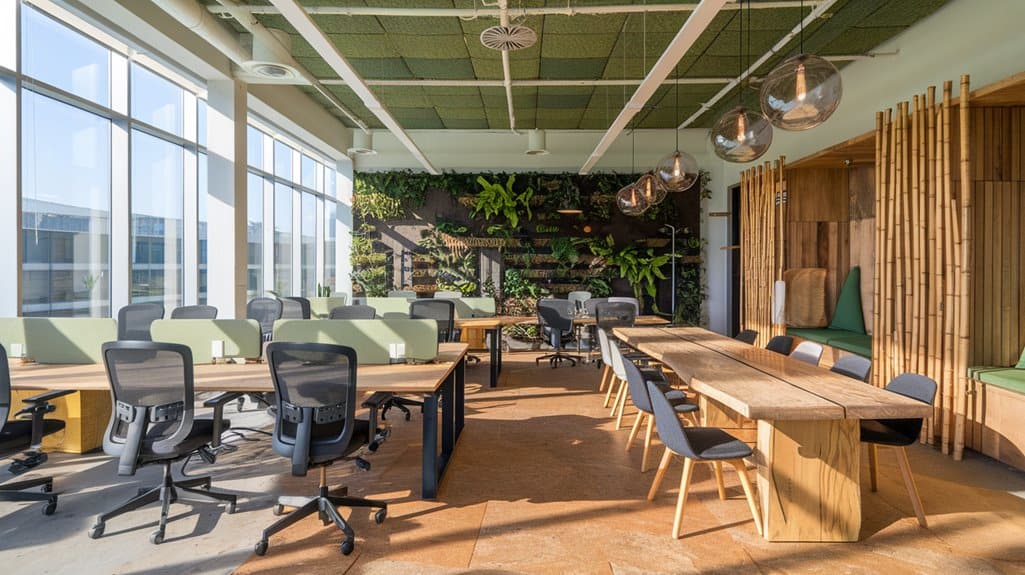
Open office acoustics are meant to support collaboration — so why does everyone wear noise-canceling headphones and beg to work from home on “focus days”?
Here’s the uncomfortable truth: that gorgeous open floor plan you specified might be costing your client up to 66% in lost productivity every time someone overhears a nearby conversation. The glass walls that flood the space with natural light? They’re bouncing sound waves around like a racquetball court. Those beautiful concrete floors and exposed ceilings that scream “modern design”? They’re literally screaming—amplifying every keyboard click, phone ring, and brainstorming session into a productivity-killing cacophony.
But before you start drawing cubicle walls back onto your plans, take a breath. The solution isn’t retreating to 1990s-style isolation booths. Modern acoustic design lets you keep the collaborative energy of open offices while actually allowing people to think. It’s about strategic intervention, not architectural surrender.
In this article, you’ll learn:
- Why office acoustics directly impact your client’s bottom line (and your reputation)
- The ABCD framework for acoustic problem-solving that works in real spaces
- Which materials actually deliver results—from ceiling baffles to TFL wall treatments
- Room-by-room implementation strategies for different work zones
- How to avoid the “dead room” mistake that makes spaces feel creepy instead of calm
- Real-world results and ROI timelines you can share with clients
Let’s turn down the volume on office noise and turn up the value of your design work.
The $650 Billion Headache: Why Office Acoustics Actually Matter
The Productivity Tax of Poor Acoustics
We’ve all been in that meeting where someone asks, “Can you repeat that?” for the third time because the HVAC kicked on. Or watched a colleague abandon their desk for a coffee shop because they literally can’t hear themselves think. These aren’t just minor annoyances—they’re expensive problems.
According to research compiled by workplace distraction analysts, businesses lose up to $650 billion annually due to workplace distractions. Office noise ranks as the number one culprit. Let those numbers sink in: 70% of employees report regular distraction from office noise, and 56% say it directly tanks their productivity.
Here’s the kicker: workers can be up to 66% less productive when exposed to just one nearby conversation. British Journal of Psychology research shows that whether reading or writing, background chatter is a productivity killer. In one Channel 4 experiment, an architectural critic wore a brain-activity cap in an open office. The results? “Intense bursts of distraction” lit up his brain like a Christmas tree every time a conversation started nearby.
We specify hundreds of design details in every project. Acoustic performance deserves equal billing with lighting levels and ergonomic furniture—because it affects how well people can actually use the space you’ve created.

The Lombard Effect: When Noise Creates More Noise
Here’s where it gets interesting (and a bit frustrating): noise creates more noise. The phenomenon is called the Lombard Effect, and it’s the acoustic equivalent of a doom loop.
When background noise increases, people naturally speak louder to be heard. Their louder voices become part of the background noise. Other people then raise their voices to compensate. The cycle continues until everyone’s practically shouting—and still can’t hear properly.
Research from JLL found that 58% of employees consider their home environment superior for focused work, with more than a quarter citing office noise and inability to focus as their primary reason for working remotely. That open office you designed? People are literally avoiding it.
It’s Not Just Annoyance—It’s a Health Issue
Let’s get serious for a moment. Chronic noise exposure isn’t just distracting—it’s dangerous.
Studies show that prolonged exposure to office noise levels triggers physiological stress responses: elevated blood pressure, increased heart rate, and higher stress hormone levels. Even sounds we consider “normal” in offices—phone rings, conversations, equipment hum—affect our cardiovascular system.
The University of Michigan’s Occupational Health Nursing Program found that chronic workplace noise caused measurable increases in blood pressure and heart rate among employees. The European Union calculates the cost of excessive noise at over €40 billion annually when factoring in lost working days, healthcare costs, and reduced productivity.
When we talk about acoustic design, we’re not just making spaces quieter. We’re making them healthier. That’s a value proposition your clients need to hear.
.
Understanding the Science: How Sound Behaves in Open Spaces
The Four Problems Every Open Office Faces
Open offices share common acoustic challenges that turn collaboration spaces into chaos. Understanding these problems helps us design better solutions.
Problem 1: Excessive Reverberation. Hard surfaces (glass, concrete, metal, polished floors) reflect sound waves instead of absorbing them. Sound bounces around the room, creating echoes and extending how long noise persists. That sleek minimalist aesthetic? It’s an acoustic nightmare.
Problem 2: Speech Privacy Failure. Research from Haworth reveals that lack of speech privacy ranks as the single greatest source of workplace dissatisfaction in a study of 50,000 workers across 351 buildings. When private conversations aren’t private, trust and comfort evaporate.
Problem 3: Low-Frequency Noise. HVAC systems, traffic, and mechanical equipment produce low-frequency rumbles that standard acoustic panels often miss. This bass-level noise creates fatigue even when people can’t consciously identify the source.
Problem 4: Sound Transmission Between Zones. Without proper barriers, noise from collaborative areas bleeds into focus zones, meeting rooms become audible from adjacent spaces, and phone booths fail to provide the privacy they promise.
Each problem requires different solutions. That’s why blanket approaches—like covering every wall with acoustic panels—often disappoint.
The ABCD Framework: Absorb, Block, Cover, Diffuse
Acoustic design follows a simple but powerful framework: ABCD. This isn’t something we made up—it’s the industry-standard approach recommended by acoustic engineering experts and backed by decades of research.
Absorb: Sound-absorbing materials soak up sound waves, preventing them from bouncing around the room. Think acoustic ceiling tiles, fabric-wrapped wall panels, carpeted floors, and upholstered furniture. These materials have high Noise Reduction Coefficient (NRC) ratings.
Block: Physical barriers prevent sound from traveling between spaces. Demountable walls, acoustic partitions, suspended ceiling tiles, and properly sealed doors all block sound transmission. Materials with high Sound Transmission Class (STC) ratings excel here.
Cover: Sound masking introduces low-level ambient noise that makes other sounds less noticeable. It’s not about making spaces louder—it’s about making distracting sounds less intelligible. White noise systems and nature-inspired soundscapes fall into this category.
Diffuse: Diffusion scatters sound waves in multiple directions, preventing sound energy from concentrating in specific areas. Textured surfaces, acoustic fins, and strategic architectural elements create diffusion.
The best acoustic designs combine all four principles in appropriate measures for each space. We don’t just absorb or just block—we orchestrate these elements together.
NRC and STC Ratings Demystified
Let’s decode the numbers you’ll see on acoustic product spec sheets.
NRC (Noise Reduction Coefficient) measures how much sound a material absorbs. The scale runs from 0 to 1, with higher numbers indicating better absorption. An NRC of 0.70 means the material absorbs 70% of sound that hits it. Quality acoustic panels typically range from 0.70 to 1.0.
STC (Sound Transmission Class) measures how well a barrier blocks sound from passing through it. Higher numbers mean better blocking. An STC rating of 50 is considered good for office walls—it reduces a normal conversation to a faint murmur.
For open offices, focus primarily on NRC ratings for absorption materials. For enclosed rooms and pods, STC ratings become critical. Don’t get caught specifying products with impressive-sounding numbers in the wrong category—an NRC 1.0 panel won’t help if you need to block sound transmission between rooms.
Solution Category 1—Absorption Strategies
Ceiling Treatments: Baffles, Clouds, and Acoustic Tiles
The ceiling represents your largest unused acoustic surface. Treating it delivers maximum impact for your investment.
Acoustic ceiling tiles directly replace standard ceiling tiles in grid systems. Modern options go far beyond the institutional look of decades past. Material LogIQ reports that ceiling treatments can reduce overall noise levels by 20-30% while maintaining design integrity.
Ceiling baffles hang vertically from the ceiling, adding three-dimensional acoustic absorption. They work beautifully in high-ceiling spaces where traditional tile installations aren’t possible. Plus, they create visual interest and can incorporate brand colors or patterns.
Acoustic clouds are horizontal panels suspended below the ceiling. They provide absorption while maintaining the industrial aesthetic of exposed ceilings and ductwork. We’ve used clouds to great effect in tech offices where clients wanted the “startup vibe” without the acoustic disaster.
Position ceiling treatments strategically above high-traffic collaboration zones, open workstations, and circulation paths. Don’t waste absorption materials in areas that rarely generate noise.
Wall Panels That Work (and Look Good Doing It)
Wall panels have evolved from the boring beige boxes of the past into genuine design features. Contemporary acoustic panel designs now function as both sound control and visual art.
Fabric-wrapped panels offer the widest color and texture selection. They typically achieve NRC ratings of 0.80-1.0, making them highly effective. Many manufacturers now offer custom printing, allowing you to integrate brand graphics, wayfinding, or biophilic imagery directly into acoustic treatments.
PET fiber panels deliver sustainability credentials alongside acoustic performance. Made from recycled plastic bottles, these panels offer NRC ratings of 0.70-1.0 while meeting LEED certification requirements. Clients increasingly request these materials as part of their ESG commitments.
Wood slat panels with acoustic backing combine the warmth of natural wood with functional sound absorption. The slats create visual texture and light play, while acoustic felt behind them traps sound waves. These panels work beautifully in executive spaces, conference rooms, and reception areas where aesthetics matter as much as acoustics.
Place wall panels at speech level—roughly 3-4 feet off the floor—where they intercept sound from conversations and activities. Corner placement amplifies effectiveness, as sound waves tend to concentrate in room corners.
The TFL Connection: Decorative Surfaces with Acoustic Function
Here’s where material specification gets interesting. Thermally Fused Laminate (TFL) isn’t traditionally considered an acoustic material, but thoughtful application creates surprising benefits in commercial interiors.
When we specify TFL surfaces from KML Designer Finishes for wall applications, we’re often backing them with acoustic substrates or incorporating them into partition systems with acoustic cores. The durable, easy-to-clean surface of TFL handles the high-traffic abuse of commercial spaces, while the backing system manages sound.
This approach works particularly well in healthcare, education, and hospitality projects where you need both acoustic performance and surfaces that withstand cleaning protocols and daily wear. The key is thinking about TFL as part of an acoustic assembly rather than standalone acoustic treatment.
We’ve also used textured TFL surfaces to create diffusion elements in spaces where absorption alone wasn’t solving the problem. The surface texture scatters sound waves, reducing problematic reflections without adding softness that could compromise cleanability or durability.
Don’t Forget the Floor: Soft Surfaces Matter
Hard flooring is an open office’s acoustic Achilles heel. Every footstep, rolling chair, and dropped item creates impact noise that radiates throughout the space.
Carpet tiles with acoustic backing reduce impact noise and absorb airborne sound. Modular carpet systems let you combine acoustic performance with easy maintenance and replacement—critical in commercial environments.
For spaces where hard flooring is non-negotiable (think healthcare or food service), strategic area rugs in circulation zones and under workstations help. Acoustic underlay beneath hard surface flooring also reduces impact noise transmission to spaces below.
We specify acoustic floor treatments most aggressively in multi-story buildings where impact noise affects tenants or departments below. The investment in proper flooring saves relationships (and potential liability).
Solution Category 2—Blocking and Dividing
Acoustic Partitions and Pods
Sometimes absorption isn’t enough. You need actual barriers.
Acoustic pods and phone booths have exploded in popularity, and for good reason. They provide speech privacy for calls and focused work without permanently dividing the floor plan. ISO standard 23351-1:2020 classifies acoustic pods into five categories (A+ through D) based on speech level reduction.
Classes A+, A, and B guarantee speech privacy in typical office environments with 40-50 dB of ambient noise. Most quality pods fall into Class A or B. When specifying pods, verify the ISO classification—marketing claims vary wildly, but standardized ratings don’t lie.
Demountable partition systems with acoustic cores provide more permanent division while maintaining flexibility. These systems achieve STC ratings of 35-45, making them effective for creating semi-private zones without committing to drywall construction.
Furniture as Sound Barrier
High-backed lounge seating, booth-style workstations, and acoustic screens integrated into desk systems all contribute to sound blocking. We call this “acoustic furniture,” and it’s become essential in modern workplace design.
The beauty of furniture-based solutions? They’re relocatable, customizable, and easier to budget than built construction. Plus, they look like intentional design features rather than obvious noise-control afterthoughts.
Position acoustic furniture to create buffer zones between high-activity areas (kitchens, copy centers, main circulation) and focused work zones. Think of furniture arrangements as semi-permeable membranes that slow sound transmission without creating isolation.
The Glass Problem (and How to Fix It)
Glass walls and partitions look fantastic. They preserve sightlines and natural light penetration. They also reflect 99% of sound that hits them.
Acoustic laminated glass incorporates a sound-dampening interlayer between glass panes, improving STC ratings from around 30 (standard glass) to 40-45. It’s more expensive, but the performance difference is substantial.
For existing glass installations, acoustic window films or suspended acoustic baffles in front of glass surfaces help manage reflections. We’ve also used floor-to-ceiling curtains or acoustic panels on tracks that can close when privacy or sound control becomes necessary.
The key insight: glass doesn’t have to be everywhere. Strategic use of glass combined with acoustic wall systems often delivers better overall results than all-glass construction with add-on fixes.
Solution Category 3—Sound Masking and Background Noise
Why Some Silence Is Too Silent
Here’s a counterintuitive acoustic principle: completely silent spaces feel uncomfortable. They amplify every small noise, make people whisper awkwardly, and can actually increase stress.
Acoustic experts at Hush Acoustics explain that the goal isn’t silence—it’s the right balance of ambient sound. A well-designed office maintains comfortable background noise that masks distracting sounds without becoming distracting itself.
One caveat: an environment that’s too quiet can feel unsettling and decrease productivity. The average office produces 40-50 dB of background noise, which provides enough acoustic cover for speech privacy without requiring excessive absorption.
Smart Sound Masking Systems
Sound masking technology introduces consistent, low-level ambient sound throughout a space. It’s not white noise in the traditional sense—it’s carefully engineered sound that raises the ambient noise floor just enough to reduce the intelligibility of conversations.
Modern sound masking systems use sensors and algorithms to self-optimize as occupancy patterns change. Networked systems adjust volume and frequency in real-time, ensuring consistent coverage without hotspots or dead zones.
A tech company in Silicon Valley integrated sound masking and reported a 50% drop in conversational distractions. Employees experienced newfound privacy and focus, leading to measurable increases in both productivity and satisfaction.
Sound masking works best when combined with absorption treatments. The masking raises the noise floor, while absorption prevents sound from building up excessively. Together, they create acoustic balance.
Natural Sound Alternatives
For clients skeptical of electronic sound masking, natural sound alternatives exist. Water features, air movement, and even strategically positioned music create ambient noise that masks distracting sounds.
We’ve specified decorative water walls in reception areas and collaboration zones where the gentle sound of running water provides both aesthetic appeal and acoustic masking. Indoor landscaping with moving water elements serves dual purpose.
Background music systems—when properly designed with appropriate volume and content—can also provide masking. The key is keeping volume low enough that it stays in the background rather than becoming foreground entertainment.
Material Matters: Choosing Acoustic Solutions That Match Your Design Vision
Recycled PET Fiber Panels
Sustainability matters to clients, and recycled PET acoustic panels deliver both environmental credentials and high performance. These panels are manufactured from post-consumer plastic bottles, diverting waste from landfills while creating excellent sound absorption.
PET panels typically achieve NRC ratings of 0.70-1.0, matching or exceeding traditional acoustic materials. They’re available in numerous colors and can be laser-cut into custom shapes, offering design flexibility alongside environmental benefits.
For projects pursuing LEED certification or other green building standards, specifying recycled content acoustic materials earns valuable points while solving real acoustic problems. It’s rare to find products that check both boxes so effectively.
Fabric-Wrapped Panels and Customization
Fabric-wrapped acoustic panels offer the ultimate in customization. Over 80 colors and textures give designers nearly unlimited palette options. More importantly, custom printing transforms acoustic panels into branded elements, wayfinding features, or artistic focal points.
We’ve created acoustic installations that double as corporate brand expressions, printed with company values, mission statements, and visual brand elements. In one marketing agency project, the acoustic panels featured examples of award-winning creative work—solving sound problems while celebrating company culture.
The acoustic core (typically fiberglass or mineral wool) provides absorption, while the fabric facing protects the core and delivers visual appeal. Quality systems maintain NRC 0.85 or higher while offering design freedom that other materials can’t match.
Wood Slat Panels with Acoustic Felt Backing
Natural wood brings warmth and sophistication to commercial spaces. Wood slat acoustic panels combine that aesthetic appeal with genuine acoustic function.
The system is elegant: wood slats mount to acoustic felt backing (often made from recycled materials). Sound waves pass between the slats and get trapped in the felt. The result is an NRC rating typically around 0.60-0.80—not the highest absorption, but respectable performance that looks nothing like traditional acoustic treatments.
These panels work beautifully in executive suites, conference rooms, and reception areas where natural materials and upscale aesthetics are priorities. They’re particularly effective when paired with LED backlighting, creating dramatic shadow play that adds depth to walls.
One architecture firm renovated their office using black walnut acoustic panels. They noticed immediate acoustic improvement—no more echo, no more sound bouncing off walls. Their workspace became both visually impressive and acoustically calm.
TFL Surfaces: Where Durability Meets Acoustic Performance
As we mentioned earlier, TFL surfaces aren’t standalone acoustic solutions, but they’re valuable components in acoustic assemblies. The durability and cleanability of TFL makes it ideal for applications where acoustic materials might face abuse.
Healthcare environments particularly benefit from TFL-faced acoustic systems. The surface withstands repeated disinfection, while acoustic cores provide necessary sound control in spaces where privacy matters and stress levels run high.
We’ve also specified TFL surfaces with subtle texture in spaces where diffusion helps manage sound. The surface texture scatters sound waves without the dust-collecting properties of fabric or the fragility of some acoustic materials.
When you need surfaces that perform acoustically while surviving the realities of heavy commercial use, thinking about TFL as part of a system rather than standalone material opens possibilities that purely decorative or purely acoustic products can’t match.
Implementation Strategy: A Room-by-Room Approach
Open Work Zones: Balance Collaboration and Focus
Open workstation areas face the toughest acoustic challenge: supporting both collaboration and concentration in the same space.
Use acoustic partitions between desks to create subtle sound barriers without blocking sightlines or natural light. Install hanging ceiling baffles above workstations to absorb overhead sound. Place soft furnishings strategically to break up sound reflection patterns.
Research shows that these treatments help contain sound in group zones while allowing necessary communication. The goal isn’t isolation—it’s acoustic zoning that lets different activities coexist.
We typically target 45-50 dB ambient noise levels in open work zones. Higher than that creates distraction; lower feels uncomfortable and makes people overly conscious of their own noise.
Conference Rooms: Speech Clarity Is Everything
Conference rooms need opposite acoustic priorities from open spaces. Here, speech intelligibility matters more than overall noise reduction.
Echo and room reverb frustrate video calls and in-person meetings. Wall-mounted acoustic panels and ceiling clouds improve speech clarity by reducing reverberation time—the measure of how long sound persists in a room.
For conference rooms, target reverberation times under 0.6 seconds. This creates clear, crisp speech without the “dead” feeling of over-treatment. Combine wall absorption with strategic diffusion to maintain some room liveliness while controlling problematic echoes.
Don’t forget about sound isolation. Conference room conversations shouldn’t be audible in adjacent areas. Specify doors with acoustic seals and ensure walls extend to the deck above suspended ceilings.
Focus Pods and Phone Booths
Acoustic pods provide private refuge in open offices. They’re particularly valuable for phone calls, video conferences, and work requiring deep concentration.
Verify ISO classification when specifying pods. Class A or B pods guarantee speech privacy in typical office noise levels. Lower classifications may disappoint in noisier environments.
Interior acoustic treatment matters too. Pods need absorption to prevent echo during calls, but over-absorption creates the uncomfortable “dead room” effect. Quality pods balance these factors through careful material selection and placement.
Position pods away from high-traffic areas to minimize disruption from people walking past. Ensure adequate ventilation—acoustic pods can get stuffy quickly. And consider accessibility requirements; not all pods accommodate wheelchair users or people with mobility challenges.
Reception and Common Areas
Reception and common areas should feel welcoming, not chaotic. Sound-absorbing ceiling tiles and wall panels reduce echo that often comes with open lobbies and hard surfaces.
These spaces benefit from decorative acoustic treatments that make strong design statements. Custom-printed panels, artistic installations with acoustic properties, and natural wood treatments all work well where first impressions matter.
One approach we’ve used successfully: integrate acoustic treatments into architectural features rather than adding them as obvious afterthoughts. Acoustic panels can become brand walls, way-finding elements, or artistic focal points that happen to also manage sound.
Real Results: What Success Looks Like
Case Study Snapshot: New York Marketing Firm
A New York-based marketing firm faced typical open-office problems: constant distractions, failed phone calls, and employees fleeing to coffee shops for focused work.
They installed recycled fabric panels throughout the office—wall panels in collaborative areas, ceiling treatments above workstations, and acoustic pods for private calls. The results were dramatic: ambient noise levels dropped approximately 20 decibels, creating a noticeably calmer environment.
More importantly, employee complaints about noise dropped by 80% within two weeks of installation. Productivity metrics (tracked through project completion rates) improved by 15% over the following quarter. And perhaps most telling: requests to work from home specifically to avoid office noise virtually disappeared.
The firm’s investment in acoustic treatments paid for itself within eight months through reduced real estate needs (fewer employees demanding private offices) and measurable productivity gains.
Measuring Improvement: Before and After Metrics
Acoustic improvements should be measurable, not just subjective. We recommend baseline testing before intervention and follow-up measurement afterward.
Decibel measurements provide objective data on noise reduction. Simple sound level meters cost under $100 and give reliable readings. Take measurements during typical work hours in multiple locations to capture real conditions.
Employee surveys reveal subjective experience changes. Ask about distraction frequency, speech privacy, and overall acoustic comfort. The combination of objective sound measurements and subjective experience data tells the complete story.
Some firms also track productivity metrics: project completion rates, error rates, meeting effectiveness scores. While multiple factors influence these numbers, significant improvements following acoustic intervention suggest real impact.
ROI Timeline: When Will You See Results?
Here’s the good news: acoustic improvements deliver fast returns.
Physical installation typically completes within days for panel-based systems, weeks for comprehensive treatments including pods and partitions. The acoustic benefits are immediate—reduced reverberation and noise levels show up instantly.
Employee satisfaction improvements appear within the first month. People notice quieter, more comfortable spaces quickly, and complaints drop off dramatically.
Productivity and business metric improvements take longer to measure reliably—usually 3-6 months. But companies consistently report measurable gains when acoustic problems get properly addressed.
The full financial ROI varies by project scale and business type, but most organizations see payback within 1-2 years through reduced absenteeism, improved productivity, and better space utilization.
Common Mistakes to Avoid
Over-Absorption: The “Dead Room” Problem
Too much acoustic treatment creates spaces that feel uncomfortable and strange. We call this the “dead room” problem.
When rooms absorb all sound energy, they lack normal acoustic feedback. People’s voices sound flat and lifeless. The space feels unnatural, even vaguely creepy. Ironically, over-treated rooms can make communication harder despite reducing noise.
Balance absorption with appropriate liveliness. Some sound reflection is desirable—it makes spaces feel more natural and provides acoustic cues we unconsciously rely on.
Acoustic design experts note that creating an overly absorptive space leaves the room feeling “dead,” meaning there’s little or no echo. This can make people feel uneasy and unwilling to communicate clearly, due to the lack of sound to mask their own voices.
Aesthetic Over Function (or Vice Versa)
Beautiful acoustic treatments that don’t actually work frustrate clients. Functional treatments that look institutional undermine design vision. Both mistakes are common.
Specify products with verified acoustic performance data. Don’t trust marketing claims—demand NRC and STC test results from independent laboratories. Beautiful panels with NRC 0.30 won’t solve serious acoustic problems no matter how good they look.
Conversely, don’t sacrifice design for performance when attractive solutions exist. With today’s material options, there’s no excuse for boring acoustic treatments. Custom colors, textures, patterns, and shapes let you maintain design integrity while delivering acoustic results.
Ignoring Low-Frequency Noise
Standard acoustic panels excel at absorbing mid and high frequencies—the range of human speech. They often miss low-frequency noise from HVAC systems, traffic, and mechanical equipment.
Low-frequency noise creates fatigue and stress even when people can’t consciously identify the source. It’s the background rumble that makes spaces feel uncomfortable without obvious cause.
Addressing low-frequency issues requires thicker absorption materials, bass traps in room corners, or mechanical system improvements. Don’t assume panel treatments alone will solve all acoustic problems.
When employees complain about acoustic discomfort despite visible treatments, suspect low-frequency issues. Acoustic testing can identify problem frequencies and guide appropriate solutions.
Wrapping Up: Sound Design for Real Spaces
Open office acoustics isn’t about choosing between collaboration and concentration—it’s about creating spaces where both can thrive. The ABCD framework (Absorb, Block, Cover, Diffuse) gives you tools to tackle any acoustic challenge, from 100-person warehouse conversions to intimate 10-desk studios.
Remember: 70% of employees struggle with office noise, and 56% say it directly impacts their productivity. When you solve acoustic problems, you’re not just making spaces quieter—you’re making them healthier, more productive, and genuinely more valuable to your clients.
Start with the science (understand how sound behaves), choose appropriate materials (from recycled PET panels to TFL-backed systems), implement strategically room by room, and measure results. The companies seeing 20-50% noise reduction and measurable productivity gains aren’t using magic—they’re using thoughtful acoustic design.
Your next open office project deserves better than noise-canceling headphones as the primary acoustic strategy. Give your clients the gift of productive silence.
Frequently Asked Questions
What’s the difference between soundproofing and sound absorption?
Sound absorption reduces echoes and reverberation inside a room using materials like acoustic panels and ceiling tiles. Soundproofing blocks sound from passing between rooms using barriers like thick walls and sealed doors. Open offices typically need absorption, while conference rooms need both.
How much should we budget for acoustic treatments in a 5,000 sq ft office?
Budget $3-8 per square foot for basic acoustic treatments (ceiling tiles, wall panels). Comprehensive solutions including acoustic pods, high-end materials, and sound masking systems run $10-15 per square foot. ROI typically occurs within 12-24 months through productivity improvements.
What’s an NRC rating and why does it matter?
NRC (Noise Reduction Coefficient) measures how much sound a material absorbs, rated 0-1. Higher is better. NRC 0.70 absorbs 70% of sound hitting it. For effective acoustic treatment, specify materials with NRC 0.70 or higher. Always verify ratings with independent lab test data.
Can we achieve good acoustics without sacrificing our open floor plan?
Absolutely. Modern acoustic design uses ceiling treatments, strategic wall panels, acoustic furniture, and sound masking to control noise without adding walls. The goal is acoustic zoning—different sound environments within the same open space—not physical isolation.
How long does it take to install acoustic panels?
Wall and ceiling panel installation typically completes in 2-5 days for average office spaces, depending on size and complexity. Acoustic pods arrive pre-fabricated and install in hours. Sound masking systems require 1-2 weeks including programming. Benefits appear immediately after installation.