
Healthcare-Compliant Surface Materials: What You Need to Know

Healthcare surface materials must survive what often feels like chemical warfare — every single day. From bleach wipes to UV disinfection, the materials you specify face relentless assault. Get it wrong, and you’re looking at failed inspections, costly replacements, and infection control headaches. Get it right, and you’ve created spaces that protect patients while expressing genuine design intent.
We’ve seen too many projects stumble because designers treated “healthcare-compliant” as a checkbox rather than a design philosophy. The truth? Compliance isn’t a single attribute you can bolt onto any material. It’s a constellation of performance characteristics that must work together under punishing real-world conditions.
In this article, you’ll learn:
- What “healthcare-compliant” actually means and why the term is often misused
- How to navigate FGI Guidelines, CDC protocols, and EPA registration requirements
- The science behind antimicrobial surfaces and their real-world limitations
- Why chemical resistance trumps almost every other specification factor
- How TFL, HPL, solid surface, and specialty materials compare for healthcare applications
- Practical collaboration strategies for working with Infection Prevention teams
- Common specification mistakes that lead to failed inspections
- A ready-to-use selection checklist for your next healthcare project
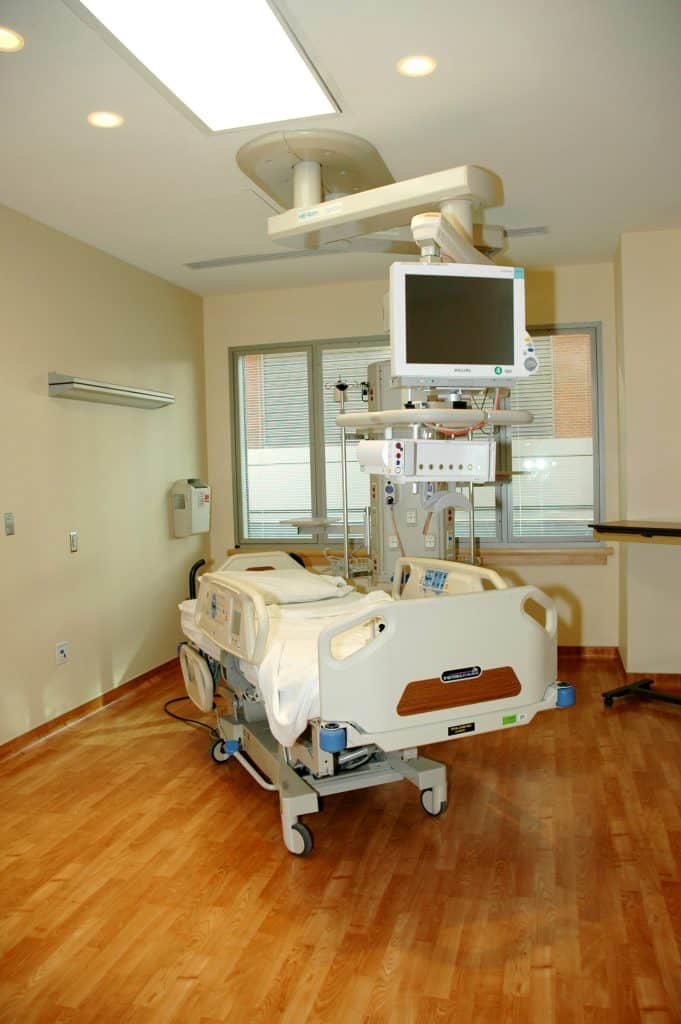
What Makes a Surface Truly Healthcare-Compliant?
The Compliance Confusion Problem
Here’s an uncomfortable truth: “healthcare-compliant” isn’t a regulated term. Unlike “organic” food or “LEED-certified” buildings, no single authority defines what makes a surface healthcare-compliant. This creates a wild west of marketing claims where nearly any durable material can position itself as suitable for clinical environments.
We’ve watched manufacturers slap “healthcare” labels on products that would fail their first encounter with a quaternary ammonium disinfectant. The confusion costs project teams time, money, and occasionally their professional reputation when surfaces degrade within months of installation.
The solution starts with understanding that compliance isn’t binary. It’s a spectrum defined by your specific application, the cleaning protocols your facility uses, and the regulatory framework that governs your project type.
Key Standards That Define Compliance
True healthcare compliance emerges from the intersection of multiple standards and guidelines. The three pillars you must understand include facility design requirements, infection control protocols, and antimicrobial product registration.
The Facility Guidelines Institute (FGI) publishes what many consider the gold standard for healthcare facility design. According to FGI, their Guidelines documents consolidate minimum program, space, risk assessment, infection prevention, architectural detail, surface, built-in furnishing, and building system requirements. Over 43 states have adopted these guidelines wholly or partially.
Major changes are coming in 2026 when FGI transitions from “Guidelines” to the enforceable “FGI Facility Code.” This shift signals that healthcare facility design requirements are moving from recommendations toward regulation. Designers who ignore these changes risk specifying materials that won’t pass muster under stricter enforcement.
The Regulatory Landscape You Need to Navigate
FGI Guidelines for Design and Construction
The FGI Guidelines serve as the foundation for most state healthcare construction codes. The Joint Commission recognizes the most recent FGI edition for new construction and renovation when state licensing rules are silent on specific design criteria.
What does this mean for surface selection? FGI requirements extend beyond mere material choices. They address how surfaces interact with infection prevention strategies, cleaning protocols, and patient safety. Your material specifications must align with these broader system requirements.
The 2026 FGI Facility Code introduces new provisions for rural emergency hospitals, behavioral health units, and short-term outpatient centers. If your projects touch these facility types, you’ll need to stay current with evolving requirements.
CDC Environmental Infection Control Guidelines
The CDC’s Guidelines for Environmental Infection Control in Health-Care Facilities provide the scientific foundation for understanding how surfaces contribute to infection transmission.
Here’s what the CDC tells us about surface contamination: While microbiologically contaminated surfaces can serve as reservoirs of potential pathogens, the transferral of microorganisms from environmental surfaces to patients happens largely via hand contact with the surface. This insight shapes everything from material selection to cleaning frequency requirements.
The CDC’s guidelines also establish clear hierarchies for surface classification. Understanding whether your surface counts as critical, semi-critical, or non-critical determines your cleaning and disinfection requirements.
EPA Registration and Antimicrobial Claims
When manufacturers claim their products kill germs, those claims must have teeth. The EPA regulates antimicrobial pesticides to ensure products meet specific standards before public use.
According to the EPA, antimicrobial pesticide products are categorized as either “public health” or “non-public health” depending on the specific claims made on each product’s labeling. Products making public health claims must submit efficacy data to support their registration.
The EPA maintains several lists of registered disinfectants effective against specific pathogens. List N covers products effective against SARS-CoV-2, while List K addresses Clostridium difficile spores. When evaluating surface materials, you need to understand which disinfectants your surfaces must survive — and verify that those disinfectants are EPA-registered for your intended use.
Antimicrobial Surfaces: Separating Hype from Science
How Antimicrobial Technologies Work
Antimicrobial surfaces use various technologies to inhibit microbial growth. Common approaches include silver ion treatments, copper alloys, and engineered surface textures that reduce bacterial adhesion.
The EPA distinguishes between products that protect the material itself versus those making public health claims. According to EPA guidance on treated articles, products claiming to be effective in controlling microorganisms such as E. coli, S. aureus, Salmonella, or Streptococcus must be registered as pesticides.
This distinction matters enormously. A surface with built-in antimicrobial properties that only protects the product itself cannot claim to prevent the spread of germs to humans. EPA’s policy rests on the fact that no scientific evidence exists that these products prevent the spread of germs and harmful microorganisms in humans.
What Antimicrobial Surfaces Can (and Can’t) Do
We need to have an honest conversation about antimicrobial surfaces. They’re not a replacement for cleaning and disinfection. They’re a supplement — and a limited one at that.
Antimicrobial surfaces work on the product’s surface over time. They don’t provide instant kill. They don’t eliminate the need for regular cleaning. And their efficacy depends heavily on proper maintenance and environmental conditions.
The Healthcare Surfaces Institute notes that an estimated 20-40% of healthcare-associated infections have been attributed to cross-infection via the hands of healthcare personnel who have become contaminated from direct contact with patients or by touching contaminated healthcare surfaces.
This statistic underscores a crucial point: antimicrobial surfaces address only part of the infection transmission pathway. Hand hygiene, proper PPE, and regular disinfection remain essential regardless of your surface selection.
When Antimicrobial Properties Matter Most
Despite their limitations, antimicrobial surfaces offer genuine value in specific applications. High-touch surfaces in patient rooms, door handles, bed rails, and nurse call buttons benefit most from continuous antimicrobial protection between cleaning cycles.
The key is understanding antimicrobial properties as one layer in a multi-layer defense strategy. They don’t replace your other infection prevention measures. They enhance them.
Chemical Resistance: The Real Compliance Gatekeeper
Understanding Chemical Resistance Ratings
Here’s where many healthcare projects fail: specifying surfaces that look great on day one but deteriorate rapidly under aggressive cleaning protocols.
The Scientific Equipment and Furniture Association (SEFA) establishes testing standards for surface chemical resistance. SEFA-3 addresses horizontal laboratory surfaces, exposing materials to 49 chemicals including acids, bases, and solvents.
Surfaces are rated on a four-level scale based on their stability to chemicals after 24-hour exposure. Understanding these ratings helps you specify materials that will survive your facility’s cleaning protocols.
Chemical resistance testing matters because healthcare cleaning isn’t gentle. Facilities use everything from quaternary ammonium compounds to sodium hypochlorite (bleach) to hydrogen peroxide. Each chemical attacks surface materials differently.
The Cleaning Protocols Your Surfaces Must Survive
Your surfaces must withstand not just one cleaning chemical but the entire range used in your facility. Different pathogens require different disinfectants. C. difficile spores, for example, require sporicidal agents that can be particularly harsh on surfaces.
We’ve seen projects where designers specified beautiful materials that degraded within months because nobody asked the Infection Prevention team what chemicals they actually use. Don’t make this mistake.
Request your facility’s cleaning protocol documents. Identify every chemical used. Then verify your proposed surfaces can withstand repeated exposure to each one.
Comparing Healthcare-Ready Materials
Thermally Fused Laminate (TFL)
Thermally fused laminate offers an compelling balance of performance, design flexibility, and cost-effectiveness for healthcare applications. According to the Composite Panel Association, TFL is an appropriate specification in healthcare, hospitality, commercial, and retail settings.
TFL panels have excellent scratch and wear resistance. The manufacturing process fuses resin-impregnated décor paper directly to the substrate, creating a durable decorative surface without additional gluing steps.
For designers seeking healthcare-appropriate materials without sacrificing aesthetics, KML Designer Finishes offers TFL options that combine the design versatility commercial interiors demand with the durability healthcare environments require. The key advantage? You can achieve consistent design language across an entire facility using TFL for appropriate applications while reserving higher-durability materials for the most demanding surfaces.
TFL works best for vertical applications and moderate-impact horizontal surfaces in healthcare settings. Cabinet interiors, wall panels, and furniture components are ideal applications.
High-Pressure Laminate (HPL)
HPL provides superior durability compared to TFL, making it the preferred choice for horizontal surfaces subject to heavy use and aggressive cleaning.
The manufacturing difference matters: HPL bonds decorative and wear layers to multiple kraft paper sheets under high pressure, creating a thicker, more impact-resistant surface. This construction withstands the repeated chemical exposure and physical wear of high-traffic healthcare environments.
Specify HPL for countertops, work surfaces, and any horizontal application that will see direct patient contact or frequent cleaning.
Solid Surface and Specialty Options
Solid surface materials offer seamless installation without joints or seams where bacteria can harbor. This makes them ideal for clinical areas requiring the highest hygiene standards.
However, solid surfaces come with higher costs and some design limitations. They’re most appropriate for surgical suites, procedure rooms, and other high-acuity settings where the premium is justified.
Specialty materials like chemical-resistant laminates (such as Wilsonart’s Chemsurf) provide exceptional resistance to harsh chemicals. These products bridge the gap between standard decorative surfaces and laboratory-grade materials.
Durability Requirements for High-Traffic Healthcare Environments
Abrasion and Impact Resistance Standards
Healthcare environments are brutal on surfaces. Equipment carts slam into walls. Wheelchairs scrape against cabinet faces. Medical devices create point loads that would damage residential-grade materials.
Look for surfaces tested to NEMA or SEFA standards for abrasion resistance. These standards simulate real-world wear patterns and help predict long-term performance.
Impact resistance matters equally. A surface that resists scratches but cracks on impact fails just as thoroughly as one that scratches easily.
Lifecycle Cost Considerations
The cheapest material upfront rarely delivers the lowest total cost. When you factor in replacement cycles, maintenance requirements, and the indirect costs of failed surfaces, premium materials often prove more economical.
We’ve calculated lifecycle costs for healthcare clients that showed premium surfaces paying for themselves within five years through reduced replacement frequency alone. Add the avoided costs of inspection failures and infection control incidents, and the case for quality becomes overwhelming.
Collaborating with Infection Prevention Teams
Building IPAC Relationships Early
Your Infection Prevention and Control team holds keys you need. They understand the facility’s cleaning protocols, pathogen concerns, and regulatory requirements better than anyone.
Engage IPAC early — ideally during schematic design. Share your material palette before you’re committed. Ask questions about cleaning frequencies, chemical protocols, and problem areas in existing facilities.
This collaboration prevents costly specification changes later. It also builds relationships that smooth the approval process when your project reaches the review stage.
Documentation That Wins Approval
Come to IPAC meetings prepared. Bring chemical resistance data sheets, antimicrobial registration documentation if applicable, and cleaning protocol recommendations from manufacturers.
Create comparison matrices showing how your proposed materials stack up against established standards. Visual documentation helps non-designers understand your recommendations.
Document every conversation and approval. When questions arise during construction or inspection, you’ll need records showing your specifications were reviewed and accepted.
Common Specification Mistakes (and How to Avoid Them)
We’ve seen these errors repeatedly across healthcare projects:
- Relying on manufacturer marketing without independent verification. Request test data to recognized standards, not just glossy brochures.
- Specifying materials without understanding cleaning protocols. Your beautiful surface means nothing if it degrades under routine disinfection.
- Ignoring seam and joint requirements. Seamless surfaces prevent bacterial harboring. Where seams are unavoidable, specify appropriate sealants and edge treatments.
- Forgetting about maintenance access. Surfaces behind equipment still need cleaning. Specify materials that remain accessible and cleanable even in tight spaces.
- Underestimating traffic patterns. High-traffic paths need more durable materials than adjacent areas. Map your traffic flows and spec accordingly.
- Treating all healthcare spaces identically. A waiting room has different requirements than an operating suite. Tailor your specifications to each space’s actual demands.
Your Healthcare Surface Selection Checklist
Before finalizing any healthcare surface specification, verify each of these requirements:
- Chemical resistance tested against your facility’s actual cleaning protocols
- Abrasion resistance appropriate for expected traffic levels
- Impact resistance suitable for equipment and activity in the space
- Seam and joint details that prevent bacterial harboring
- Antimicrobial claims backed by EPA registration (if applicable)
- Manufacturer cleaning recommendations compatible with facility protocols
- FGI Guidelines compliance for your facility type
- IPAC team review and written approval
- Lifecycle cost analysis comparing alternatives
- Warranty terms covering cleaning protocol damage
- Sample panels tested with actual cleaning chemicals before full specification
FAQs
What makes a surface “healthcare-compliant”? No single standard defines healthcare compliance. True compliance requires meeting FGI Guidelines, surviving your facility’s EPA-registered disinfectants without degradation, and satisfying your IPAC team’s infection control requirements for the specific application.
Do antimicrobial surfaces eliminate the need for regular disinfection? No. Antimicrobial surfaces supplement cleaning protocols but never replace them. They reduce microbial load between cleanings but cannot achieve the rapid kill rates of proper disinfection.
How do I choose between TFL and HPL for healthcare projects? Use TFL for vertical surfaces and moderate-use applications where cost efficiency matters. Specify HPL for horizontal surfaces facing direct patient contact, heavy traffic, or aggressive cleaning protocols.
What documentation should I request from surface material manufacturers? Request chemical resistance test results to SEFA or equivalent standards, abrasion and impact test data, antimicrobial registration documents if claimed, and written cleaning protocol recommendations.
How early should I engage Infection Prevention teams in material selection? Engage IPAC during schematic design, before material specifications are finalized. Early collaboration prevents costly specification changes and builds approval relationships.