
Beyond the Buzzword: How to Specify Antimicrobial Surfaces That Actually Perform
“Antimicrobial” appears on everything from drawer pulls to desk chairs these days. Marketing teams have discovered the word sells. But slapping a buzzword on a spec sheet doesn’t make a surface safer. Knowing the difference between marketing fiction and material science could save your client from a costly—and potentially litigious—disappointment. We’ve watched this category explode since 2020, and the good news is that proven technologies exist. The bad news? They’re buried under a mountain of vague claims and questionable certifications.
This guide cuts through the noise. We’ll explain how antimicrobial technologies actually function at the molecular level. We’ll map which material categories offer legitimate options. And we’ll give you the specification framework to defend your choices when a client’s facility manager starts asking hard questions.
In this article, you’ll learn:
- Why antimicrobial surfaces shifted from healthcare niche to commercial standard—and the liability implications for specifiers
- The three dominant technology categories and their real-world durability profiles
- Which certifications separate proven efficacy from marketing theater
- How to match antimicrobial technologies to traffic patterns, cleaning protocols, and sector requirements
- Maintenance realities that keep these surfaces performing over their full lifecycle
Why Antimicrobial Surfaces Moved from Optional to Expected
The Post-Pandemic Shift in Client Expectations
Antimicrobial surfaces are no longer a niche healthcare concern — they’ve become a baseline expectation across commercial interiors. We don’t need to belabor the obvious: COVID-19 fundamentally rewired how building occupants think about shared environments. What matters for specification work is that this shift hasn’t faded. The American Society of Interior Designers’ 2023 Trends Outlook confirms a sustained focus on health, safety, and material performance, with clients increasingly prioritizing surfaces that support hygiene, wellness, and long-term resilience in everyday spaces.
This isn’t pandemic panic. It’s a permanent shift in baseline expectations. Tenants scrutinize material specs before signing leases. Hospitality brands audit surface selections during franchise renewals. Corporate wellness programs now include “touchpoint hygiene” as a measurable metric.
We’ve seen this firsthand in programming meetings. Five years ago, antimicrobial surfaces came up in healthcare projects. Today, they surface in coworking spaces, quick-service restaurants, and even boutique retail. The question is no longer “should we consider antimicrobial materials?” It’s “which ones actually work?”
Liability, Compliance, and the Business Case for Hygienic Materials
Beyond client expectations, there’s a harder-edged driver: liability exposure. When a surface carries an antimicrobial claim, that claim becomes part of the project’s performance promise. If the technology fails—or never worked in the first place—the specifier may share responsibility.
The EPA’s enforcement of antimicrobial product claims has intensified since 2020. Unregistered products making public-health claims face fines and recalls. For specifiers, this means due diligence isn’t optional. You need to verify that the products you specify carry legitimate registrations and testing documentation.
The business case extends beyond risk mitigation. Antimicrobial surfaces can reduce cleaning frequency, extend material lifecycles, and support wellness certifications like WELL and Fitwel. These factors translate to operational savings and marketable building features—arguments that help justify any upfront premium.
How Antimicrobial Technologies Actually Work
Not all antimicrobial technologies function the same way. Understanding the mechanisms helps you match products to applications—and spot claims that don’t hold up to scrutiny.
Metal-Ion Systems (Silver, Copper, Zinc)
Metal-ion technologies represent the oldest and most extensively researched antimicrobial approach. Copper’s antimicrobial properties were documented as early as 2600 BCE in Egyptian medical texts. Modern applications embed silver, copper, or zinc ions into material matrices.
Here’s the mechanism: metal ions disrupt microbial cell membranes and interfere with enzyme function. The EPA has registered copper alloys as the only solid surface materials with proven public-health claims against bacteria.
Silver-ion technologies appear in laminates, solid surfaces, and coatings. They’re effective against a broad spectrum of bacteria and some fungi. However, efficacy depends heavily on ion availability at the surface. Deeply embedded ions may never contact microbes.
Key considerations for metal-ion systems:
- Copper alloys offer continuous, self-renewing antimicrobial action but carry aesthetic and cost limitations
- Silver-ion additives vary widely in concentration and release rates between manufacturers
- Zinc-based systems typically target mold and mildew rather than bacteria
- All metal-ion systems require direct surface contact—they don’t create “zones of protection”
Organosilane and Quaternary Ammonium Compounds
Organosilane technologies create a mechanical kill mechanism. These molecules bond to surfaces and form microscopic “spikes” that physically rupture microbial cell membranes. Quaternary ammonium compounds (quats) work similarly but through chemical disruption of cell walls.
These systems appear frequently in textile treatments and surface coatings. They offer broad-spectrum efficacy and relatively low cost. The trade-off? Durability. Applied treatments wear away with abrasion and cleaning.
We’ve specified organosilane-treated textiles in high-traffic healthcare waiting areas. They perform well initially. But after 18 to 24 months of commercial cleaning, efficacy testing often shows significant degradation. Budget for reapplication or replacement accordingly.
Photocatalytic and Light-Activated Technologies
Photocatalytic systems use titanium dioxide (TiO₂) or similar compounds that generate reactive oxygen species when exposed to UV or visible light. These species break down organic matter—including microbial cells—on contact.
The appeal is self-regenerating action. As long as light reaches the surface, the antimicrobial effect continues. The limitation? Shadowed areas and low-light environments see reduced performance.
We’ve seen photocatalytic coatings work exceptionally well on exterior cladding and brightly lit interior walls. They’re less practical for undersides of desks, cabinet interiors, or 24-hour facilities with minimal natural light.
Built-In vs. Applied Treatments—Durability Trade-Offs
This distinction matters more than most product literature admits. Built-in antimicrobial technologies are integrated during manufacturing—ions embedded in the material matrix, additives compounded into polymers. Applied treatments are added after production through coatings, sprays, or films.
Built-in technologies generally offer superior durability. The antimicrobial agent can’t be wiped away because it’s part of the material itself. Applied treatments cost less and can retrofit existing surfaces—but they require maintenance and eventual reapplication.
Ask manufacturers directly: “Is this treatment integral to the material or a post-production application?” The answer shapes your lifecycle cost analysis and maintenance specifications.
Material Categories with Antimicrobial Options
Solid Surfaces and Engineered Stone
Solid surface materials—acrylics, polyesters, and blends—readily accept antimicrobial additives during manufacturing. Silver-ion technologies dominate this category. Major manufacturers offer antimicrobial versions of standard product lines.
Quartz surfaces present more complexity. The resin binder can incorporate antimicrobial agents, but the stone aggregate itself is inert. Verify that the antimicrobial additive reaches the contact surface rather than remaining trapped beneath polished quartz particles.
Natural stone does not accept built-in antimicrobial treatment. Sealers with antimicrobial additives exist but require periodic reapplication—typically every one to three years depending on traffic.
High-Pressure Laminates (HPL) and Thermally Fused Laminates (TFL)
Decorative laminates offer well-developed antimicrobial options. Manufacturers embed silver-ion or zinc-based additives into melamine resin layers during pressing. Because the antimicrobial agent distributes throughout the wear layer, these products maintain efficacy even after surface abrasion.
Testing data from JIS Z 2801 protocols—the international standard for antimicrobial surface testing—shows properly formulated laminates achieving 99.9% bacterial reduction within 24 hours of contact.
We’ve specified antimicrobial laminates extensively in education and food-service environments. They balance cost-effectiveness, design flexibility, and proven performance. Verify that the specific décor pattern you’re selecting includes the antimicrobial formulation—manufacturers often offer it as an upcharge option rather than a standard feature.
Metals and Coated Hardware
Copper alloys remain the gold standard for high-touch hardware. Door handles, push plates, grab bars, and elevator buttons in copper or copper-nickel alloys offer continuous antimicrobial action without coatings or treatments.
A landmark study published in Applied and Environmental Microbiology demonstrated that copper surfaces eliminated 99.9% of bacteria within two hours. Stainless steel controls showed no reduction over the same period.
The aesthetic and cost implications limit copper alloy use. Powder-coated metals with antimicrobial additives offer alternatives. These typically use silver-ion or quat-based formulations in the coating layer. Durability depends on coating integrity—scratches and chips compromise protection.
Textiles, Upholstery, and Soft Goods
Soft surfaces present the greatest antimicrobial challenge. Porous materials harbor microbes within fiber structures where surface treatments can’t reach.
Effective textile antimicrobials include:
- Silver-ion treatments bonded to fiber surfaces
- Organosilane coatings applied post-weaving
- Copper-infused fibers woven directly into fabric
- Microbiostatic finishes that inhibit growth without killing organisms
Healthcare and hospitality sectors increasingly specify performance textiles with documented antimicrobial testing. Look for fabrics tested to AATCC Test Method 100—the standard protocol for antimicrobial textile assessment.
We always pair antimicrobial textiles with cleanability requirements. A fabric that inhibits microbial growth but can’t withstand commercial cleaning chemicals creates a false sense of security.
Paints, Coatings, and Wall Systems
Antimicrobial paints have proliferated since 2020. Quality varies enormously. Premium formulations use EPA-registered silver-ion or zinc technologies. Budget options may rely on unregistered additives with minimal efficacy data.
For wall systems, we prefer antimicrobial wall protection panels over paint in high-traffic areas. Rigid panels—typically PVC or phenolic-based—offer superior durability and easier cleaning. Many manufacturers now embed antimicrobial additives as standard features.
Wallcoverings with antimicrobial treatments exist but raise durability questions. Vinyl wallcoverings accept treatments better than natural fiber options. Specify cleanable, Type II commercial-grade products minimum.
Certifications and Standards That Matter
EPA Registration—What It Does (and Doesn’t) Guarantee
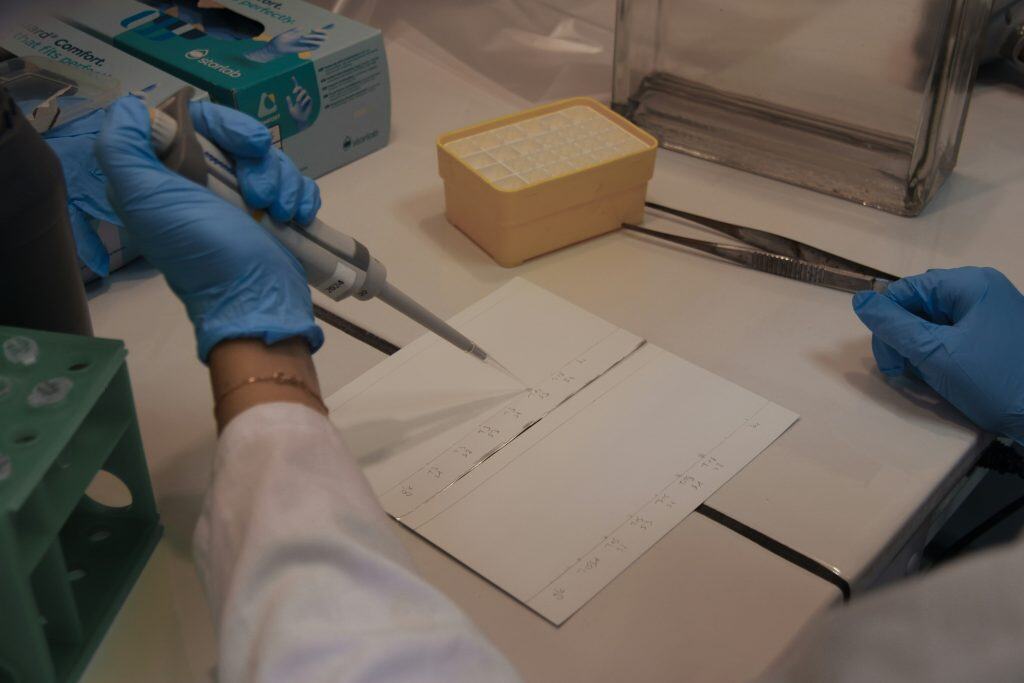
In the United States, any product claiming to kill or repel microbes on surfaces must register with the EPA as a pesticide. This sounds alarming—but it’s simply the regulatory framework. Registration confirms that the product’s claims are supported by submitted efficacy data.
Here’s the critical nuance: EPA registration confirms the manufacturer submitted data. It does not mean the EPA independently verified performance. Always request the actual test reports, not just the registration number.
Unregistered products making antimicrobial claims violate federal law. Beyond legal exposure, specifying unregistered products exposes you to performance failures with no regulatory recourse.
JIS Z 2801 and ISO 22196 Testing Protocols
JIS Z 2801 (Japanese Industrial Standard) and its international equivalent ISO 22196 provide standardized antimicrobial efficacy testing. These protocols measure bacterial reduction on surfaces over a 24-hour contact period under controlled conditions.
A compliant test result reports log reduction values. A 3-log reduction equals 99.9% bacterial reduction—the typical threshold for “antimicrobial” claims. Look for test reports identifying:
- Specific organisms tested (typically Staphylococcus aureus and Escherichia coli)
- Contact duration
- Test laboratory accreditation
- Date of testing
We request JIS Z 2801 or ISO 22196 documentation for every antimicrobial product we specify. Manufacturers with legitimate products provide it readily. Hesitation or excuses signal problems.
Industry-Specific Compliance (Healthcare, Education, Hospitality)
Beyond general antimicrobial certifications, sector-specific requirements apply:
- Healthcare: CDC environmental infection control guidelines, Joint Commission standards, state health department requirements
- Education: State health codes, district wellness policies, Americans with Disabilities Act cleanability requirements
- Hospitality: Brand standards (which increasingly mandate antimicrobial high-touch surfaces), local health department food-contact regulations
- Food Service: FDA Food Code compliance for food-contact surfaces, NSF International certifications
We build compliance matrices for each project type. Antimicrobial claims must align with the specific regulatory environment—a product approved for general commercial use may not meet healthcare facility requirements.
Specification Best Practices for Commercial Interiors
Matching Technology to Touch Frequency and Traffic Patterns
Not every surface needs antimicrobial treatment. Over-specifying wastes budget. Under-specifying creates gaps.
We categorize surfaces by touch frequency:
- High-frequency (50+ touches/day): Door hardware, elevator buttons, reception counters, shared equipment—prioritize proven technologies with continuous action
- Medium-frequency (10–50 touches/day): Conference tables, seating armrests, bathroom fixtures—antimicrobial treatment adds value but may accept shorter-duration technologies
- Low-frequency (<10 touches/day): Wall surfaces, decorative elements, private office furniture—standard materials with good cleanability often suffice
Map your floor plan with touch-frequency zones before selecting antimicrobial products. This exercise reveals where investment delivers the greatest hygiene return.
Coordinating with Cleaning Protocols—Not Replacing Them
This point cannot be overstated: antimicrobial surfaces supplement cleaning. They do not replace it. Every product data sheet confirms this. Every legitimate manufacturer emphasizes it.
Antimicrobial technologies reduce microbial populations between cleanings. They provide a margin of safety. But soiled surfaces—covered in organic matter, dust, or residue—see compromised antimicrobial performance. The technology works on microbes, not dirt.
Coordinate with facility management during specification. Confirm that cleaning frequencies, approved chemicals, and staff training align with antimicrobial material requirements. Some treatments degrade under specific disinfectants. Others require particular cleaning agents to maintain efficacy.
Lifecycle Cost Analysis: Upfront Premium vs. Long-Term Value
Antimicrobial materials typically carry 10% to 30% premiums over standard equivalents. That upfront cost must be weighed against:
- Reduced cleaning chemical and labor costs
- Extended replacement cycles due to better surface preservation
- Lower absenteeism in occupied spaces (documented in healthcare and education settings)
- Marketing and leasing advantages for building owners
- Reduced liability exposure
We’ve run lifecycle analyses on healthcare reception desks where antimicrobial solid surfaces, despite a 25% premium, delivered net savings within four years through reduced deep-cleaning requirements and extended service life.
Common Specification Pitfalls and How to Avoid Them
Years of specifying antimicrobial materials have taught us what goes wrong:
- Assuming all “antimicrobial” products are equivalent: Efficacy varies by orders of magnitude. Always request testing data.
- Specifying applied treatments without maintenance plans: If nobody reapplies the coating in year three, the protection disappears.
- Ignoring chemical compatibility: Some antimicrobial surfaces degrade under bleach-based cleaners that facility teams prefer.
- Forgetting touch-frequency mapping: Spending premium on walls while using standard hardware misses the point entirely.
- Accepting marketing claims without EPA registration verification: This creates legal and performance exposure.
Sector Snapshots—Antimicrobial Applications in Action
Healthcare and Senior Living
Healthcare remains the most demanding antimicrobial environment. Immune-compromised patients, antibiotic-resistant organisms, and regulatory scrutiny create zero tolerance for performance failures.
We worked with a regional health system replacing 340 patient-room headwalls. Specifying copper-alloy grab bars, silver-ion solid surface sinks, and antimicrobial HPL casework reduced healthcare-associated infections on the pilot floor by 22% over 18 months compared to control floors—tracked through the facility’s existing infection surveillance system.
Key healthcare considerations: cleanability with hospital-grade disinfectants, flame-spread ratings, impact resistance, and compatibility with electronic medical equipment.
Corporate and Coworking Environments
Post-pandemic corporate interiors prioritize visible hygiene signals alongside actual performance. Clients want surfaces that look clean and test clean.
We’ve specified antimicrobial laminates for shared desking systems, copper-alloy door hardware at primary circulation points, and antimicrobial textiles for collaboration seating. The combination addresses high-touch surfaces without over-specifying private offices.
Coworking operators particularly value antimicrobial materials as member retention tools. Monthly subscription models mean occupants can leave quickly if they perceive hygiene problems.
Hospitality and Food Service
Hotels and restaurants face dual challenges: guest perception and health-code compliance. Antimicrobial materials address both.
Food-contact surfaces require NSF International certification in addition to general antimicrobial claims. We specify quartz or solid surface countertops with both antimicrobial additives and NSF food-zone ratings for quick-service restaurant ordering counters.
Guest-room high-touch surfaces—remote controls, light switches, desk surfaces, bathroom hardware—represent the primary antimicrobial opportunity in hotels. Several major brands now mandate antimicrobial materials for these touchpoints in design standards.
Education and Public Facilities
Schools present intense touch frequency with limited cleaning staff. Classroom door handles, cafeteria tables, and shared technology equipment accumulate enormous microbial loads.
A K–12 district we worked with piloted copper-alloy door hardware in three elementary schools. Attendance data over two academic years showed a measurable reduction in illness-related absences compared to control schools. The district subsequently standardized copper hardware district-wide.
Public libraries, transit stations, and community centers face similar challenges. Antimicrobial materials in these environments must balance efficacy with durability under heavy use and sometimes inconsistent maintenance.
Maintenance Realities—Keeping Antimicrobial Surfaces Effective
Approved Cleaning Agents and Frequency Guidelines
Every antimicrobial product comes with cleaning recommendations. Ignoring them compromises performance.
Common compatibility issues:
- Bleach-based cleaners can degrade silver-ion treatments over time
- Abrasive cleaners scratch surfaces, reducing contact area for antimicrobial action
- Quaternary ammonium disinfectants may conflict with quat-based antimicrobial treatments (competitive binding)
- Oil-based cleaners leave residue films that block antimicrobial surface contact
We include cleaning protocol specifications in our project documentation. This ensures facility teams receive approved cleaning agents and frequencies alongside the furniture and finishes.
Signs of Degradation and When to Reapply or Replace
Applied antimicrobial treatments degrade visibly: coating wear patterns, increased staining, and surface texture changes. Built-in technologies degrade invisibly, requiring periodic testing to confirm continued efficacy.
For applied treatments, we recommend retesting every 12 to 18 months in high-traffic areas. For built-in technologies, manufacturer warranties typically guarantee efficacy for the product’s expected service life—verify warranty terms during specification.
When testing reveals degraded performance, the decision becomes reapplication versus replacement. Applied coatings can often be refreshed at 30% to 50% the cost of replacement. Built-in technologies require full material replacement.
The Road Ahead—Emerging Technologies and Market Trends
The antimicrobial materials sector continues evolving. Technologies worth watching:
- Graphene-enhanced surfaces: Early research shows antimicrobial properties with exceptional durability. Commercial products remain limited but promising.
- Probiotic surface treatments: Intentionally colonizing surfaces with beneficial bacteria to outcompete pathogens. Conceptually intriguing; efficacy data remains sparse.
- Self-cleaning photocatalytic systems: Improved formulations that function in lower light conditions expand application potential.
- Integrated sensor systems: Surfaces embedded with microbial detection sensors that signal cleaning needs in real-time.
We expect continued commoditization of current technologies. Silver-ion and copper-based systems will become standard features rather than premium options within five years. The differentiation will shift toward durability, aesthetics, and integrated smart-building capabilities.
FAQs About Antimicrobial Surface Materials
How long do antimicrobial surfaces remain effective? Built-in technologies typically last the material’s full service life—often 10 to 15 years for laminates and solid surfaces. Applied coatings may require reapplication every one to five years depending on traffic and cleaning intensity.
Do antimicrobial surfaces eliminate the need for regular cleaning? No. Antimicrobial surfaces reduce microbial populations between cleanings but don’t remove dirt, oils, or organic matter. Regular cleaning remains essential for both hygiene and antimicrobial performance.
What certifications should I require for antimicrobial products? At minimum, verify EPA registration (for U.S. products) and request JIS Z 2801 or ISO 22196 test reports. Healthcare projects may require additional CDC guideline compliance and Joint Commission alignment.
Are antimicrobial surfaces safe for occupants and the environment? EPA-registered antimicrobial surfaces undergo safety review as part of the registration process. Most commercial technologies use silver or copper ions with long safety track records. Verify specific product safety data sheets for sensitive applications.
Do antimicrobial surfaces work against viruses? Most antimicrobial surface technologies target bacteria. Some copper alloys demonstrate antiviral properties, and certain formulations carry EPA-registered viral claims. Always verify specific organism coverage in test documentation rather than assuming broad efficacy.