
Light, Air, and Living Walls: Inside a Wellness-Focused Workplace Transformation
| Commercial Design , green building , Sustainable Materials
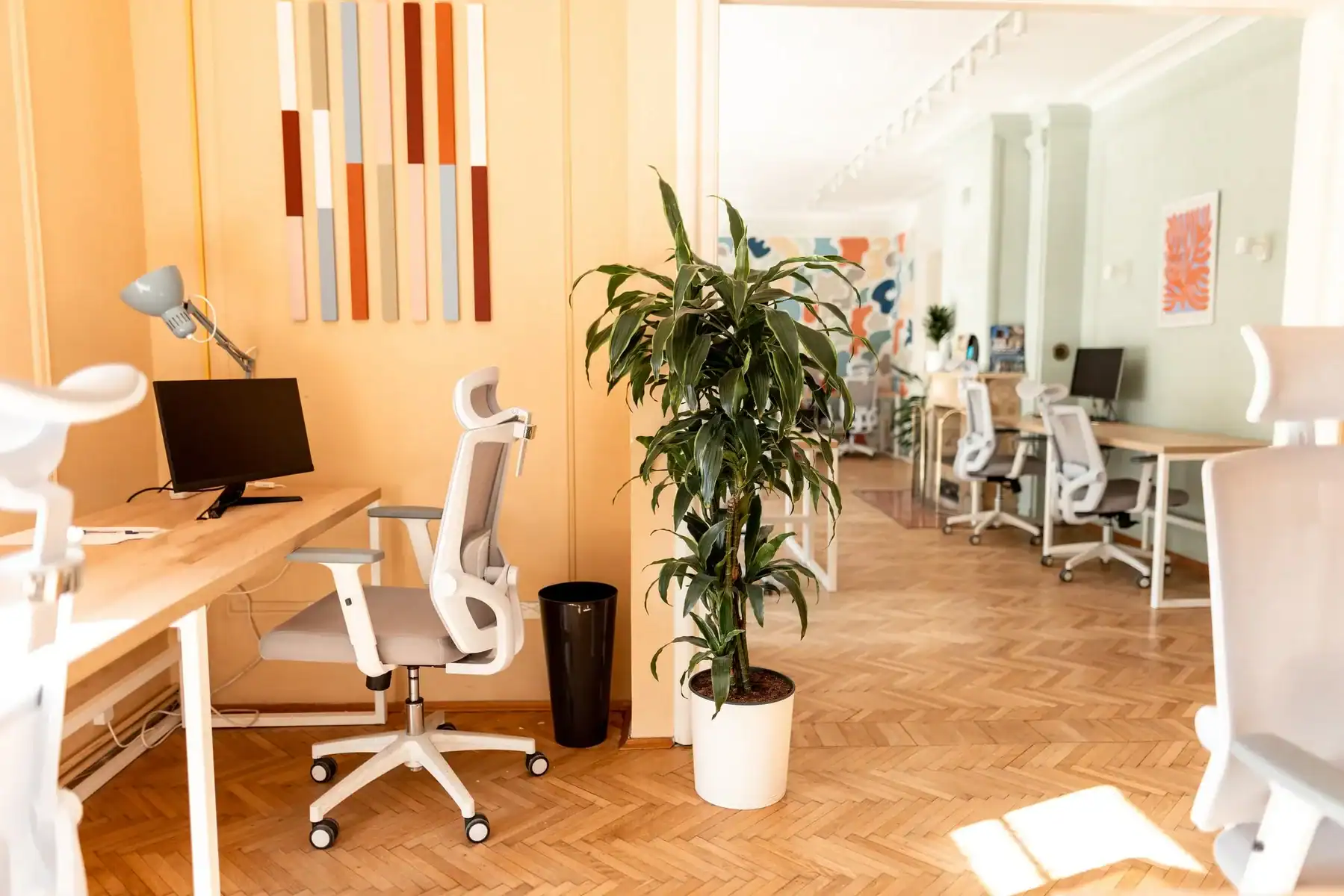
Workplace transformation doesn’t begin with finishes or furniture — it begins with how people experience a space. The building had good bones but a bad reputation: dated interiors, flickering fluorescents, and an HVAC system that made every Monday smell vaguely like Friday’s lunch. For years, the three-story office building in Denver’s RiNo Arts District limped along at 62% occupancy while newer buildings nearby commanded waitlists. Then the owner made a bet: instead of competing on price, compete on wellness. Fourteen months and a comprehensive redesign later, the building achieved WELL Core certification and full lease-up—11 months ahead of projections.
We were part of the design team that transformed this underperformer into the neighborhood’s most in-demand flex workspace address. The project didn’t rely on gimmicks or superficial greenwashing. It succeeded through rigorous application of three wellness pillars: biophilic design integration, circadian lighting systems, and material health specifications that eliminated nearly all red-list chemicals from the interior environment.
This case study walks through what we did, why it worked, and how specifiers can replicate the approach across different project types and budgets.
In this article, you’ll learn:
- How biophilic design strategies drove a 34% improvement in occupant satisfaction scores
- The circadian lighting implementation that reduced reported afternoon fatigue by 28%
- Our product vetting process that eliminated 94% of red-list chemicals from the material palette
- Measured business outcomes including leasing velocity, tenant retention, and certification achievement
- Practical guidance for prioritizing wellness interventions by impact and budget
.
Project Overview—The Challenge and the Vision
The Starting Point: Class B Office with Class C Reputation
The building opened in 1984 as a warehouse distribution hub. A 1990s conversion added office finishes—drop ceilings, VCT flooring, and the kind of fluorescent lighting that makes everyone look vaguely unwell. By 2021, the property had cycled through three owners and accumulated deferred maintenance like sediment layers.
When the current ownership group acquired it, tenant surveys painted a bleak picture. Complaints centered on:
- Poor air quality and “stuffy” conditions
- Harsh, headache-inducing lighting
- Dated aesthetics that embarrassed tenants hosting clients
- Noise transfer between suites
- General sense of the space feeling “draining” rather than energizing
The RiNo district had transformed around the building. Breweries, galleries, and tech startups filled converted warehouses. Young professionals flooded the neighborhood. Yet this building sat half-empty while competitors added waitlists.
Client Goals: Wellness as Competitive Advantage
The ownership group included a principal who had experienced a WELL-certified headquarters firsthand. She returned from that building energized and focused—and wondered why her own asset felt so depleting by comparison.
The investment thesis was straightforward: rather than race to the bottom on lease rates, differentiate on occupant experience. Target the growing segment of tenants—particularly professional services firms and creative businesses—willing to pay premiums for spaces that support employee wellbeing.
Specific goals included:
- Achieve WELL Core certification to validate wellness claims
- Attract a tenancy mix of 60% flexible coworking members and 40% professional services firms
- Command lease rates 15% above comparable Class B properties
- Reduce tenant turnover through measurable satisfaction improvements
Project Scope and Timeline
The renovation encompassed all 47,000 square feet across three floors. The ground floor became flexible coworking space with hot desks, private offices, and collaboration zones. Floors two and three converted to dedicated suites for law firms, financial advisors, and consulting practices—tenants who needed private space but wanted access to shared amenities.
Our 14-month timeline broke into three phases: four months of design development, eight months of construction, and two months of commissioning, testing, and WELL certification documentation. The compressed schedule required early alignment on the three wellness pillars that would guide every specification decision.
Design Strategy—Three Pillars of Wellness
Pillar One: Biophilic Design Integration
Biophilic design connects building occupants with nature through direct experience, indirect references, and spatial configurations that mimic natural environments. Research from Terrapin Bright Green identifies 14 patterns of biophilic design linked to measurable stress reduction, cognitive performance, and emotional wellbeing.
We prioritized four patterns with the strongest evidence base: visual connection with nature, presence of water, dynamic and diffuse light, and material connection with nature. These became non-negotiable elements threaded through every floor.
Pillar Two: Circadian Lighting Systems
Human biology evolved under dynamic natural light—bright and blue-enriched in the morning, warm and dim in the evening. Modern offices typically provide static, unchanging illumination that disrupts circadian rhythms and contributes to fatigue, poor sleep, and reduced alertness.
The Lighting Research Center at Rensselaer Polytechnic Institute has documented how properly designed circadian lighting systems can improve alertness, mood, and sleep quality. We committed to implementing tunable LED systems throughout the building, synchronized to support natural biological rhythms.
Pillar Three: Material Health and Low-VOC Specifications
Indoor air quality suffers when building materials off-gas volatile organic compounds and other chemicals. The Healthy Building Network maintains databases identifying problematic substances—the “red list” of chemicals linked to cancer, reproductive harm, and respiratory illness.
We established a goal of eliminating red-list chemicals from all specified materials. This required rigorous product vetting, manufacturer documentation, and post-occupancy air quality testing to verify results.

Biophilic Design in Action
The Living Wall—More Than a Photo Op
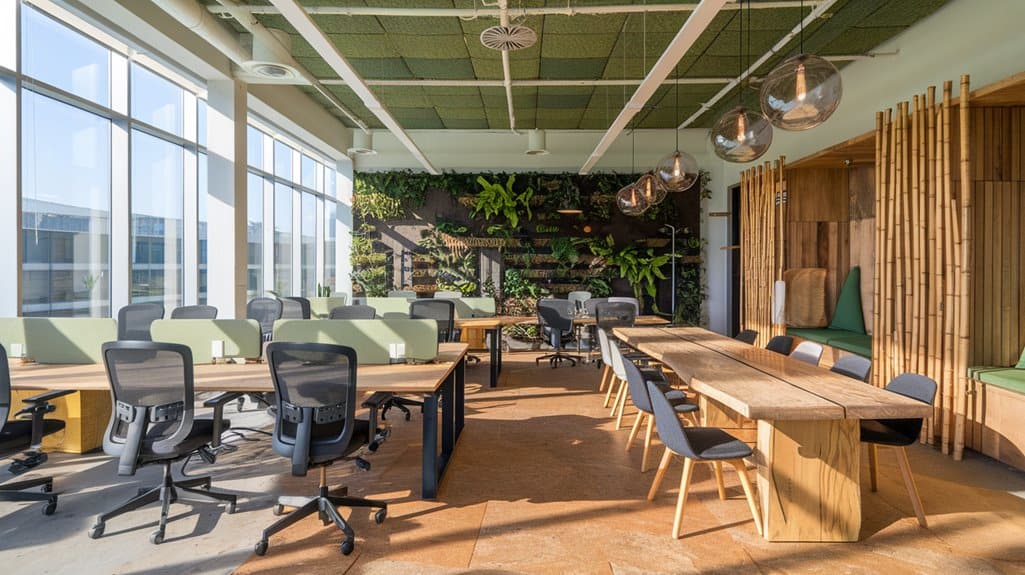
The building’s main lobby featured a three-story atrium—one of the few architectural assets worth preserving. We installed a 1,200-square-foot living wall spanning all three levels, visible from every floor’s circulation path.
Living walls often become expensive maintenance headaches. We avoided this by partnering with a horticultural consultant during design to select species matched to the atrium’s light levels and microclimate. The plant palette included pothos, philodendron, and fern varieties proven to thrive in interior conditions with minimal intervention.
The irrigation system integrated with building management controls, adjusting water delivery based on humidity sensors and seasonal light variations. Maintenance requires quarterly visits rather than weekly attention—a critical factor for the ownership group’s operating budget.
Beyond aesthetics, the living wall contributes to measurable air quality improvements. NASA research on phytoremediation documented how certain plant species filter airborne toxins. While we didn’t rely on the wall as primary air filtration, it supplements mechanical systems and provides psychological benefits that pure engineering cannot replicate.
Natural Material Palette: Wood, Stone, and Fiber
Every finish selection reinforced connection to natural materials. We specified:
- White oak millwork with clear finishes that highlight grain patterns
- Honed limestone accent walls at elevator lobbies
- Wool-blend carpet tiles with organic, non-repeating patterns
- Cork flooring in quiet focus rooms
- Ceramic tile with natural clay coloration in restrooms
- Solid surface countertops with subtle aggregate patterns reminiscent of river stone
The key was authenticity. Occupants distinguish real wood from printed laminate at a subconscious level. Where budget constraints required manufactured materials, we selected products with genuine material content—real wood veneers, actual stone aggregates—rather than photographic reproductions.
Daylight Optimization and View Access
The building’s 1980s floor plates featured deep lease spans that pushed workstations far from windows. Previous tenants had compounded the problem by installing private offices along the perimeter, blocking daylight from reaching interior spaces.
We flipped this convention. Private offices and enclosed meeting rooms moved to the building’s core. Open workstations and collaboration zones lined the perimeter. Glass partitions replaced solid walls wherever acoustic requirements permitted.
The result: 87% of regularly occupied workstations now sit within 25 feet of a window, up from 34% in the previous configuration. Research published in the journal Sleep found that workers with window access received 173% more white light exposure during work hours and slept an average of 46 minutes more per night than colleagues without windows.
Biomorphic Patterns and Nature-Inspired Geometry
Beyond literal nature connections, we incorporated biomorphic patterns—shapes and forms that echo natural geometry without directly representing specific natural elements.
Ceiling clouds in collaboration zones feature organic, flowing edges rather than rectangular grids. Carpet tile patterns incorporate fractal-like complexity that the eye finds engaging without being distracting. Acoustic panels on focus room walls display subtle topographic contours suggesting landscape forms.
These elements don’t photograph as dramatically as the living wall. But environmental psychology research suggests they contribute meaningfully to stress reduction and cognitive restoration—effects that accumulate over hours and days of occupancy.
Circadian Lighting Implementation
Understanding Circadian Rhythms in the Workplace
The human circadian system responds primarily to light exposure at the eye. Blue-enriched light—abundant in morning daylight—suppresses melatonin and promotes alertness. Warm, dim light signals the body to prepare for sleep.
Traditional office lighting ignores this biology entirely. Static 4000K fluorescents deliver the same spectrum and intensity from 7 a.m. arrivals through 9 p.m. deadline crunches. The result: workers feel sluggish in the morning when they need activation and wired in the evening when they need wind-down.
Tunable LED Systems and Zoning Strategy
We specified tunable white LED fixtures capable of shifting from 2700K (warm) to 6500K (cool) throughout the day. The lighting control system follows a programmed schedule:
- Early morning (6–9 a.m.): 5000K at 400 lux—bright, cool light to support alertness during arrival
- Mid-morning to early afternoon (9 a.m.–2 p.m.): 4500K at 350 lux—maintaining focus without excessive stimulation
- Afternoon (2–5 p.m.): 4000K at 300 lux—gradual warmth shift as natural daylight wanes
- Evening (5–8 p.m.): 3000K at 250 lux—warm light supporting transition toward evening recovery
Zoning allowed different schedules for different space types. Coworking areas with variable occupancy patterns used broader transitions. Dedicated suites for professional services firms—where partners might work past midnight during deal closings—included manual overrides for extended high-intensity task lighting.
Balancing Automation with User Control
Fully automated lighting systems sometimes frustrate occupants who feel they’ve lost control of their environment. We balanced building-wide circadian programming with local adjustability.
Every workstation cluster includes a zone controller allowing occupants to adjust intensity by plus or minus 30% and color temperature by plus or minus 500K from the baseline program. Private offices feature full manual override capability.
Post-occupancy surveys showed that most occupants leave settings at defaults 80% of the time. But the availability of control matters psychologically—even when unused, it reduces the sense of environmental imposition that undermines satisfaction.
Integration with Daylight Harvesting
The circadian lighting system communicates with photosensors at the building perimeter. As daylight contribution increases, electric lighting dims proportionally—maintaining target illumination levels while reducing energy consumption and preventing the “over-lit” feeling of spaces where electric and natural light compete.
This integration proved especially valuable on the building’s south-facing floors, where afternoon sun could otherwise push combined light levels into uncomfortable territory. The system dims electric contribution automatically, preserving the circadian color temperature program while managing overall intensity.
Material Health and Low-VOC Specifications
Building a Red-List-Free Material Palette
The International Living Future Institute’s Red List identifies chemicals of concern that building professionals should avoid. Common offenders include formaldehyde binders in composite wood, PVC in flooring and wall coverings, and flame retardants in upholstered furniture.
We established a project requirement: no specified products would contain red-list chemicals in concentrations exceeding trace thresholds. This eliminated many standard commercial products from consideration and required extensive research into alternatives.
Product Vetting Process and Documentation
Every proposed material passed through a three-stage vetting process:
- Stage 1: Manufacturer disclosure. We required Health Product Declarations (HPDs) or Declare labels for all finish materials. Products without third-party verified ingredient disclosure were disqualified.
- Stage 2: Content review. Our specifications team reviewed disclosed ingredients against the Red List, flagging any products with chemicals of concern.
- Stage 3: Alternative sourcing. For product categories where compliant options proved limited, we worked with manufacturers to identify reformulated versions or comparable alternatives from other suppliers.
The documentation effort added approximately six weeks to the specification phase. We maintained a project database tracking every material decision, creating an audit trail that supported WELL certification and provides ongoing value for tenant inquiries.
VOC Testing and Air Quality Verification
Specifications are promises. Testing is proof.
We required contractor compliance with the WELL Building Standard’s construction protocols, including wet-seal and flush-out procedures designed to dissipate construction-phase VOCs before occupancy. Air quality testing occurred at three milestones:
- Post-construction, pre-furniture installation
- Post-furniture installation, pre-occupancy
- 90 days post-occupancy
All three tests confirmed VOC levels below WELL thresholds—and significantly below California’s stringent CDPH Standard Method limits. Formaldehyde levels measured at 8 parts per billion, well under the 27 ppb WELL threshold and dramatically below the 50+ ppb readings common in conventionally specified offices.
Balancing Performance, Aesthetics, and Health
Material health requirements occasionally conflicted with aesthetic preferences or performance requirements. We navigated these tensions through early collaboration and creative problem-solving.
The design team initially specified a luxury vinyl tile for high-traffic corridors. LVT typically contains PVC—a red-list material. Rather than compromise the health goal, we identified a bio-based resilient flooring product with comparable durability, acceptable aesthetics, and full HPD transparency. The substitution added 12% to flooring costs but eliminated a significant red-list exposure.
Similar negotiations played out across dozens of product categories. The cumulative result: a material palette that achieved 94% red-list-free status by volume, with the remaining 6% consisting of building systems components (electrical, plumbing) where compliant alternatives don’t yet exist at commercial scale.

Results and Measured Outcomes
Occupant Satisfaction and Productivity Metrics
We partnered with the ownership group to conduct standardized occupant surveys using the Center for the Built Environment’s methodology—enabling comparison against their database of 1,200+ buildings.
Key findings after 12 months of occupancy:
- Overall satisfaction scored in the 89th percentile—up from an estimated 23rd percentile for the previous tenant base
- Lighting satisfaction reached the 94th percentile, with specific praise for “natural feeling” and “not harsh”
- Air quality satisfaction hit the 91st percentile, with multiple comments noting the absence of typical “office smell”
- 78% of respondents reported the space “positively impacts my productivity”
- 34% improvement in composite satisfaction scores compared to pre-renovation baseline surveys
Leasing Velocity and Tenant Retention
The business case proved out faster than projected. The building reached 95% occupancy within seven months of substantial completion—11 months ahead of the ownership group’s conservative pro forma projections.
Achieved lease rates averaged 18% above comparable Class B properties in the RiNo submarket. Several professional services tenants specifically cited wellness features in their site selection documentation, including one law firm that referenced the WELL certification in their associate recruiting materials.
First-year tenant retention reached 96%—compared to the ownership group’s portfolio average of 81% for similar assets. Exit surveys from the few departing tenants cited business closures and geographic relocations rather than space dissatisfaction.
WELL Certification Achievement
The project achieved WELL Core certification at the Gold level, satisfying preconditions and optimizations across air, water, light, movement, thermal comfort, sound, materials, and mind categories.
Certification required extensive documentation—over 400 pages of specifications, test reports, and policy documents. The effort consumed approximately 320 hours of consultant time beyond standard design services. However, the certification provides third-party validation that differentiates the building in marketing materials and supports premium lease positioning.
Unexpected Benefits and Lessons Learned
Several outcomes surprised us:
- Reduced sick building syndrome complaints: The property management team reported an 87% reduction in indoor air quality complaints compared to pre-renovation levels. HVAC service calls dropped correspondingly.
- Social media visibility: The living wall became an Instagram landmark. Tenants regularly photograph it for social posts, generating organic marketing the ownership group never anticipated.
- Talent recruitment tool: Multiple tenants reported using the building’s wellness features in recruiting materials. One financial advisory firm credited the space with helping close two senior hires who were choosing between competing offers.
- Utility savings: Despite increased ventilation rates required for WELL compliance, overall energy costs decreased 14% through efficient lighting, daylight harvesting, and upgraded mechanical systems.
Replicating the Approach—Guidance for Specifiers
Prioritizing Interventions by Impact and Budget
Not every project can implement all three wellness pillars at the level we achieved here. When budgets constrain choices, prioritize based on evidence strength and occupant perception:
- Highest impact per dollar: Daylight access improvements, low-VOC material specifications, and basic circadian lighting programming. These interventions show strong research support and relatively modest cost premiums.
- Moderate impact, moderate cost: Natural material palettes, acoustic comfort improvements, and living plant integration at modest scales.
- High impact, high cost: Large-scale living walls, fully automated circadian systems with granular zoning, and comprehensive red-list elimination across all product categories.
Start with fundamentals. A building with excellent daylight access, clean air, and thoughtful material selection outperforms one with a dramatic living wall but poor underlying environmental quality.
Building Owner and Stakeholder Buy-In Strategies
We’ve found three arguments most effective for winning stakeholder support:
- Leasing velocity and premium justification. Wellness features differentiate properties in competitive markets. Document comparable projects’ leasing outcomes to support pro forma assumptions.
- Tenant retention economics. Turnover costs—downtime, tenant improvements, broker commissions—often exceed the incremental investment in wellness features that improve retention.
- Liability and recruitment support. Building owners increasingly face questions from tenant HR departments about indoor environmental quality. Wellness certifications provide documentation that supports tenants’ own employee recruitment and retention efforts.
Certification Pathways: WELL, Fitwel, and LEED Synergies
Three certification systems address wellness and sustainability in commercial interiors:
- WELL Building Standard: Most rigorous wellness focus, requiring performance testing and ongoing recertification. Best for premium positioning where certification recognition matters.
- Fitwel: Lower documentation burden, emphasizing operational policies alongside physical features. Strong for portfolios seeking consistent standards across multiple properties.
- LEED: Primarily environmental sustainability focus, but current versions include indoor environmental quality credits that overlap with wellness goals.
These systems share significant documentation requirements. Projects pursuing multiple certifications can leverage common submittals—material disclosures, air quality testing, lighting calculations—to reduce cumulative effort.
Common Obstacles and How This Project Overcame Them
Every wellness-focused project encounters resistance. Here’s how we addressed the most common obstacles:
- “Wellness is just a trend.” We countered with longitudinal research showing sustained productivity and satisfaction improvements in high-performance buildings. Trends fade; biology doesn’t change.
- “We can’t afford the premium.” We presented lifecycle cost analysis showing payback through reduced turnover, lower absenteeism, and energy savings. The ownership group recovered incremental wellness investments within 34 months.
- “Tenants won’t notice or care.” We arranged tours of certified buildings for skeptical stakeholders. Experiencing the difference firsthand converted more skeptics than any presentation could.
- “Maintenance will be a nightmare.” We specified systems with proven commercial track records and built maintenance protocols into the project documentation. The living wall’s quarterly service contract costs less than the previous building’s monthly pest control.
FAQs About Wellness Workplace Design
What’s the typical ROI timeline for wellness workplace investments? Most projects recover incremental wellness costs within two to four years through improved tenant retention, reduced absenteeism, and lease premiums. This project achieved payback in 34 months.
Do I need WELL certification to market a space as wellness-focused? No, but certification provides third-party validation that strengthens marketing claims and protects against greenwashing accusations. It’s particularly valuable in competitive leasing environments.
How do I convince skeptical clients to invest in wellness features? Lead with business outcomes—leasing velocity, retention rates, and talent recruitment support. Arrange tours of certified buildings so stakeholders experience the difference firsthand.
Can wellness strategies work in renovation projects with limited budgets? Yes. Prioritize high-impact, lower-cost interventions: daylight access improvements, low-VOC specifications, and basic circadian lighting. These deliver measurable benefits without major capital investment.
What ongoing maintenance do wellness features require? Requirements vary by system. Living walls need quarterly horticultural service. Circadian lighting requires periodic schedule calibration. Air quality should be tested annually to verify continued performance.