
The Wood Question: Comparing TFL, Veneer, and Solid Wood for Healthier Interiors
Healthier interiors don’t always start with the materials that feel the most virtuous. Solid wood does. There’s something deeply satisfying about specifying “real” material—the weight of it, the grain patterns, the story of trees becoming furniture. That satisfying feeling doesn’t always survive contact with lifecycle data, VOC testing, and the reality of what happens when adhesives and finishes enter the picture.
We’ve spent years navigating the wood alternatives conversation with clients who arrive with strong opinions and incomplete information. The designer who insists on solid wood for sustainability reasons. The facilities manager who assumes laminate means “cheap.” The sustainability consultant who focuses on forest certifications while ignoring what happens after the material reaches the jobsite.
This comparison cuts through the assumptions. We’ll examine thermally fused laminate, wood veneer, and solid wood through the lens that matters most for occupied interiors: material health and indoor air quality. Then we’ll layer in environmental sustainability, performance by application, aesthetics, and cost. By the end, you’ll have a decision framework that matches material to purpose rather than defaulting to instinct.
In this article, you’ll learn:
- Why “natural” origin doesn’t guarantee healthier indoor air—and where VOCs actually come from in wood products
- How modern TFL achieves cleaner emissions profiles than traditionally finished solid wood
- Performance trade-offs across casework, furniture, wall paneling, and architectural woodwork applications
- The certifications that separate marketing claims from verified material health
- A three-material toolkit approach that balances sustainability, performance, and design intent
The Sustainability Question Nobody’s Asking Correctly
Why “Natural” Doesn’t Automatically Mean “Better”
Here’s the uncomfortable truth: a solid wood cabinet can off-gas more formaldehyde than its TFL equivalent. Not because wood itself is problematic—it’s not—but because of everything that happens between the sawmill and the finished installation.
Solid wood requires adhesives for panel glue-ups and joinery. It demands finishes to protect against moisture and wear. Those adhesives and finishes often contain the very compounds that sustainability-minded specifiers are trying to avoid. Meanwhile, factory-produced TFL undergoes controlled manufacturing processes with emissions testing built into quality assurance.
We’re not arguing that TFL is universally superior. We’re arguing that the comparison requires nuance. Origin matters less than outcome. What ends up in the occupied space—and what occupants breathe—should drive the conversation.
Reframing the Comparison: From Origin to Outcome
Traditional sustainability thinking focuses upstream: Where did the material come from? Was the forest responsibly managed? How far did it travel?
These questions matter. But for interior environments, downstream questions matter more: What chemicals will this material release over its service life? How does it perform under real-world cleaning and maintenance? What happens at end-of-life?
We’ve adopted an outcome-focused framework that evaluates materials across four dimensions:
- Material health and indoor air quality impact
- Environmental sustainability across the full lifecycle
- Performance suitability for the intended application
- Economic viability from first cost through replacement
This framework often produces surprising conclusions. Materials with excellent upstream stories sometimes fail downstream. Engineered alternatives with less romantic origins sometimes deliver superior occupied-environment outcomes.
What This Comparison Covers (and What It Doesn’t)
We’re comparing three material categories for interior woodwork applications:
- Solid wood: Lumber milled from logs, used as primary structural and finish material
- Wood veneer: Thin wood slices adhered to substrate panels (typically particleboard, MDF, or plywood)
- Thermally fused laminate (TFL): Decorative paper impregnated with melamine resin, fused directly to substrate panels under heat and pressure
We’re not covering high-pressure laminate (HPL), reconstituted veneers, or solid surface materials—each worthy of separate analysis. And we’re focusing on commercial interior applications: casework, furniture, wall paneling, and architectural millwork.

Understanding the Three Contenders
Solid Wood—The Traditional Standard
Solid wood needs little introduction. Hardwoods like oak, walnut, maple, and cherry have defined quality woodwork for centuries. The material offers genuine natural variation, the ability to be refinished multiple times, and an authenticity that manufactured alternatives can only approximate.
Commercial applications typically use solid wood for:
- High-end custom furniture and executive casework
- Feature millwork elements (reception desks, feature walls, stair components)
- Restoration and historic preservation projects
- Applications requiring complex carved or turned details
The material’s limitations are equally real. Solid wood moves with humidity changes—expanding, contracting, potentially warping or cracking. It requires skilled installation and ongoing environmental control. And it carries premium pricing that often restricts its use to accent applications rather than full-scale deployment.
Wood Veneer—The Middle Ground
Veneer technology slices thin wood layers (typically 1/42” to 1/8” thick) and bonds them to stable substrates. This approach delivers genuine wood aesthetics while reducing material consumption and improving dimensional stability.
Quality veneer work is indistinguishable from solid wood to most observers. The grain is real. The color variation is real. Only close inspection of edges and cuts reveals the substrate beneath.
Commercial veneer applications include:
- Architectural wall paneling and column wraps
- Conference tables and executive furniture
- Casework fronts and drawer faces
- Door skins and frames
Veneer’s sustainability story centers on resource efficiency—a single log yields dramatically more surface coverage as veneer than as solid lumber. But that story complicates when we examine adhesive systems and substrate materials, which we’ll address in the material health section.
Thermally Fused Laminate (TFL)—The Engineered Alternative
TFL represents a fundamentally different approach. Decorative paper—printed with wood grain patterns, solid colors, or abstract designs—is saturated with melamine resin and fused directly to particleboard or MDF substrate under heat and pressure. The result is a monolithic panel with the decorative surface integral to the substrate.
The manufacturing process creates several inherent advantages:
- No field-applied adhesives required for surface bonding
- No topcoat finishes needed—the melamine surface is the finish
- Consistent appearance without natural material variation
- Controlled factory conditions with emissions testing
TFL dominates commercial casework, systems furniture, and worksurface applications. Its combination of durability, consistency, and cost-effectiveness makes it the default choice for high-volume interior woodwork.
Specialists like KML Designer Finishes offer extensive TFL collections with wood-grain patterns sophisticated enough to satisfy design intent while delivering the performance and material health advantages of engineered manufacturing.
Material Health and Indoor Air Quality—The Hidden Differentiator
Where VOCs Actually Come From in Wood Products
Volatile organic compounds in wood products originate from four primary sources:
- Natural wood emissions: All wood species release some VOCs naturally, including terpenes and aldehydes. These generally dissipate within weeks of milling.
- Adhesive systems: Urea-formaldehyde, phenol-formaldehyde, and other resin systems used in panel products and joinery release formaldehyde over extended periods.
- Finish coatings: Stains, sealers, lacquers, and topcoats contain solvents and reactive compounds that off-gas during curing and continue at lower levels thereafter.
- Substrate panels: Particleboard and MDF used as core materials in veneered and laminated products may contain formaldehyde-based binders.
The critical insight: solid wood’s natural emissions are typically the least concerning component. The adhesives and finishes applied to solid wood often dominate the emissions profile.
Solid Wood’s Finish Problem
Unfinished solid wood has minimal long-term VOC concerns. But unfinished solid wood rarely appears in commercial interiors. Real-world installations require protection against moisture, staining, and wear.
Traditional lacquer and conversion varnish finishes—the workhorses of commercial wood finishing—contain significant VOC content. EPA data on architectural coatings documents VOC levels ranging from 350 to 680 grams per liter for conventional lacquers.
Low-VOC and water-based alternatives exist but often compromise durability or require more coats to achieve equivalent protection. We’ve seen specification language require “low-VOC finishes” without understanding that field-applied waterborne finishes may not withstand commercial cleaning chemicals.
The finish problem compounds in renovation projects. Refinishing solid wood casework—a commonly cited advantage of the material—reintroduces VOCs to occupied spaces. Sanding releases accumulated dust. New finishes require curing time. Occupants either endure the exposure or vacate during the work.
Veneer’s Adhesive and Substrate Variables
Wood veneer’s material health profile depends heavily on what lies beneath the surface.
Adhesive systems for veneer application range from formaldehyde-based options (urea-formaldehyde, phenol-formaldehyde) to formaldehyde-free alternatives (PVA, soy-based, polyurethane). Specifying low-emitting adhesives is possible but requires explicit documentation—many fabricators default to conventional systems unless directed otherwise.
Substrate panels present similar variability. Standard particleboard and MDF historically used urea-formaldehyde binders that continue releasing formaldehyde for years. Compliant alternatives meeting CARB Phase 2 standards dramatically reduce emissions but cost more and aren’t universal.
Veneer also typically requires finish coatings, introducing the same concerns as solid wood finishing. Some manufacturers offer pre-finished veneer panels with factory-applied, UV-cured coatings that minimize field VOC exposure—but these limit customization and add handling complexity.
TFL’s Factory-Controlled Advantage
TFL sidesteps several material health concerns through its manufacturing process:
- No field-applied surface adhesives: The decorative surface fuses to the substrate during manufacturing. Installation requires only edge treatments and mechanical fastening.
- No topcoat finishes: The melamine surface is inherently sealed and durable. No stains, sealers, or lacquers required.
- Controlled substrate quality: Reputable TFL manufacturers use compliant substrates and test finished panels for emissions before shipping.
- Documented performance: Factory testing produces consistent, verifiable emissions data rather than variable field conditions.
This doesn’t make TFL automatically superior—substrate quality varies between manufacturers, and some decorative papers and resins perform better than others. But the manufacturing model allows for controlled conditions and third-party verification that field-finished materials can’t match.
Certifications That Matter: CARB, NAF, ULEF, and Greenguard
Navigating material health claims requires understanding the certification landscape:
- CARB Phase 2: California Air Resources Board regulations set formaldehyde emission limits for composite wood products sold in California—effectively the national standard since major manufacturers comply universally. This is baseline compliance, not distinction.
- NAF (No Added Formaldehyde): Products manufactured without formaldehyde-containing resins in the panel production process. Requires third-party verification.
- ULEF (Ultra-Low Emitting Formaldehyde): Products meeting emission limits significantly below CARB Phase 2 thresholds. Also requires verification.
- Greenguard/Greenguard Gold: UL’s certification program tests finished products for total VOC emissions, not just formaldehyde. Gold certification meets stricter limits suitable for schools and healthcare facilities.
We require Greenguard Gold certification for healthcare and education projects. For general commercial work, NAF or ULEF certification on panel products provides meaningful differentiation beyond baseline CARB compliance.
Environmental Sustainability Beyond the Surface
Forest Resource Efficiency and Waste Reduction
A single log converted to solid lumber yields dramatically less usable material than the same log processed for veneer or panel substrates.
Solid lumber recovery rates typically range from 40% to 60%—the remainder becomes sawdust, chips, and waste. Veneer slicing recovers more surface area per log. Panel substrates utilize wood chips, sawdust, and residuals that would otherwise become waste or low-value fuel.
From a pure resource efficiency standpoint, engineered wood products stretch forest resources further than solid lumber. A forest managed for veneer and panel production serves more end uses than one managed for dimensional lumber alone.
Carbon Footprint and Lifecycle Considerations
Lifecycle assessment data complicates simple sustainability narratives. Research published by the Consortium for Research on Renewable Industrial Materials documents carbon impacts across wood product categories.
Solid wood’s carbon story includes:
- Carbon sequestered in the wood itself (positive)
- Forest management and harvesting impacts (variable)
- Transportation from forest to mill to fabricator to jobsite (typically higher than engineered products due to lower processing consolidation)
- Field finishing emissions and energy use (often overlooked)
Engineered products concentrate manufacturing impacts but often reduce transportation complexity and eliminate field finishing energy and emissions.
No universal winner emerges. Project-specific factors—source locations, transportation distances, finishing requirements—determine actual carbon outcomes.
End-of-Life and Circular Economy Potential
Solid wood offers theoretical advantages at end-of-life: it can be refinished, repurposed, or eventually composted. Reality proves messier. Finished solid wood contains coatings that complicate composting. Contaminated or mixed wood waste often ends up in landfills regardless of material origin.
TFL and veneered panels face recycling challenges due to mixed material composition. Some manufacturers accept post-consumer panels for recycling into new substrates, but infrastructure remains limited.
The most impactful end-of-life strategy for all wood products is extended service life. Durable materials that resist damage and remain aesthetically acceptable longer delay replacement and its associated environmental impacts.
Certification Pathways: FSC, EPDs, and Declare Labels
Environmental certifications provide verification pathways:
- FSC (Forest Stewardship Council): Chain-of-custody certification traces wood fiber from responsibly managed forests through manufacturing to finished product. Available for solid wood, veneer, and panel substrates.
- Environmental Product Declarations (EPDs): Standardized lifecycle assessment documents following ISO 14025. Increasingly available for panel products; less common for solid wood due to variability.
- Declare Labels: Living Future Institute’s ingredient disclosure program identifies material contents and red-list chemical status. Growing adoption among progressive manufacturers.
We recommend FSC certification as a baseline for all wood products. EPDs provide additional depth for projects pursuing LEED or other rating systems.
Performance Comparison by Application
Casework and Cabinetry
Commercial casework demands durability, cleanability, and cost-effectiveness across hundreds or thousands of square feet. TFL dominates this application category for good reason.
TFL advantages for casework:
- Melamine surfaces resist scratching, staining, and moisture better than most wood finishes
- Consistent appearance across large installations without grain matching challenges
- Lower material and labor costs enable higher-quality construction methods within budget
- Factory-controlled emissions simplify IAQ compliance documentation
Solid wood and veneer appear in casework primarily as accent elements—door fronts, drawer faces, feature panels—where visual impact justifies premium cost and maintenance requirements.
Furniture Systems and Desking
Open-plan furniture systems rely heavily on TFL for worksurfaces, storage components, and panel systems. The material handles the abuse of commercial environments—coffee spills, marker stains, daily cleaning—without degradation.
Executive furniture and conference tables often incorporate wood veneer or solid wood tops. These high-visibility pieces justify the investment in natural materials and the maintenance commitment they require.
We typically specify TFL for workhorse furniture components and reserve natural wood materials for pieces where visual prominence and touch frequency merit the upgrade.
Wall Paneling and Millwork
Architectural wall paneling presents interesting trade-offs. Large-scale veneer installations create dramatic feature walls with genuine wood character. TFL panels offer consistency and durability for corridor wainscoting and back-of-house applications.
Solid wood paneling—tongue-and-groove boards, dimensional lumber features—works beautifully for rustic or biophilic design concepts but introduces dimensional movement concerns in climate-controlled interiors.
Our general guidance: veneer for primary feature walls, TFL for secondary and circulation areas, solid wood for small-scale accent moments where natural movement won’t cause problems.
Doors and Architectural Woodwork
Door leaves present specific performance requirements—dimensional stability through hundreds of daily cycles, resistance to impact and abuse, compatibility with hardware mortising.
Most commercial wood doors use engineered construction: solid core substrates with veneer or laminate faces. Solid stile-and-rail doors appear in high-end hospitality and residential applications but rarely in commercial settings due to cost and maintenance.
TFL door skins offer durability advantages for high-traffic applications. Wood veneer doors provide warmth and character for executive areas and public-facing spaces.
High-Moisture and High-Traffic Environments
Restrooms, break rooms, and exterior-adjacent applications demand moisture resistance that natural wood struggles to provide. Solid wood swells, warps, and degrades under repeated moisture exposure. Veneer delaminates when moisture reaches the adhesive layer.
TFL—particularly products with moisture-resistant substrates—handles these environments more reliably. The sealed melamine surface prevents moisture penetration; compliant substrates resist swelling.
For genuinely wet environments, we look beyond wood alternatives entirely to phenolic panels, solid surface materials, or other purpose-built options.

Aesthetic Capabilities and Limitations
Pattern Consistency vs. Natural Variation
Natural wood variation delights some clients and frustrates others. The same grain cathedral patterns that read as “authentic character” to one observer read as “inconsistent and distracting” to another.
TFL offers pattern control. Digital printing technology produces consistent repeats across panels. Sophisticated patterns minimize obvious repetition while maintaining predictability.
Veneer falls between extremes. Skilled specification and sequencing (book-matching, slip-matching) creates intentional patterns from natural variation. But even careful sequencing can’t eliminate the fundamental variability of natural material.
We discuss aesthetic expectations explicitly during design development. Clients who want guaranteed consistency should specify TFL. Those who embrace variation can pursue veneer or solid wood with appropriate expectations.
Edge Treatments and Detail Work
Edge treatment often reveals material limitations:
- Solid wood offers unlimited edge profile options—any shape achievable through routing and carving
- Veneer requires edge banding that may not perfectly match face grain
- TFL typically uses PVC, ABS, or matching laminate edge bands; visible seams at corners
High-end TFL applications use matching 3D laminate edges that wrap corners seamlessly. But solid wood maintains advantages for complex profiles and custom millwork details.
Color Matching and Custom Options
TFL offers extensive standard collections and custom matching capabilities. Major manufacturers maintain thousands of standard décors; custom printing accommodates specific design requirements.
Wood veneer color depends on species selection and finishing. Staining allows customization but introduces variability concerns. What looks perfect on a sample may shift on installed panels.
Solid wood faces similar finishing variability, compounded by natural color variations between boards that staining may emphasize rather than minimize.
The “Authenticity” Question
Some clients—and some designers—simply prefer “real” wood regardless of performance comparisons. That preference is valid. Design intent matters.
We don’t try to convince solid-wood advocates to specify TFL. We ensure they understand the trade-offs and make informed decisions. When natural material authenticity drives design intent, we help navigate the material health implications through careful adhesive and finish specifications rather than material substitution.
Cost Analysis—First Cost Through Lifecycle
Material and Installation Cost Comparison
Material costs vary significantly by species, grade, and market conditions, but relative positioning remains consistent:
- TFL typically costs 40% to 60% less than equivalent wood veneer installations
- Wood veneer falls in the middle range, varying by species rarity and matching requirements
- Solid wood commands the highest material costs, compounded by higher labor requirements for installation and finishing
Installation labor follows similar patterns. TFL casework installs faster than veneered casework, which installs faster than solid wood millwork requiring field finishing.
Maintenance and Refinishing Economics
Solid wood’s refinishability represents a theoretical lifecycle advantage—but refinishing isn’t free. Sanding, staining, and recoating commercial casework requires skilled labor, displacement of occupants, and acceptance of VOC exposure during the process.
TFL cannot be refinished. Damaged panels require replacement. However, TFL’s superior durability means damage occurs less frequently, often offsetting refinishing economics over realistic service lives.
Veneer falls between: minor damage may be spot-repaired or touched up; significant damage requires panel replacement.
Replacement Cycles and Total Cost of Ownership
Commercial interior lifecycles typically span 10 to 15 years before major renovation. Within that window:
- Quality TFL casework generally requires zero refinishing, minimal repairs
- Wood veneer may require touch-up refinishing and occasional panel replacement
- Solid wood may require one full refinishing cycle and ongoing touch-up maintenance
Total cost of ownership analysis often favors TFL despite lower aesthetic perception. The math changes for prestigious applications where solid wood’s refinishability extends service life across multiple renovation cycles.
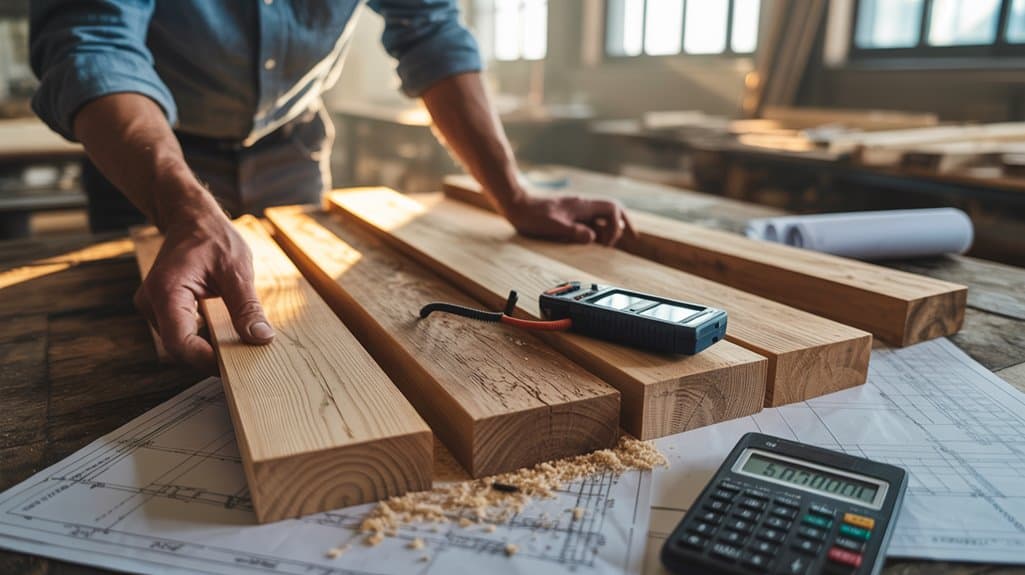
Expert carpenter analyzing wood pieces for design during a professional designer charrette, emphasizing woodworking, construction, and architectural planning.
Making the Call—A Decision Framework for Specifiers
When Solid Wood Makes Sense
Solid wood earns its premium in specific contexts:
- Custom furniture and millwork requiring carved, turned, or complex shaped details
- Historic preservation and renovation matching existing materials
- High-end hospitality and residential-scale commercial where craft authenticity drives brand positioning
- Applications requiring multiple refinishing cycles over very long service lives
- Biophilic design concepts emphasizing natural material connection
When Veneer Delivers the Best Balance
Wood veneer balances aesthetics and practicality for:
- Architectural feature walls and column wraps where visual impact justifies investment
- Conference tables and executive furniture requiring wood warmth at manageable cost
- Applications requiring FSC-certified wood aesthetics with improved dimensional stability
- Projects where grain matching and sequencing create intentional design patterns
When TFL Is the Smart Choice
TFL makes sense for the majority of commercial woodwork:
- High-volume casework and storage systems
- Furniture systems and worksurfaces subject to daily wear
- Healthcare, education, and other applications prioritizing material health documentation
- Budget-conscious projects requiring durability and consistency
- High-moisture or high-traffic areas demanding abuse resistance
The Three-Material Toolkit Approach
Rather than choosing one material category for entire projects, we typically deploy all three strategically:
- TFL for workhorse applications: Casework interiors, secondary millwork, back-of-house installations
- Veneer for feature moments: Reception desks, conference rooms, executive areas, primary public-facing millwork
- Solid wood for specialty details: Custom furniture pieces, decorative trim, carved elements where the material’s unique capabilities are essential
This approach optimizes budget allocation, performance matching, and design intent simultaneously.
FAQs About TFL, Solid Wood, and Veneer
Is TFL less sustainable than solid wood? Not necessarily. TFL uses wood fiber more efficiently than solid lumber processing and eliminates field finishing emissions. Sustainability depends on specific products, certifications, and lifecycle considerations rather than material category alone.
Can TFL match the appearance of real wood? Modern TFL achieves remarkably realistic wood grain appearances through advanced printing technology. Most observers cannot distinguish quality TFL from wood veneer at normal viewing distances. Close inspection of edges and texture reveals differences.
Does solid wood always have better indoor air quality than engineered alternatives? No. Solid wood requires adhesives for joinery and finishes for protection—both potential VOC sources. TFL with NAF or ULEF certification and Greenguard Gold verification often delivers cleaner emissions profiles than field-finished solid wood.
How do I specify low-emitting wood products? Require CARB Phase 2 compliance as baseline. For enhanced performance, specify NAF or ULEF panel substrates and Greenguard Gold certification on finished products. For veneered work, require documentation of adhesive systems and finish VOC content.
When should I choose veneer over TFL? Choose veneer for high-visibility applications where natural wood character, grain matching, and tactile warmth justify the cost premium—conference rooms, reception areas, executive offices, and architectural feature elements.