
Educational Facility Design: Essential Materials for Modern Schools

Educational facility design must account for surfaces that face more daily abuse than a commercial kitchen and carry more emotional weight than a hospital — yet too often, schools are designed like neither. Backpacks scrape against casework. Markers stain tabletops. Sneakers scuff baseboards. And through it all, these environments must somehow inspire the next generation of thinkers, makers, and leaders.
We’ve spent years helping designers specify materials for educational facilities across K-12 and higher education. The challenge is always the same: create spaces that survive the relentless wear of student life while sparking curiosity and supporting learning. It’s a tall order. But with the right material strategy, it’s absolutely achievable.
In this article, you’ll learn:
- Why America’s school infrastructure crisis makes material selection more urgent than ever
- How classroom design directly impacts student academic performance
- Which durability standards and certifications matter most for educational environments
- How indoor air quality affects cognitive function — and which materials protect it
- Why flexibility and color psychology deserve a seat at the specification table
- How TFL delivers the durability, design variety, and low emissions schools need
Why Material Selection Matters in Educational Facility Design
The Infrastructure Crisis
Educational facility design today must confront a difficult reality: American schools are aging faster than districts can repair them. The average U.S. school building is now 49 years old, meaning many structures are reaching the end of their 50-year design life. Essential systems need comprehensive upgrades or outright replacement.
The numbers are sobering. According to the 2025 ASCE Infrastructure Report Card, school infrastructure earned a D+ grade. The annual funding gap to reach a state of good repair has grown from $60 billion in 2016 to $85 billion in 2021. Only 10% of total education spending goes toward facility expenses, with capital budgets skewing heavily toward new construction rather than maintenance.
Meanwhile, 53% of public school districts face aging HVAC systems that need replacement. Deferred maintenance creates a vicious cycle: small problems become expensive emergencies, diverting funds from classrooms to crisis repairs. As one facilities management expert noted, the average school building here is nearly 50 years old, and only 10% of total education spending is directed toward facility upkeep.
For designers, this reality demands a lifecycle-cost mindset. Every material decision carries long-term consequences.
The Learning-Space Connection
Here’s what makes material selection even more critical: classroom design directly affects academic outcomes. Research from the HEAD (Holistic Evidence and Design) project at the University of Salford found that classroom design can account for up to 16% of the variance in student academic performance. That’s not a marginal effect — it’s a significant factor in whether students succeed.
Environmental factors like lighting, temperature, air quality, and spatial configuration all play roles. Studies published in the Journal of Environmental Psychology found strong correlations between these design elements and student achievement. Students in newer or renovated buildings tend to have better academic outcomes than those in deteriorating facilities.
The takeaway? Material selection isn’t just about aesthetics or maintenance. It’s about creating environments where learning thrives.
Durability Requirements for Educational Environments
The Unique Demands of Schools
We often tell clients that schools are among the toughest environments to specify for. Consider what surfaces endure daily: thousands of touches from sticky fingers, backpack hardware scraping against walls, marker mishaps, food spills in cafeterias, chemical cleaners in science labs, and the general chaos of 30 energetic students per room.
Elementary schools face particular challenges. Young children are still developing motor skills, meaning more spills, more impacts, more unintentional damage. Middle schools add hormonal energy and the occasional graffiti attempt. High schools and universities introduce heavier equipment, specialized labs, and 24-hour use patterns.
Unlike offices — where adults generally treat furniture with care — schools demand surfaces that forgive abuse while maintaining appearance.
Understanding BIFMA and ANSI Testing
Commercial furniture and surfaces should meet ANSI/BIFMA standards, which test for safety, structural strength, and durability. These standards matter because residential-grade furniture simply won’t survive educational use.
According to the Business and Institutional Furniture Manufacturers Association, BIFMA-certified products undergo rigorous testing for structural integrity, user safety, ergonomic design, and environmental responsibility. Products that pass are typically backed by warranties of five years or longer and will withstand the rigors of daily use year after year.
When specifying casework, work surfaces, and furniture, we always verify BIFMA compliance. It’s the baseline for commercial-grade durability.
Lifecycle Cost Thinking
Initial price tells only part of the story. We encourage clients to think in terms of total cost of ownership across a 10-year horizon.
Consider two options: a budget laminate surface at $X per panel versus a higher-quality TFL at $X+20% per panel. If the budget option needs replacement in five years while the premium option lasts ten, the “expensive” choice actually costs less over time. Factor in labor, disruption to learning, and disposal costs, and the math becomes even more compelling.
Proactive maintenance matters too. Districts that track asset conditions, schedule routine inspections, and address issues early avoid the emergency repairs that drain budgets and disrupt learning.
Indoor Air Quality and Material Health
Why IAQ Matters for Learning
Children breathe larger volumes of air relative to their body weight than adults. Their lungs are still developing, and they have narrower airways. This makes them uniquely vulnerable to indoor air pollutants.
The science is clear: poor indoor air quality impairs cognitive function. Research shows that CO₂ concentrations of 1,000 ppm led to significant reductions in decision-making performance, with further declines at higher levels. VOCs emitted from building materials, furnishings, and cleaning products can also impair cognitive functions and increase asthma-related incidents.
For designers, this means material selection has direct health implications. Every surface, every adhesive, every finish contributes to — or detracts from — the air students breathe.
Low-Emission Certifications to Specify
We recommend prioritizing materials with third-party certifications for low emissions:
- GREENGUARD Gold — Specifically developed to account for sensitive populations like children in schools. Products meeting this standard have been tested for over 10,000 chemicals and VOCs.
- FloorScore — Certifies hard surface flooring for compliance with California’s stringent VOC criteria.
- CARB Phase 2 / NAF/ULEF — California Air Resources Board standards for formaldehyde emissions from composite wood products. No-added-formaldehyde (NAF) and ultra-low-emitting formaldehyde (ULEF) options provide additional protection.
- SCS Indoor Advantage Gold — Aligns with ANSI/BIFMA standards and qualifies for LEED, WELL, and other green building programs.
The EPA recommends selecting materials that require low-VOC, water-based adhesives and emit the least hazardous compounds. This guidance applies especially to sensitive spaces like nurse’s offices and special education classrooms.
Source Control Strategies
The most effective IAQ strategy is source control — preventing pollutants from entering the environment in the first place. For casework and millwork, this means:
- Specifying panels with low or no formaldehyde emissions
- Using TFL or HPL surfaces that encapsulate the substrate
- Selecting low-VOC edge treatments and adhesives
- Ensuring proper edge sealing to prevent off-gassing from exposed core materials
The EPA notes that covering pressed wood cabinetry with sealed or laminated surfaces reduces pollutant release. It’s a simple specification choice with significant health benefits.

Designing for Flexibility and Adaptability
The 21st-Century Classroom
Rigid rows of desks facing a chalkboard are giving way to dynamic, student-centered spaces. Modern pedagogy emphasizes collaboration, project-based learning, and differentiated instruction — all of which require flexible layouts that can be quickly reconfigured.
Research shows that flexible learning spaces empower educators to tailor environments to diverse learning styles. A room might shift from small-group collaboration to whole-class instruction to independent study within a single period. Furniture and finishes must support this fluidity.
Successful flexible classrooms often include designated zones: quiet corners for focus work, collaborative pods for group projects, and presentation areas for whole-class discussion.
Materials That Support Reconfiguration
Flexibility demands durability. Furniture that moves daily takes more abuse than stationary pieces. Work surfaces need to resist scratches from rearrangement. Casework must withstand impacts as rooms transform.
We look for:
- Lightweight but durable materials — Easy to move without sacrificing longevity
- Scratch-resistant surfaces — Laminates that maintain appearance despite constant contact
- Easy-to-clean finishes — Stain resistance that simplifies maintenance
- Casters and mobility features — Designed for frequent repositioning
- Modular components — Systems that adapt to changing needs
From K-12 to Higher Ed
Material requirements shift with student age. Early childhood environments need soft edges, bright colors, and surfaces that survive everything from finger paint to juice boxes. Elementary schools require high durability with age-appropriate aesthetics.
Middle and high schools introduce specialized needs: science lab chemical resistance, art room stain protection, maker space impact tolerance. Colors and finishes can mature alongside students, shifting from primary palettes to more sophisticated tones.
Higher education brings 24-hour use patterns, collaborative commons, and technology-rich environments. University student centers, libraries, and residence halls demand commercial-grade durability with design appeal.
Color Psychology and Finish Selection
The Science Behind Color in Learning
Color isn’t just decoration — it’s a cognitive tool. Research in color psychology shows that well-designed classrooms can boost learning progress by 16%, with color, light, and layout all contributing to that effect.
A 2021 study comparing warm versus cool classroom hues found that cool colors significantly improved attention and memory performance. Blues and greens promote calm and focus. Yellows stimulate attention and optimism. Reds energize but can overwhelm if overused.
Age matters too. Elementary learners gravitate toward warm, vibrant colors that boost energy and engagement. High school students learn best with cooler tones — greens, blues, and mauves — that support concentration without overstimulation.
Coordinating Finishes Across Zones
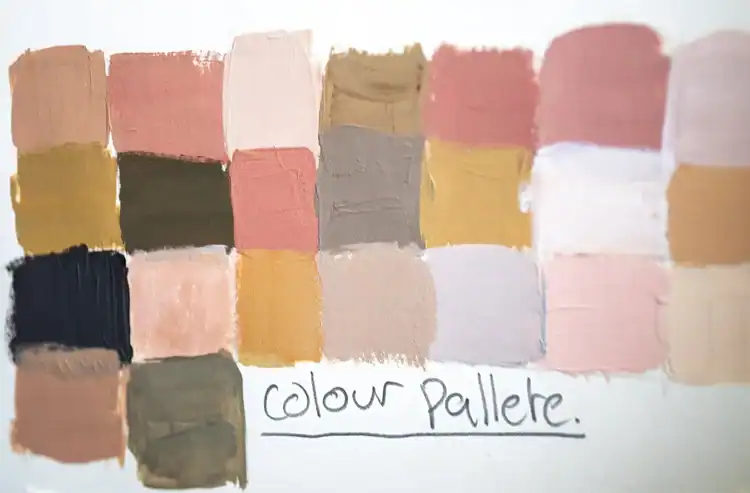
We recommend developing a cohesive palette that varies by function:
- Classrooms — Balanced tones supporting focus; accent walls for visual relief
- Corridors — Warm tones fostering community and wayfinding
- Libraries — Cool blues and greens promoting concentration
- Cafeterias and commons — Energizing colors encouraging social interaction
- Administrative areas — Professional tones reflecting institutional identity
Fewer colors (2-3) work best within individual learning spaces, while larger areas like cafeterias can handle 4-6 colors with proper balance.
Biophilic Design and Nature-Inspired Finishes
Connections to nature support learning. The HEAD project found that natural elements like wooden furniture and views of nature correlated with improved student outcomes. Attention Restoration Theory suggests that natural environments help students recover from directed-attention fatigue.
Wood-grain laminates, organic textures, and nature-inspired palettes bring biophilic benefits without the maintenance challenges of natural materials. They’re particularly effective in spaces without direct outdoor views.
TFL in Educational Design — Surface and Substance
Why TFL Works for Schools
Thermally fused laminate delivers the combination of durability, design flexibility, and material health that educational environments demand. The manufacturing process fuses resin-impregnated décor paper directly to the substrate using heat and pressure, creating a permanent bond without separate adhesives.
The result is a surface with excellent scratch and wear resistance that maintains appearance despite daily abuse. Melamine resin cures clear under heat and pressure, providing protection that rivals HPL at a more accessible price point.
For schools specifically, TFL offers:
- Stain resistance — Resists markers, food, and common classroom substances
- Easy cleaning — Non-porous surfaces simplify daily maintenance
- Low emissions — Available with GREENGUARD Gold certification and formaldehyde-free options
- Design variety — Hundreds of colors and realistic wood grains
- Cost efficiency — Delivers commercial performance at education-friendly budgets
KML’s Educational Palette
At KML Designer Finishes, we offer TFL panels in over 800 colors and 8+ finishes, including synchronized wood grains that align texture with printed pattern for striking realism. Our panels are available with multiple core options — including moisture-resistant and CARB-compliant substrates — to match specific application requirements.
Coordinated HPL and edgebanding ensure visual continuity across casework, work surfaces, and furniture. This coordination matters in educational settings where consistent aesthetics support wayfinding and institutional identity.
For projects prioritizing material health, we offer NAF (no-added-formaldehyde) and ULEF (ultra-low-emitting formaldehyde) options that meet the most stringent IAQ requirements.
Zone-Based Specification
Not every school space demands the same durability. We recommend matching material performance to traffic intensity:
- High-traffic zones (corridors, cafeterias, commons) — Enhanced wear surfaces, impact-resistant edges
- Standard classrooms — Commercial-grade TFL with appropriate scratch resistance
- Specialized spaces (labs, art rooms) — Chemical-resistant and stain-resistant options
- Administrative areas — Design-forward finishes with standard durability
This approach optimizes budgets while ensuring each space gets appropriate protection.
Case Study: Midwest Middle School Renovation
When Jefferson Middle School in a suburban Midwest district faced a comprehensive renovation of its 35,000-square-foot main building, the design team confronted familiar challenges: aging casework releasing VOCs, inflexible classroom layouts, and surfaces showing decades of wear.
The 45-year-old building had never undergone significant interior updates. Science labs featured original laminate counters with visible delamination. Classroom casework showed water damage at seams. Teachers complained of chemical odors, and district air quality testing confirmed elevated VOC levels.
The Solution
Working with the district’s facilities team, we specified TFL casework and work surfaces throughout classrooms, labs, and common areas. Key decisions included:
- NAF-core TFL panels with GREENGUARD Gold certification for all casework
- Wood-grain finishes in warm oak tones for classrooms, supporting biophilic design goals
- Color-zoned wayfinding using accent panels in corridor casework — blue for the science wing, green for language arts, orange for mathematics
- Chemical-resistant HPL for science lab countertops, coordinated with TFL storage cabinets
- Flexible furniture with matching TFL surfaces for collaborative zones
The design team selected finishes appropriate for middle-school students: sophisticated enough to respect their developing maturity, durable enough to survive daily wear.
The Results
Six months post-occupancy, the district reported measurable improvements:
- IAQ testing showed VOC levels within GREENGUARD Gold thresholds
- Maintenance requests dropped 35% compared to pre-renovation baselines
- Teacher feedback highlighted easier cleaning and improved classroom aesthetics
- Student navigation improved with intuitive color wayfinding
The facilities director noted that the total project cost — including labor and materials — came in 18% below initial estimates using all-solid-surface alternatives. The savings funded additional flexible furniture for collaborative spaces.
Specification Checklist for Educational Interiors
Use this checklist when specifying materials for educational projects:
- Durability verification — Confirm BIFMA compliance for furniture; specify commercial-grade surfaces for all casework
- IAQ certifications — Require GREENGUARD Gold or equivalent; specify NAF/ULEF cores where available
- Wear resistance — Match surface durability to traffic intensity and expected use
- Chemical resistance — Specify appropriate resistance for labs, art rooms, and food service areas
- Flexibility support — Choose lightweight, durable materials that tolerate frequent reconfiguration
- Color strategy — Develop age-appropriate palettes; coordinate finishes across zones
- Edge treatment — Specify sealed edges to prevent moisture infiltration and VOC release
- Maintenance requirements — Confirm cleaning protocols align with district capabilities
- Lifecycle cost analysis — Evaluate 10-year total cost of ownership, not just initial price
- Coordination — Ensure visual continuity across TFL, HPL, edgebanding, and furniture finishes
FAQs
What’s the difference between TFL and HPL for school applications?
Both are laminate surfaces, but they differ in construction. HPL uses multiple layers fused under high pressure, then bonded to a substrate. TFL fuses decorative layers directly to the substrate in a single step. HPL offers higher impact resistance for demanding horizontal surfaces. TFL provides excellent performance for casework, storage, and moderate-use work surfaces at a more accessible price point.
How do I verify that materials meet indoor air quality standards?
Look for third-party certifications like GREENGUARD Gold, FloorScore, or SCS Indoor Advantage Gold. Request documentation from manufacturers showing test results. For composite wood products, confirm CARB Phase 2 compliance at minimum; NAF or ULEF options provide additional protection.
Should elementary and high school specifications differ?
Yes. Elementary environments need brighter color palettes, rounded edges, and surfaces that resist finger paint and food. High school specifications can incorporate more sophisticated finishes and should address specialized spaces like labs and maker areas. Both require commercial-grade durability.
How do I balance durability with budget constraints?
Focus on lifecycle cost rather than initial price. Invest in higher durability for high-traffic zones while specifying standard-grade materials for lower-use areas. Zone-based specification optimizes budgets without sacrificing performance where it matters most.
Can TFL support flexible classroom design?
Absolutely. TFL’s durability tolerates the frequent movement and reconfiguration that flexible classrooms require. Lightweight panels simplify furniture construction, while scratch resistance maintains appearance despite daily repositioning. Coordinated finishes across mobile and fixed elements create visual cohesion.