Color Psychology in Workplace Design: A Designer’s Guide
That conference room painted “Safe Corporate Gray #47”? It’s probably costing your client more in lost creativity than they saved by choosing the cheapest paint option. Meanwhile, the breakroom you specified in cheerful yellow might be triggering anxiety instead of encouraging water-cooler collaboration.
Color isn’t just decoration—it’s neuroscience with a paintbrush. When light hits your retina, your hypothalamus doesn’t just register “blue wall ahead.” It triggers a cascade of hormonal responses that affect mood, energy, decision-making, and even physical performance. Research from the University of Texas found that bland colors like beige, white, and gray induce emotions related to depression and sadness—especially among women, who are more receptive to environmental color cues.
Yet despite decades of color psychology research, we still see offices where every surface is neutral, every meeting room is identical, and the only pop of color comes from emergency exit signs. It’s time to get smarter about color specification.
In this article, you’ll learn:
- How color actually affects the brain (hint: it’s not just “vibes”)
- What each major color does in workplace contexts—backed by research, not Pinterest boards
- Current color trends for 2024-2025 and why they’re emerging now
- Cultural considerations that prevent embarrassing international design fails
- Room-by-room color strategies that support different work activities
- How to integrate color with durable materials like TFL for high-traffic commercial spaces
- Common color psychology mistakes that undermine even beautiful designs
Let’s turn color from an afterthought into a strategic design tool that actually improves how spaces perform.
The Science Behind Color Psychology: More Than Pretty Walls
How Your Brain Processes Color
When someone enters a workspace, their eyes detect light wavelengths that the brain interprets as color. This isn’t a passive process. Environmental psychologist Sally Augustin, PhD explains that when color signals reach the hypothalamus, they trigger hormone production that directly affects mood and cognitive function.
Blue wavelengths, for instance, can trigger dopamine release—associated with calm, focused mental states ideal for analytical work. Yellow stimulates mental activity but can increase cortisol (stress hormone) when overused. Research published in color psychology studies shows that bright, vibrant colors like yellow and orange stimulate the brain and promote enthusiasm and energy, making them suitable for brainstorming areas or collaborative zones.
This isn’t mysticism—it’s measurable physiology. Red has been proven to elevate blood flow and heart rate, boosting performance on tasks requiring close attention like proofreading. It’s why red works well in fitness centers but can feel aggressive in offices requiring careful analysis.
Context Matters More Than You Think
Here’s where color psychology gets interesting: the same color produces different responses depending on context. A 2025 semantic review in color psychology research emphasizes the Color-in-Context theory, which argues that psychological meaning depends fundamentally on physical and psychological context.
Red might enhance performance in a gym (physical exertion context) but degrade analytical performance in an accounting office (precision context). Green signals nature and growth in Western contexts but can associate with disease in some Asian cultures. This is why cookie-cutter color schemes fail—effective color psychology requires understanding both the biological response and the cultural/functional context.
Saturation and Brightness: The Variables Nobody Talks About
We obsess over hue (red vs. blue) but often ignore saturation and brightness—which matter just as much.
Dr. Augustin notes that knowledge work benefits from less saturated but relatively bright colors. Think sage green (low saturation) versus Kelly green (high saturation). The sage promotes calm focus, while Kelly green can feel overstimulating in spaces where people need to think deeply for hours.
Conversely, spaces meant to energize benefit from greater saturation and less brightness—like pumpkin orange or rich teal. It’s not just about choosing blue or green; it’s about choosing the right version of blue or green for the specific activity happening in that space.
Color-by-Color Workplace Applications: What Works Where
Blue: The Focus Champion
Blue consistently ranks as the world’s favorite color across cultures. In workplace contexts, it delivers measurable benefits for productivity and mental endurance.
Research shows that blue environments help reduce stress and support concentration—making it ideal for spaces requiring sustained focus. The color promotes feelings of trust and dependability, which explains why it’s ubiquitous in financial services and healthcare.
Best applications:
- Private offices where deep thinking happens
- Conference rooms requiring level-headed decision-making
- Technology spaces where precision matters
- Areas where you want to convey stability and reliability
Shades to consider: Sky blue for openness, dusty blue for sophistication, slate blue for gravitas, navy for executive presence.
We’ve specified blue-dominant schemes in law firms, accounting offices, and research facilities where analytical thinking is the primary activity. The calming effect reduces decision fatigue over long workdays.
Green: The Balance Keeper
Green holds special status in color psychology because it’s the color most easily perceived by the human eye, reducing eye strain during extended exposure. Studies show that 95.9% of people associate green with vegetation, involving relaxation, comfort, and happiness.
Green-infused spaces provide subtle recharge during work. The color balances stimulation and calm—making it versatile for multiple workspace types.
Best applications:
- Open work areas requiring sustained attention without fatigue
- Spaces where employees spend long hours (8+ hours daily)
- Breakrooms where restoration matters
- Areas with heavy computer work (reduces eye strain)
Shades to consider: Sage green for sophisticated calm, fern for natural energy, olive for grounded focus, forest green for depth without heaviness.
The biophilic connection with nature makes green particularly effective when paired with actual plants, natural materials, and views to outdoor spaces. We use green extensively in healthcare environments where stress reduction is critical.
Yellow and Orange: The Collaboration Catalysts
These warm colors energize spaces and stimulate mental activity—but require careful dosing. Color psychologists note that yellow and orange can increase anxiety and appetite when overused, making them better as accent colors than dominant schemes.
Research indicates that orange creates feelings of enthusiasm, activity, and endurance—all related to high productivity levels. However, men tend to respond less positively to orange than women, suggesting its best use is as strategic accent rather than primary color.
Best applications:
- Collaborative zones and brainstorming spaces
- Breakrooms and cafeterias (yellow’s association with food works here)
- Creative studios and innovation labs
- Accent walls in otherwise neutral spaces
Shades to consider: Soft butter yellow for warmth without intensity, tart orange for energy bursts, amber for sophisticated warmth, marigold for creative spark.
Dr. Augustin specifically notes that “for some reason in our society we tend to feel really good about having yellow kitchens”—making breakrooms the one place yellow can dominate without negative effects.
Red: The Power Player (Use Sparingly)
Red is physiologically stimulating. It elevates blood flow and heart rate and has been proven to boost performance on tasks requiring close attention. But the same qualities that make it powerful also make it dangerous in offices.
Research shows that seeing red degrades analytical performance. It gives bursts of strength but isn’t sustainable for long-duration knowledge work. Red can also heighten emotions and lead to overstimulation.
Best applications:
- Corporate fitness centers (leverages the strength boost)
- High-activity areas like copy centers or mail rooms
- Accent elements in reception or brand walls
- Performance-based spaces requiring quick decisions
Shades to consider: Deep burgundy for sophistication, muted terracotta for warmth without aggression, coral for energy with approachability.
We typically use red as a strategic accent—a single wall, furniture elements, or brand features—rather than allowing it to dominate any space where people spend significant time.
Neutrals: The Foundation That Fails When Overused
Beige, gray, taupe, and white serve important functions as anchors for brighter colors. They convey steadiness and professionalism. The problem? Heavy use of gray has been shown to suppress energy, diminish confidence, and contribute to fatigue or depression.
University of Texas research found that predominantly gray, beige, and white offices caused feelings of sadness and depression that negatively impacted productivity—especially among women who are more receptive to color in their environment.
Best applications:
- Base color that grounds brighter accent colors
- Transition spaces like corridors and lobbies
- Paired with rich textures and varied materials to avoid sterility
- Spaces requiring flexibility (neutral base accepts any furniture color)
Shades to consider: Warm gray with brown undertones, greige (gray-beige hybrid), soft taupe, warm whites with cream undertones.
The key is using neutrals as a canvas, not the entire painting. We pair neutral walls with colorful furniture, artwork, acoustic panels, and architectural features to maintain visual interest while preserving professional sophistication.
Purple: The Luxury Signal
Purple occupies interesting psychological territory. It represents loyalty, royalty, and ambition while conveying luxury. Bold purples can feel artificial (the color rarely appears in nature), but lighter lavenders and mauves work beautifully for spaces requiring creative thinking without high energy.
Best applications:
- Executive spaces and C-suite offices
- Client-facing areas where luxury perception matters
- Creative industries (design studios, marketing firms)
- Wellness areas (spa industry uses purple extensively)
Shades to consider: Lavender for calm sophistication, plum for richness, mauve for approachability with elegance.
Purple is underutilized in commercial design, which makes it valuable for clients wanting distinctive spaces that don’t follow corporate trends.
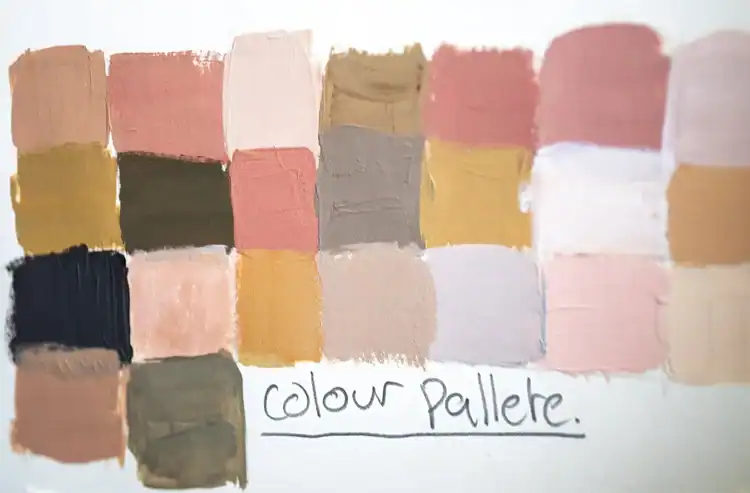
2024-2025 Color Trends: What’s Shaping Workplace Palettes Now
The Shift Away from Stark White
Design trends in 2024 show a significant shift from bright, white spaces toward neutral, earthy, and muted tones throughout core office areas. As employees return to offices more frequently, companies want spaces that “stand out and have a unique space and one that reflects their brand and culture,” according to FCA project interior designer Rachel Ryan.
This trend responds to years of sterile minimalism that left offices feeling more like hospitals than human-centered workspaces. The new neutrals have warmth—think Pantone’s 2025 Color of the Year: Mocha Mousse, a deep brown combining chocolate and coffee tones with comfort and stability.
Rich, Dramatic Accent Colors
While bases go warmer and more neutral, accent colors are getting bolder. Behr’s 2025 Color of the Year “Rumors” brings deep ruby red allure, while trending shades include Dark Everglade (blackened green) and Espresso Beans (bold brown).
Research from Pantone indicates that 67% of designers are experimenting with richer, more dramatic colors in 2025, with oxblood being a key player. This color evokes confidence, strength, and creativity—qualities businesses want to signal as they compete for talent.
Biophilic Color Palettes
Natural, earth-toned colors continue dominating as biophilic design principles gain traction. Think forest greens, terracotta, warm browns, and stone grays that connect indoor environments with nature.
Harvard’s T.H. Chan School of Public Health found that employees in environments with biophilic elements report 15% increases in well-being and 6% rises in productivity. Color plays a crucial role in this connection—greens, browns, and blues that mirror natural environments create psychological links to outdoor spaces.
Wood Grain and Material-Inspired Colors
Linear wood grains and walnut tones are trending heavily, reflecting the integration of natural materials with color strategy. These aren’t just paint colors—they’re surface finishes that bring warmth, sophistication, and tactile interest to workspaces.
This trend aligns beautifully with TFL applications. Thermally Fused Laminate surfaces from KML Designer Finishes offer wood grain aesthetics with commercial durability. When we specify TFL in natural wood patterns for desking, casework, and wall panels, we’re delivering both the color psychology benefits of wood tones and the performance requirements of high-traffic environments.
Cultural Considerations: Color Doesn’t Travel Like You Think
When Green Means Different Things
Dr. Sally Augustin cautions: “Different cultures have different associations with color. In the US, we think of green as nature and goodness, so shades of green in a company cafeteria would be a positive choice. But in some Asian countries green is linked to disease and rot.”
This isn’t a minor nuance—it’s a fundamental misunderstanding that can undermine an entire design. When designing for multinational companies or locations outside your cultural context, color research becomes non-negotiable.
East vs. West: Major Divergences
Cultural color perception studies reveal significant differences between Eastern and Western interpretations:
Red: In Western cultures, red signals passion, love, and sometimes aggression. In Eastern cultures—especially China—red is the most positive color, symbolizing happiness, prosperity, good luck, and long life. Chinese wear red at weddings and New Year celebrations.
White: Western cultures associate white with purity, innocence, and cleanliness. In many Eastern cultures, white links to death and mourning—people wear white to funerals.
Yellow: Western associations include happiness and caution. In China, yellow can associate with vulgarity in certain contexts (“yellow picture” means pornographic content). In India, yellow symbolizes sanctity.
Gender Considerations
Research also shows that men and women respond differently to certain colors. The University of Texas study found that women are more receptive to bright colors in the environment, while men are more sensitive to colors like orange and purple, which can make them feel depressed or gloomy.
This doesn’t mean segregating spaces by gender—it means recognizing that diverse workforces will experience color differently and designing accordingly. Balance becomes key: use colors that have broad appeal while avoiding those that strongly polarize responses.
The Solution: Research and Test
When designing for diverse populations, we conduct color preference research with the actual user group. What colors does the existing culture embrace? Are there cultural taboos to avoid? Do brand colors translate well across regions?
For multinational clients, we often develop regional variations that honor local color associations while maintaining brand coherence through consistent application principles rather than identical palettes.
Room-by-Room Color Strategies: Matching Hue to Function
Open Work Areas: Balance Stimulation and Calm
Open workstations need colors that support sustained focus without inducing drowsiness. Research suggests that cool workplace colors enhance creativity and help managers think and generate ideas—but these spaces also need enough warmth to feel inviting.
Our approach: Neutral base (warm gray or greige) with cool accent walls (sage green or soft blue) in areas where people sit for extended periods. Add warmth through wood-toned furniture, TFL surfaces on workstations, and warm-colored acoustic treatments overhead.
Saturation strategy: Low saturation, medium-high brightness. You want enough color to register psychologically without creating visual fatigue over an 8-hour workday.
Conference Rooms: Colors That Aid Decision-Making
Meeting spaces require colors that support both analytical thinking and creative problem-solving. Blue and green combinations work particularly well, as University of Texas research shows these combinations improve productivity more than white and red pairings.
Our approach: Blue or blue-green on the wall behind the main presentation area (conveys trust and authority for the presenter), neutral side walls, accent elements in brand colors or warmer tones to prevent the space from feeling cold.
Saturation strategy: Medium saturation for accent walls, low saturation elsewhere. Conference rooms need to feel substantial without overwhelming participants or creating video conference background issues.
Collaborative Zones: Energy Without Anxiety
Spaces designed for brainstorming, casual meetings, and teamwork benefit from warmer, more energizing colors—but with careful balance to avoid creating stress.
Our approach: Warm neutrals as base with strategic pops of orange, yellow, or warm red in furniture, acoustic panels, or feature walls. Behr recommends combinations like Mountain Olive (deep olive green) with Even Better Beige and a bold Tart Orange accent.
Saturation strategy: Higher saturation in accent elements (this is where you can use Kelly green, bright orange, or vibrant yellow) balanced by lower saturation in larger surface areas.
Focus Pods and Private Offices: Colors for Deep Thinking
Individual focus spaces and private offices need colors that minimize distraction and support sustained cognitive work. This is where blue shines—both literally and figuratively.
Our approach: Blues and blue-greens in medium to darker values create cocooning effect that signals “this is a thinking space.” We pair these with warm wood tones (natural or TFL) to prevent spaces from feeling cold or institutional.
Saturation strategy: Low to medium saturation. Too much saturation in a small, enclosed space can feel oppressive rather than focused.
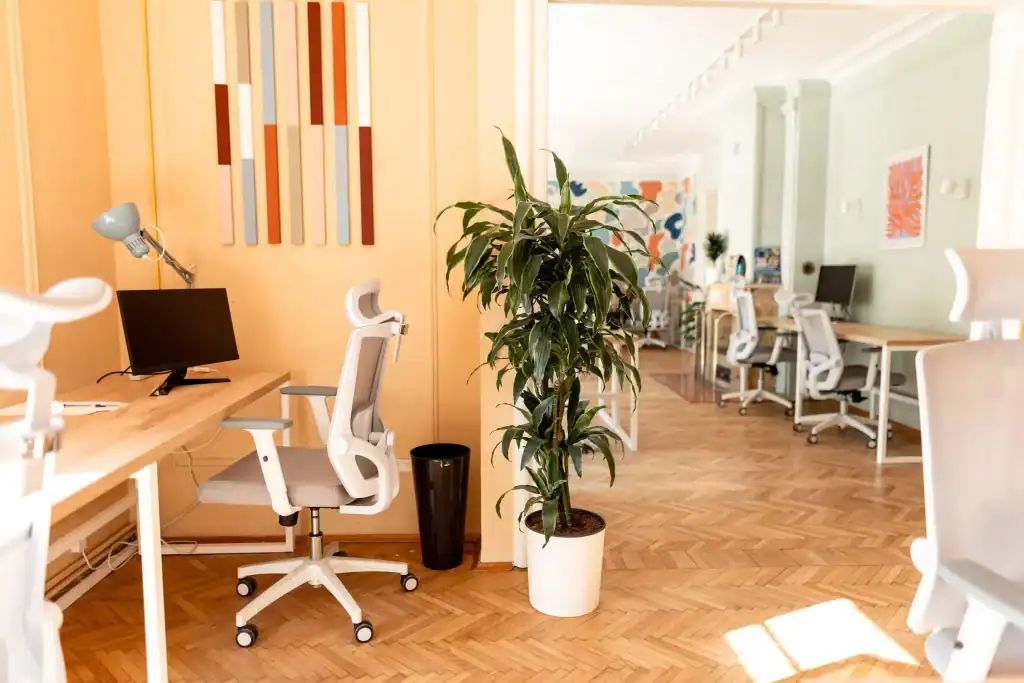
Breakrooms and Social Spaces: Permission to Use Yellow
Breakrooms represent one of the few workplace areas where yellow works as a dominant color. Research shows people respond positively to yellow in kitchen contexts, creating feelings of warmth and social connection.
Our approach: Warm yellows, oranges, and red-oranges create energy and signal “this is not a work space—relax here.” We often mix these with natural wood tones and green (through plants or wall color) to balance stimulation with restoration.
Saturation strategy: Higher saturation acceptable here. Breakrooms benefit from more dramatic color that clearly differentiates them from work zones.
Integrating Color with Commercial Materials: The TFL Connection
When Durability Meets Color Psychology
Here’s a challenge we face constantly: clients want the psychological benefits of natural wood tones, but they need surfaces that withstand commercial abuse. Enter Thermally Fused Laminate.
TFL surfaces from KML Designer Finishes deliver wood grain colors and textures that convey warmth, nature connection, and sophistication—while meeting the durability, cleanability, and budget requirements of commercial spaces. This isn’t about compromise; it’s about optimization.
When we specify natural walnut TFL for workstation surfaces and storage elements, employees get the psychological benefits of wood grain colors (browns and warm neutrals that reduce stress and increase comfort) without maintenance headaches or cost overruns.
Color Consistency Across Materials
One advantage of TFL in color strategy: consistency. When you need blue-gray casework, warm gray work surfaces, and charcoal storage elements to coordinate within a single space, TFL provides color matching that paint-plus-veneer approaches struggle to achieve.
We’ve used TFL strategically in reception areas where brand colors need to appear in durable, high-touch surfaces. The material accepts custom colors and can coordinate with paint palettes to create cohesive color experiences that don’t fail under heavy use.
Textured Color: The Third Dimension
Flat paint delivers color. Textured TFL surfaces deliver color plus tactile variation—which research shows enhances the psychological impact of color. A medium-gray linen-texture TFL reads differently than flat gray paint, even at the same hue and saturation.
The texture adds visual interest that prevents neutral colors from feeling boring while maintaining the sophisticated, professional appearance clients want. We use textured TFL extensively in spaces where neutral palettes dominate but visual richness matters.
Common Color Psychology Mistakes That Sabotage Good Design
Mistake 1: Ignoring Lighting Conditions
Color doesn’t exist without light. The same paint swatch looks completely different in natural daylight versus fluorescent office lighting versus warm LED. Yet designers often select colors under showroom lighting that bears no resemblance to the actual space conditions.
Color psychology research emphasizes that proper application requires consideration of natural and artificial lighting. When applied thoughtfully with lighting considerations, color can transform offices.
The fix: Always test color samples in the actual space, under actual lighting conditions, at different times of day. What looks like warm gray at 10am might read as cold blue-gray at 3pm.
Mistake 2: Forgetting Cultural Context
We’ve discussed cultural color differences, but this mistake remains remarkably common. Designers specify colors based on Western color psychology for international clients, then wonder why the response is lukewarm or negative.
The fix: Research color associations for the specific culture and region. When in doubt, consult with local stakeholders. Don’t assume your color psychology knowledge transfers universally.
Mistake 3: Choosing Colors Based on Trends, Not Function
2025’s trendy oxblood and mocha mousse look stunning in design magazines. They might also be completely wrong for your client’s accounting firm where analytical precision matters more than dramatic sophistication.
Color trends inform—they don’t prescribe. The goal isn’t to create the most on-trend space; it’s to create the space that best supports the work happening within it.
The fix: Start with function. What activities happen here? What psychological states support those activities? Then apply trend awareness to select current versions of the functionally appropriate colors.
Mistake 4: Treating All Blues (or Greens, or Grays) as Equal
“We’ll use blue—it’s calming!” says every designer before specifying a bright cerulean that’s anything but calming. Hue alone doesn’t determine psychological effect—saturation and brightness matter enormously.
The fix: Specify colors with three parameters: hue, saturation, and brightness. “Blue” isn’t enough. “Medium blue, low saturation, medium-high brightness” gives you something actionable.
Mistake 5: Forgetting That Neutral Overload Is Still Overload
The safest path seems like all-neutral everything. But as research demonstrates, predominantly neutral spaces create sadness and depression. Safety isn’t the same as effectiveness.
The fix: Use neutrals as the foundation, not the entire structure. Even conservative corporate clients benefit from strategic color in accent walls, furniture, artwork, and architectural features. You don’t need rainbow explosions—just enough color to register psychologically.
Wrapping Up: Color as Strategic Design Tool
Color psychology isn’t decoration advice—it’s neuroscience applied to workplace design. When you specify blues in conference rooms, you’re leveraging research showing these wavelengths promote focused, analytical thinking. When you add orange accents to collaborative zones, you’re triggering hormonal responses that increase energy and interaction.
The commercial interior designers getting this right understand three truths:
First: Color affects performance measurably. Studies consistently show that color choices significantly impact productivity, creativity, and employee satisfaction. This isn’t soft science—it’s ROI.
Second: Context determines effectiveness. The same color produces different results depending on the activity, culture, lighting, and surrounding elements. Generic color rules fail. Strategic color application succeeds.
Third: Integration matters more than isolation. Color works best when coordinated across paint, materials like TFL, furniture, acoustic treatments, and architectural features. Think holistically, not just about wall paint.
Start your next project by asking not “what colors are trending?” but “what psychological states support the work happening in this space?” Then select colors that promote those states while respecting cultural context, lighting realities, and material requirements.
The conference room painted Safe Corporate Gray #47? It’s ready for an upgrade. And your clients’ productivity metrics will thank you.
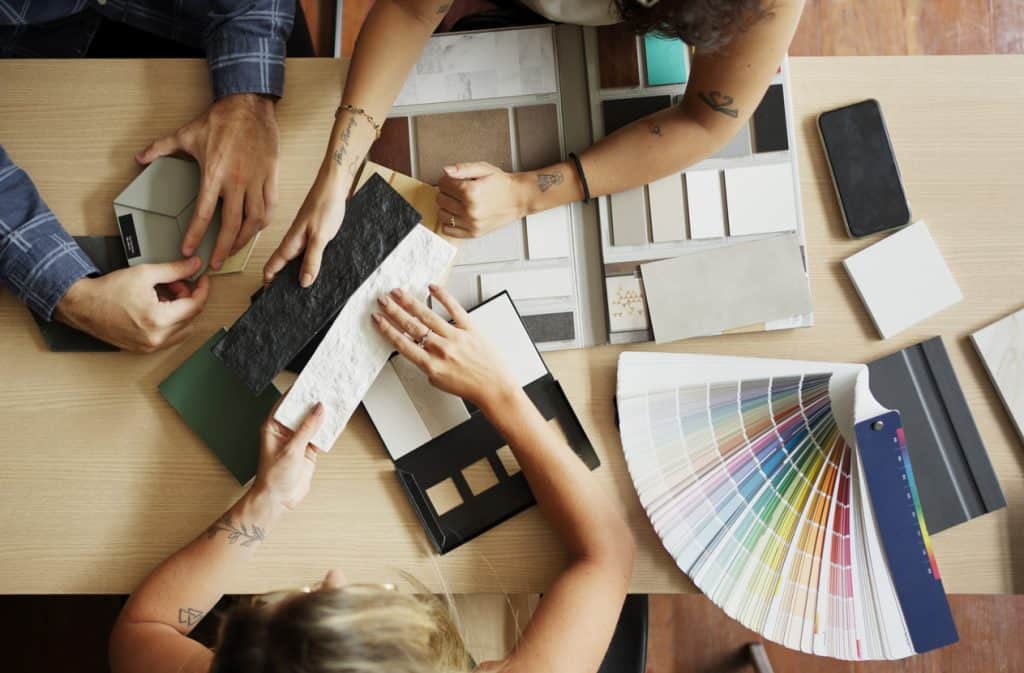
High angle view of a young female interior designer discussing tiles with a young couple during a meeting in her office
Frequently Asked Questions
Does color psychology actually work, or is it just design theory?
Color psychology is grounded in measurable neuroscience and physiology. When color wavelengths hit your retina, your hypothalamus triggers hormonal responses affecting mood, energy, and cognitive function. Research shows blue environments reduce stress and increase focus, while red increases blood pressure and heart rate. However, effectiveness depends on proper application—understanding context, culture, and saturation matters as much as choosing the right hue.
How do I choose office colors for a multicultural workforce?
Research color associations in the specific cultures represented in your workforce. While blue has broad cross-cultural appeal, colors like green, red, and white carry significantly different meanings in Eastern versus Western cultures. Test color preferences with representative employee groups, focus on colors with positive associations across cultures, and avoid those with strong negative connotations in any represented culture.
Can I use bold accent colors in conservative corporate environments?
Absolutely—strategic accent colors work even in conservative spaces. Use neutrals as your base (70-80% of surfaces) and add bold colors in furniture, artwork, accent walls, or architectural features (20-30% of visual field). This approach delivers color psychology benefits without overwhelming traditional aesthetic expectations. Conference rooms, breakrooms, and reception areas offer safer opportunities for bolder color choices.
What’s more important: color hue, saturation, or brightness?
All three matter equally for psychological impact. Hue (red vs. blue) determines the general response direction, saturation controls intensity of effect, and brightness affects energy level. A highly saturated bright blue feels energizing; low saturation bright blue feels calm. Medium saturation dark blue conveys authority. Specify all three parameters for effective results, not just hue alone.
How do I integrate color psychology with durable commercial materials like TFL?
Thermally Fused Laminate offers excellent color psychology integration for commercial spaces. TFL surfaces deliver wood grain colors and textures (browns, grays, natural tones) that provide psychological warmth and nature connection while meeting durability requirements. Use TFL for high-touch surfaces like work surfaces, casework, and wall panels where you need both color consistency and commercial performance. Coordinate TFL selections with overall color strategy rather than treating them separately.