
Designing for Wellness: How Material Choices Shape Healthier Commercial Interiors
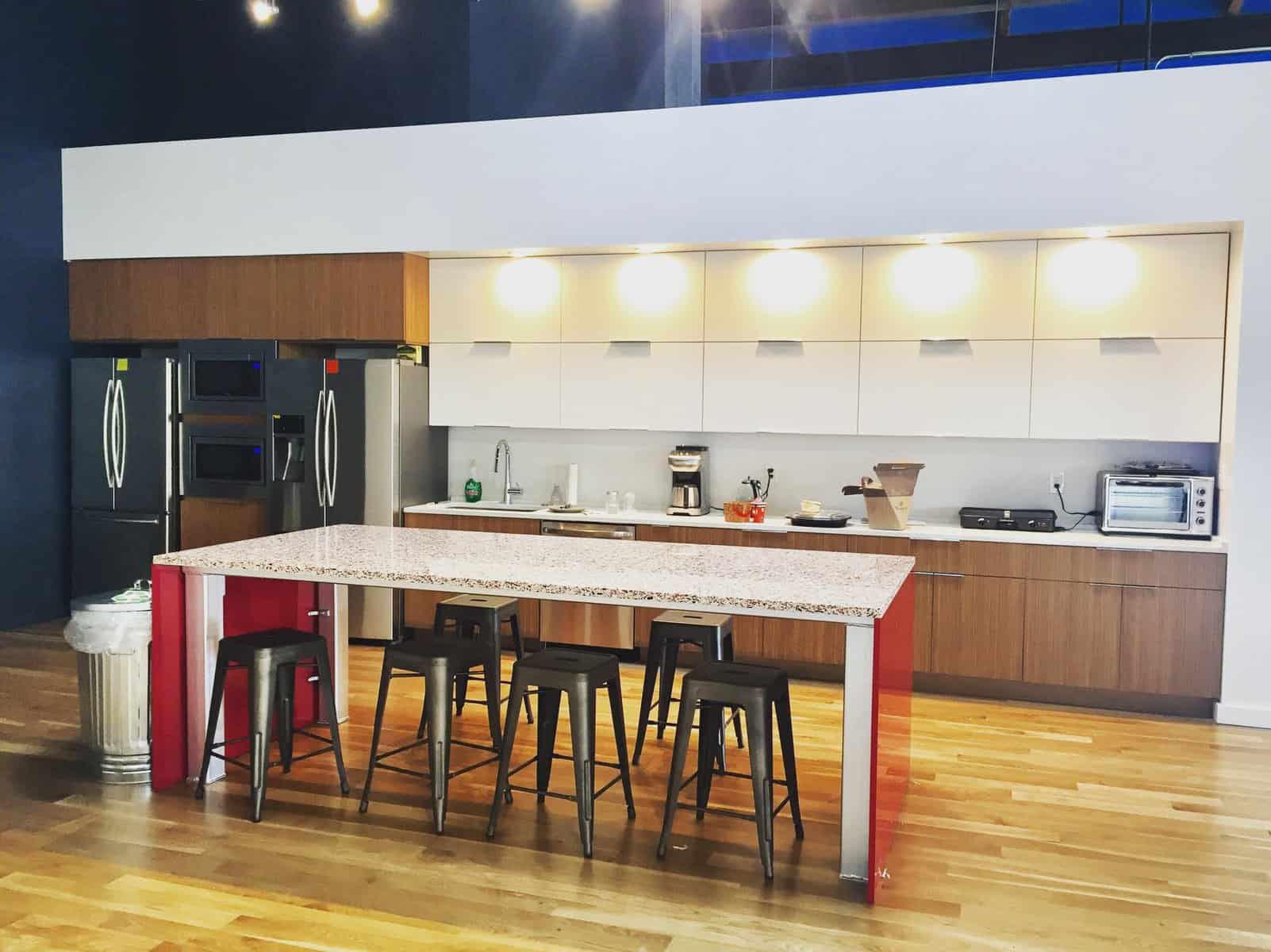
Designing for wellness starts with a simple reality: we spend roughly 90 percent of our lives inside buildings we didn’t design—yet every surface, finish, and fixture silently influences how we feel, think, and perform. Wellness design flips the script by making occupant health the organizing principle, not an afterthought. The materials you specify can either nourish the people who use a space or quietly work against them. Over the past decade, we’ve watched designing for wellness move from a niche concern to a mainstream expectation. Today, clients ask about air quality, biophilic elements, and material transparency before they ask about color palettes. This guide walks you through the wellness design framework and shows you how to translate it into material specifications that deliver measurable results.
In this article, you’ll learn:
- What wellness design means and why it’s reshaping commercial interiors
- How material choices impact air quality, acoustics, lighting, and biophilic connection
- Which transparency tools and certifications simplify healthy material selection
- How thermally fused laminate supports wellness goals through low emissions and natural aesthetics
- Practical strategies for building a wellness-forward specification library
What Is Wellness Design?
From Aesthetics to Outcomes
Wellness design treats occupant health as a measurable performance metric rather than a vague aspiration. It asks a different set of questions than traditional interior design. Instead of “Does this look good?” the wellness approach asks “Does this support cognitive function? Does it reduce stress? Does it promote physical health over time?”
The shift reflects growing awareness that buildings shape behavior and biology. The Global Wellness Institute notes that choosing natural materials, low-toxic adhesives, and clean air filtration creates physical environments that best support human health. Design professionals increasingly accept responsibility for outcomes that extend beyond visual appeal.
The WELL Building Standard Framework
The WELL Building Standard provides the most comprehensive framework for wellness-focused design. Developed by the International WELL Building Institute, it organizes health impacts into ten concepts: Air, Water, Nourishment, Light, Movement, Thermal Comfort, Sound, Materials, Mind, and Community.
Each concept contains preconditions—baseline requirements for any certification level—plus optimizations that earn additional points toward higher achievement tiers. The Materials concept specifically addresses ingredient transparency, VOC restrictions, and the elimination of hazardous substances. According to WELL documentation, indoor VOC levels can be five times higher than outdoors, making material selection a critical lever for air quality improvement.
Why Material Choices Sit at the Center
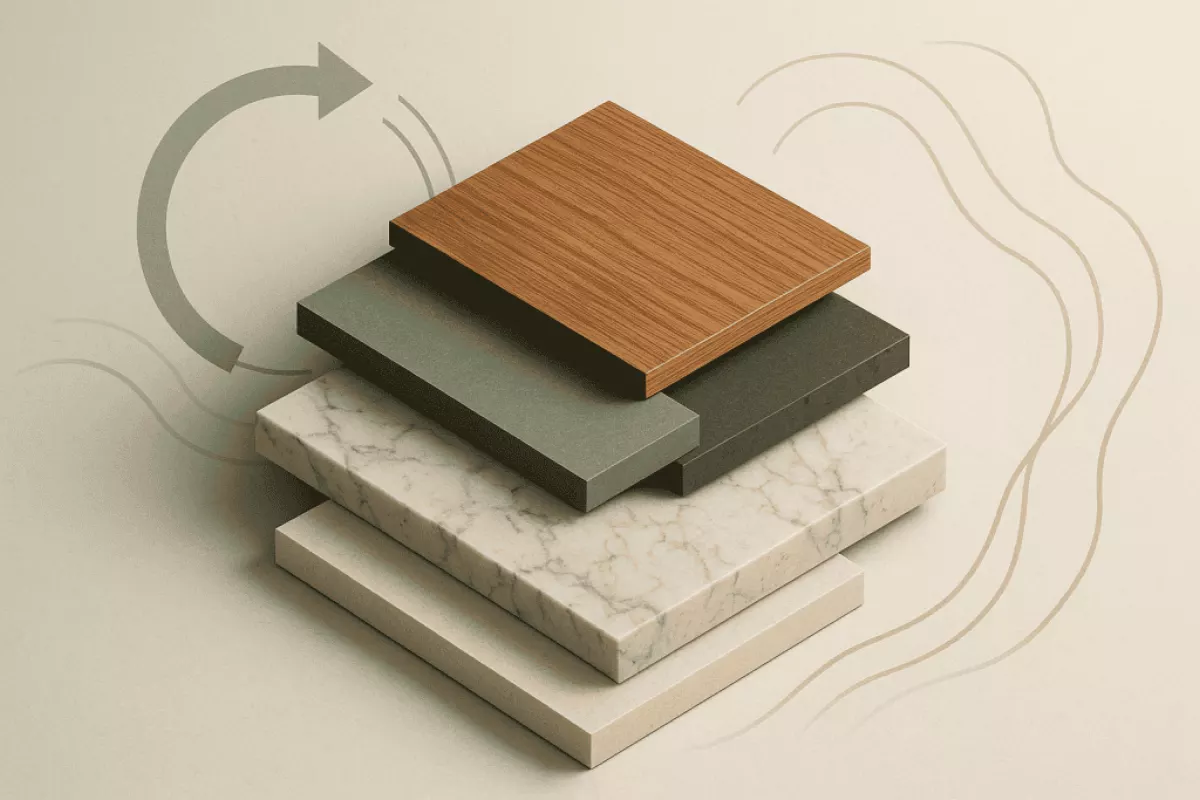
Materials touch every other wellness category. They affect air quality through emissions. They influence acoustics through absorption and reflection. They shape visual comfort through color, texture, and light reflectance. They create or inhibit biophilic connection through pattern, grain, and tactile qualities.
This interconnection means material specification offers outsized impact. A single decision—choosing a low-emission panel system over a conventional one—ripples across multiple wellness dimensions simultaneously.
The Pillars of Healthy Material Selection
Indoor Air Quality and Emissions
Air quality forms the foundation of material health. Volatile organic compounds off-gas from paints, adhesives, composite panels, flooring, and furniture. These emissions don’t announce themselves visibly, but they accumulate in enclosed spaces and affect everyone who breathes the air.
The EPA’s research found indoor pollutant concentrations routinely exceed outdoor levels by factors of two to ten. During and immediately after installation, levels can spike dramatically higher. Formaldehyde, benzene, and toluene rank among the most concerning compounds—all linked to respiratory irritation, headaches, and longer-term health risks.
Specifying low-emission materials addresses this invisible burden directly. Products certified under GREENGUARD, GREENGUARD Gold, or FloorScore have undergone chamber testing to verify they meet strict emission thresholds.
Acoustic Performance
Sound shapes wellness in ways we often underestimate. Excessive noise triggers stress responses, impairs concentration, and reduces productivity. Open-plan offices amplify these challenges by allowing conversations, phone calls, and equipment sounds to travel freely.
Material choices influence acoustic comfort through absorption, blocking, and covering. Soft surfaces like carpet, acoustic panels, and upholstered furniture absorb sound energy. Dense materials block transmission between spaces. Background sound systems mask distracting noises.
The WELL Sound concept establishes performance thresholds for background noise, reverberation time, and sound isolation. Meeting these thresholds often requires deliberate material selection—choosing acoustic ceiling tiles, specifying sound-absorbing wall panels, or selecting flooring with underlayment that reduces impact noise.
Visual Comfort and Circadian Lighting
Light affects more than visibility. It regulates circadian rhythms—the internal biological clocks that govern sleep, alertness, hormone production, and mood. Exposure to appropriate light spectra at the right times of day supports healthy function. Misaligned exposure disrupts it.
Research from Rensselaer Polytechnic Institute’s Lighting Research Center found that workers with high circadian-effective light exposure fell asleep more quickly, experienced less depression, and reported better sleep quality compared to those receiving low circadian-effective exposure.
Material choices influence lighting outcomes through reflectance values, color temperature compatibility, and glare control. Light-colored surfaces bounce daylight deeper into floor plates. Matte finishes reduce glare. Strategic placement of reflective and absorptive materials shapes how light behaves throughout a space.
Biophilic Connection Through Materiality
Biophilic design acknowledges that humans evolved in natural environments and retain deep psychological connections to nature. Bringing natural elements into interior spaces—plants, water features, natural light, organic materials—triggers measurable benefits.
The Human Spaces global study found that workers in environments with biophilic elements reported 15 percent higher creativity and 15 percent higher wellbeing compared to those in conventional spaces. Productivity increased by 6 percent. These aren’t marginal improvements—they translate directly to business outcomes.
Materials serve biophilic goals through visual and tactile connection to nature. Wood grain patterns, stone textures, natural fiber textiles, and organic color palettes all strengthen the nature connection even in urban high-rises far from actual forests. The authenticity of the representation matters less than the pattern recognition it triggers.

The Business Case for Wellness Interiors
Productivity and Cognitive Performance
Wellness design pays dividends through improved human performance. Research consistently links healthy indoor environments to better cognitive function, faster task completion, and higher-quality output.
Studies on biophilic design show particularly strong effects. Gensler’s research found that views of vegetation and access to natural light can improve worker productivity by as much as 12 percent. Offices using biophilic design principles see nearly 20 percent fewer sick days than those without such elements.
Air quality improvements show similar patterns. Harvard research found that workers in well-ventilated spaces with low pollutant levels demonstrated significantly better cognitive performance than those in conventional environments—even when the conventional spaces met code requirements.
Talent Attraction and Retention
Workplace quality increasingly influences employment decisions. Employees notice when spaces feel healthy, comfortable, and thoughtfully designed. They also notice when spaces feel stale, stuffy, or generic.
The competition for talent has elevated workplace environment from nice-to-have to strategic priority. Companies investing in wellness-forward spaces signal that they value employee wellbeing—a message that resonates with candidates evaluating offers and employees deciding whether to stay.
Research suggests that WELL-certified buildings command rental premiums and experience faster lease-up times. Tenants recognize the certification as a credible signal of quality that supports their own talent strategies.
Certification Premiums and Marketability
Wellness certifications create market differentiation. WELL, Fitwel, and LEED provide third-party validation that buildings deliver on health and sustainability claims. This validation translates to measurable value.
Studies indicate that certified healthy buildings earn rental premiums of 7 to 8 percent per square foot compared to uncertified competitors. The certification process also creates documentation that supports marketing claims, giving leasing teams concrete talking points beyond generic wellness language.
Material Transparency and Certification Tools
Declare Labels and the Red List
The Declare label program, administered by the International Living Future Institute, functions as a nutrition label for building products. Manufacturers disclose complete ingredient lists down to 100 parts per million, revealing exactly what goes into each product.
Declare labels compare ingredients against the Living Building Challenge Red List—a compilation of chemicals deemed harmful to health and environment. Products achieving “Red List Free” status contain zero Red List chemicals. “LBC Compliant” products meet requirements with documented exceptions. “Declared” products disclose ingredients but contain Red List items without exceptions.
This transparency simplifies specification. Instead of researching individual chemicals, designers can filter for Red List Free products and trust that major hazards have been screened.
GREENGUARD and FloorScore
GREENGUARD certification focuses specifically on emissions rather than ingredient content. Products undergo chamber testing to measure what they actually release into the air under controlled conditions.
GREENGUARD Gold—originally developed as the Children and Schools certification—sets particularly stringent thresholds appropriate for sensitive populations. The formaldehyde limit of 7.3 parts per billion falls below outdoor air concentrations in many urban areas.
FloorScore applies similar testing protocols specifically to hard surface flooring and flooring adhesives. Products meeting FloorScore requirements satisfy California Department of Public Health Standard Method v1.2—a benchmark referenced by multiple certification programs.
Health Product Declarations (HPDs)
Health Product Declarations provide standardized reporting of product contents and associated health hazards. Unlike Declare labels, HPDs follow a format developed specifically for the building industry through the Health Product Declaration Collaborative.
HPDs screen ingredients against multiple hazard lists and report findings in consistent categories. This standardization allows apples-to-apples comparison across manufacturers and product types. Many WELL and LEED credits accept HPDs as documentation of material health performance.

Wellness-Forward Material Categories
Paints, Coatings, and Adhesives
Wet-applied products historically contributed heavily to indoor air pollution. Solvents in conventional paints and adhesives evaporate during application and curing, releasing VOCs into occupied spaces.
Low-VOC and zero-VOC formulations have matured significantly. Major manufacturers now offer complete product lines meeting California Air Resources Board standards or South Coast Air Quality Management District rules. Performance and color range no longer suffer compared to conventional options.
Adhesives deserve particular attention. Construction adhesives used in flooring installation, panel mounting, and casework assembly can release significant emissions if conventional products are specified. Water-based, low-VOC alternatives provide adequate bonding strength without the air quality penalty.
Flooring and Acoustic Surfaces
Flooring covers vast square footage and sits at breathing zone height for seated occupants. Material choice here carries outsized air quality impact.
Hard surfaces like bamboo, cork, certified hardwood, and low-emission luxury vinyl tile offer good performance profiles. Carpet tile varies widely by manufacturer—look for FloorScore certification or GREENGUARD Gold to identify low-emission options.
Acoustic panels and ceiling systems address sound control while contributing their own emission profiles. Mineral fiber, fiberglass, and wood fiber panels all offer low-emission options when properly specified. Verify certifications rather than assuming acoustic products automatically meet health standards.
Decorative Panels and Casework—Including TFL
Casework, millwork, and decorative wall panels represent major surface area in most commercial interiors. Traditional approaches often relied on site-finished substrates—plywood or MDF receiving field-applied laminates, paints, or veneers. Each application step introduced potential emission sources.
Thermally fused laminate panels offer a cleaner alternative. The decorative surface bonds directly to the substrate during manufacturing, eliminating field-applied adhesives on panel faces. Panels arrive ready for fabrication and installation without additional finishing steps that could compromise air quality.
Quality TFL products carry GREENGUARD Gold certification, verifying emission performance suitable for schools, healthcare facilities, and other sensitive environments.
Textiles and Soft Goods
Upholstery, drapery, and carpet contribute both to air quality and acoustic performance. Textiles can harbor dust, allergens, and microbial growth if not properly specified and maintained.
OEKO-TEX Standard 100 certification screens textiles for harmful substances. The Declare program now includes furniture and interior finishes, allowing specification of Red List Free soft goods. CertiPUR-US certifies foam materials used in upholstered furniture and mattresses.
Cleanability matters for long-term wellness. Textiles that resist staining and tolerate frequent cleaning maintain healthier conditions over time than delicate materials requiring minimal maintenance.
How Thermally Fused Laminate Supports Wellness Goals
Low-Emission Profiles and GREENGUARD Gold Certification
TFL panels deliver wellness performance through manufacturing process advantages. The thermal fusion process bonds decorative surfaces to substrates without field-applied adhesives, eliminating a common emission source.
At KML Designer Finishes, our TFL panels carry GREENGUARD Gold certification—the most stringent emission standard suitable for environments serving children and sensitive populations. The certification verifies that our panels meet strict thresholds for formaldehyde, total VOCs, and individual chemical compounds.
For projects pursuing WELL or LEED certification, GREENGUARD Gold documentation satisfies low-emitting materials requirements. The certification eliminates guesswork and provides audit-ready verification.

Biophilic Aesthetics Without Maintenance Burden
Natural materials support biophilic design goals, but real wood brings maintenance challenges. Veneers scratch, stain, and require refinishing. Solid wood expands and contracts with humidity changes. Both demand ongoing care to maintain appearance.
TFL panels reproduce natural woodgrain patterns with remarkable fidelity while delivering superior durability. Our panels come in over 800 colors and eight-plus finishes, including realistic woodgrains that trigger the same biophilic responses as natural materials.
The textured embossing creates tactile depth that reinforces visual authenticity. Occupants perceive connection to natural materials without the facility management burden of maintaining actual wood surfaces.
Durability and Cleanability for Healthier Spaces
Wellness extends beyond initial installation. Materials that degrade, harbor contaminants, or resist cleaning compromise health over time.
TFL surfaces resist scratches, stains, and moisture penetration. The non-porous finish prevents bacterial growth and simplifies disinfection—critical attributes for healthcare, food service, and education environments where hygiene directly affects occupant health.
This durability also supports sustainability. Products that maintain performance for decades avoid the environmental and health impacts of premature replacement. The healthiest material is often the one that stays in place longest.
Practical Specification Strategies
Building a Healthy Materials Library
Proactive wellness specification starts before individual projects. Build a curated library of pre-vetted products that meet your health criteria, organized by material category and certification status.
Use database tools like Mindful Materials, the Declare database, and manufacturer sustainability portals to identify qualifying products. Document certification status, emission test results, and specification details in accessible formats your team can reference during design development.
Update the library regularly as new products launch and certifications evolve. Material health standards tighten over time—products meeting today’s thresholds may fall short of tomorrow’s requirements.
Layering Certifications for WELL and LEED Credits
WELL and LEED reward comprehensive approaches that address multiple material categories simultaneously. Understand credit requirements early and plan specification to capture available points.
WELL’s Materials concept includes credits for VOC restrictions, material transparency, and optimization. Meeting requirements typically means documenting low-emission specifications across paints, adhesives, flooring, furniture, and decorative surfaces. LEED’s Low-Emitting Materials credits follow similar patterns.
Track compliance systematically. Create checklists mapping each material category to applicable credits and document qualifying products as specification develops. This discipline prevents last-minute scrambles when certification reviewers request documentation.
Communicating Wellness Value to Stakeholders
Technical certifications don’t always resonate with clients focused on budgets and timelines. Translate wellness benefits into outcomes they care about.
Productivity improvements convert to payroll value. A 6 percent productivity gain for a 100-person office represents substantial annual savings that dwarf incremental material costs. Reduced sick days lower healthcare expenses and minimize operational disruptions.
Talent attraction and retention carry their own economic weight. If healthier spaces reduce turnover by even modest percentages, the avoided recruiting and training costs justify wellness investments many times over.
Frame wellness design as business strategy, not compliance burden. When clients understand the return on investment, material health moves from cost center to value driver.

Frequently Asked Questions
What’s the difference between WELL and LEED regarding materials?
LEED focuses primarily on environmental sustainability, with material credits addressing recycled content, regional sourcing, and emissions. WELL focuses specifically on human health, with deeper requirements for ingredient transparency, hazardous substance avoidance, and indoor air quality verification.
Do wellness-certified materials cost significantly more?
Price premiums vary by category. Low-VOC paints now cost roughly the same as conventional options. Certified flooring and panel products may carry modest premiums of 5 to 15 percent, but productivity and health benefits typically deliver payback within one to two years.
How do I verify a product’s wellness credentials?
Look for third-party certification logos—GREENGUARD Gold, Declare Red List Free, FloorScore. Request copies of test reports and Health Product Declarations. Use database tools like Mindful Materials to cross-reference manufacturer claims against verified certifications.
Can TFL panels contribute to biophilic design goals?
Yes. High-quality TFL panels reproduce natural woodgrain patterns with realistic depth and texture. Research suggests that visual connection to natural patterns triggers biophilic responses regardless of whether materials are actually harvested from nature.
Which certification should I prioritize for healthcare projects?
GREENGUARD Gold certification was specifically designed for sensitive environments including healthcare facilities. Products meeting this standard satisfy the strictest emission thresholds and support both WELL and LEED credit pathways commonly pursued in healthcare design.