
ABW Materials: Designing Activity-Based Workspaces That Last
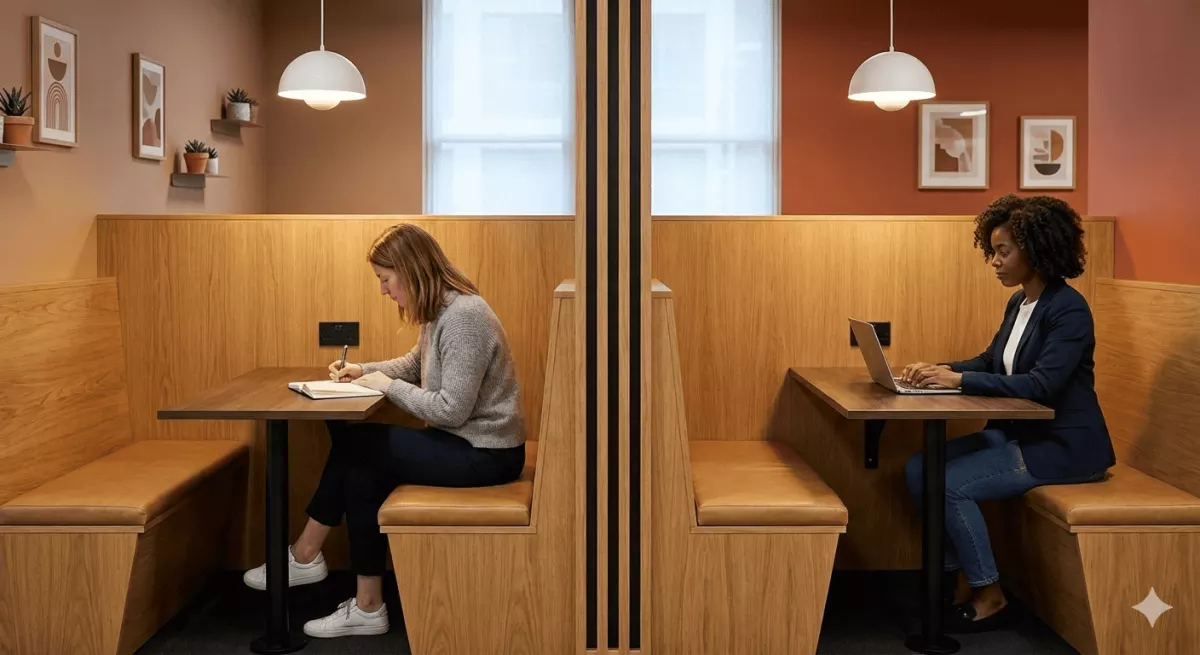
Your beautifully designed activity-based workspace opened six months ago — and the ABW materials looked flawless.
The furniture arrangement? Perfect. The zone planning? Textbook. The first-month photos? Instagram gold.
Then reality hit. The “collaboration tables” developed scratches from constant laptop movement. Those gorgeous soft-touch lounge chairs in the social hub? Stained beyond recovery after the first coffee spill. The acoustic panels you specified for focus pods? They looked premium but absorbed zero sound. Your modular furniture that was supposed to reconfigure weekly? Too heavy to move, and the finish chips every time someone tries.
Here’s the uncomfortable truth about activity-based working: 71% of organizations perceive their offices as focus-based despite shifting toward ABW designs, largely because materials fail to support the intended behaviors. The concept works brilliantly—until the materials betray the vision.
In this article, you’ll learn:
- How material selection enables or undermines activity-based working success
- Zone-specific material requirements for focus, collaboration, social, and touchdown areas
- Durability specifications for high-turnover, multi-user environments
- Acoustic material performance that actually reduces noise (not just decorates walls)
- Surface material strategies that balance aesthetics with heavy daily use
- Flexible furniture construction that withstands frequent reconfiguration
- Maintenance-friendly materials that keep spaces looking fresh for years
Let’s turn those beautiful renderings into workspaces that actually function as intended.
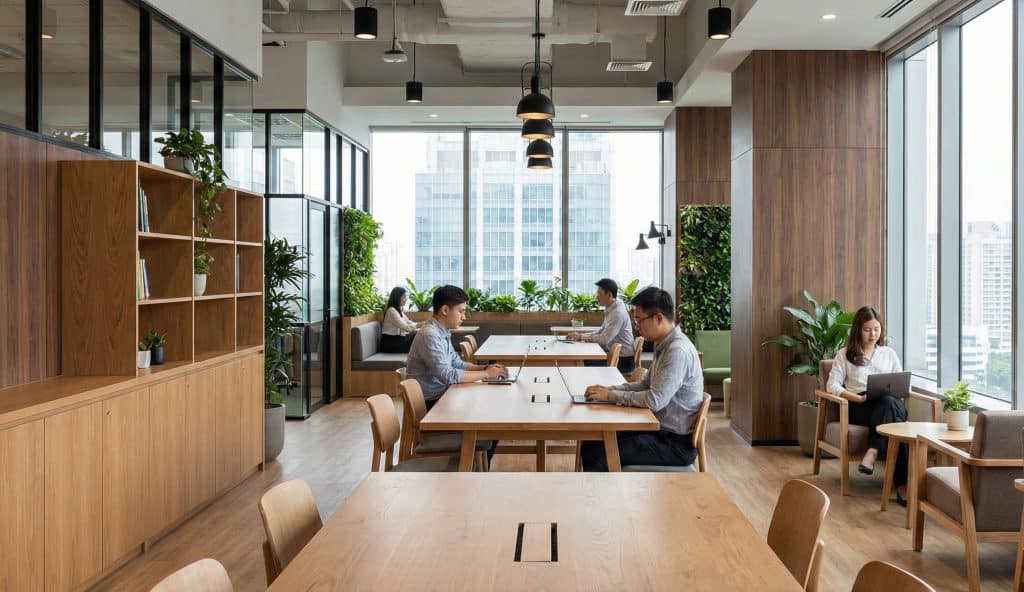
Understanding Activity-Based Working: Why Materials Matter More Than You Think
The ABW Promise vs. Reality Gap
Activity-based working empowers employees by offering diverse spaces tailored to specific tasks, moving beyond traditional assigned seating to support varied work styles. The model works—when materials support it.
The disconnect emerges in execution. Designers create stunning visuals of focus pods, collaboration hubs, and social zones. Then they specify materials based on aesthetics or first-cost, forgetting that ABW environments face punishment traditional offices never imagined:
- Constant turnover: Every surface hosts multiple users daily
- Varied use patterns: The same table supports breakfast, brainstorming, and deadline crunches
- Frequent reconfiguration: Furniture moves weekly or monthly
- Mixed behaviors: Social zones need cleanable surfaces; focus areas demand acoustic performance
- High visibility: Every zone is someone’s workspace every day
Traditional office materials—selected for one person using one desk predictably—fail catastrophically in these conditions.
The Three Material Challenges Unique to ABW
Challenge 1: Multi-User Durability
In traditional offices, that executive desk serves one person. Scratches accumulate slowly. Wear patterns are predictable. In ABW, offices now average just 38.1% occupancy over five working days, but high-use zones see constant rotation. That collaboration table hosts 15 different users weekly, each with different work styles, care levels, and equipment.
Materials must withstand this abuse multiplier. A surface that lasts five years with one careful user might fail in six months under ABW conditions.
Challenge 2: Acoustic Performance vs. Aesthetic Appeal
Focus zones with office acoustic treatment support deep concentration, while collaboration hubs need different acoustic properties. Yet most designers specify acoustic materials based on how they photograph rather than measured NRC (Noise Reduction Coefficient) performance.
The result? Beautiful panels that bounce sound like gymnasium walls, or effective acoustic materials that photograph like 1970s basement rec rooms. ABW demands materials that deliver both.
Challenge 3: Flexibility That Functions
ABW requires reconfigurable furniture. But “modular” means different things to different manufacturers. Some systems rearrange easily but wear rapidly at connection points. Others are indestructible but require tools and two people to modify. Still others look modular in renderings but arrive as permanently configured units.
Modular furniture must provide dynamic solutions for evolving layouts while maintaining structural integrity through constant reconfiguration.
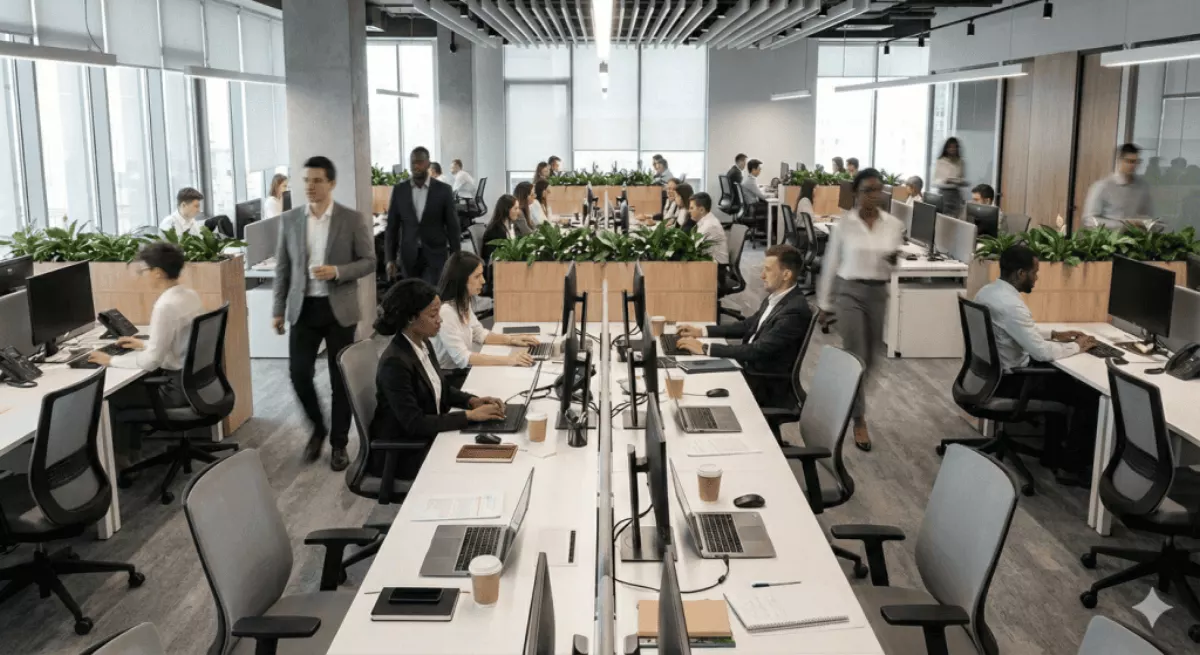
Zone-by-Zone Material Specifications
Focus Zones: The Acoustic Performance Priority
Focus zones provide quiet, distraction-free areas for deep concentration. Research shows over 50% of people report difficulty concentrating in open offices, and once distracted, refocusing takes an average of 20 minutes. Materials here must prioritize acoustic performance above all else.
Surface Materials:
- Work surfaces: TFL panels from KML Designer Finishes deliver durability for low-impact horizontal applications like desktops while maintaining consistent appearance across multiple users. Specify matte or low-gloss finishes that don’t show fingerprints or glare under task lighting.
- Panel systems: Fabric-wrapped acoustic panels with NRC ratings of 0.80 or higher. Premium acoustic materials deliver up to 30-40 dB noise reduction, enough to significantly reduce ambient noise.
- Flooring: Carpet tile (not luxury vinyl) in focus areas. LVT reflects sound; carpet absorbs it. Specify tiles with attached cushion backing for maximum sound absorption.
Furniture Materials:
- Seating: High-performance upholstery fabrics rated for 100,000+ double rubs minimum. Focus zone chairs see multiple users daily; residential-grade fabrics fail rapidly.
- Acoustic pods: Soundproof office pods feature three-layer acoustic structures—PET fiber, particle board, acoustic felt—engineered to block and absorb sound efficiently. Verify STC (Sound Transmission Class) ratings of 30-35 minimum.
- Privacy screens: Fabric-wrapped panels at 66 inches or higher for seated privacy. These taller dividers offer excellent acoustic absorption, containing conversations and reducing distraction.
Common Mistakes:
- Specifying decorative “acoustic” panels without checking NRC ratings
- Using hard surfaces (glass, laminate) that bounce sound
- Selecting low-pile carpet that provides minimal sound absorption
- Forgetting that focus zones need cleanable materials despite acoustic priorities
Collaboration Hubs: Durability Meets Flexibility
Collaboration zones encourage spontaneous interaction and idea-sharing, requiring materials that withstand heavy abuse while supporting frequent reconfiguration.
Work Surface Requirements:
- Benching systems: High Pressure Laminate (HPL) for horizontal surfaces seeing constant laptop movement, whiteboard marker contact, and collaborative work. HPL delivers superior wear resistance and impact resistance compared to lower-pressure alternatives.
- Mobile tables: Lightweight cores with durable edge banding. Tables must be light enough to move easily but sturdy enough to withstand constant repositioning. Commercial-grade laminates ensure longevity and performance.
- Height-adjustable surfaces: Specify powder-coated steel frames (not painted) that won’t chip with repeated height changes. Laminate tops should have impact-resistant edge treatments.
Seating Durability:
- Collaborative seating: Solution-dyed nylon fabrics resist fading and wear. For high-traffic areas, recommend solution-dyed nylon known for exceptional durability.
- Stackable/nesting options: Metal or polypropylene chairs that won’t scratch or chip when stacked. Wood chairs look beautiful but damage rapidly in stack-and-store environments.
- Modular lounge: Modular lounge seating combines comfort and style with reconfigurable options. Verify connection mechanisms that withstand hundreds of reconfigurations.
Technology Integration Surfaces:
- Writable surfaces: Porcelain-enameled steel whiteboards (not melamine). Melamine degrades rapidly; porcelain lasts decades.
- Power/data access: Grommets in solid materials, not snap-in solutions in thin laminates. ABW collaboration zones see constant cord plugging/unplugging.
What Works: We specified HPL-topped mobile tables with powder-coated steel bases for a tech company’s collaboration zones. Three years later, tables that move 2-3 times weekly still look new. The investment in durable materials paid off in month 18.
Social and Breakout Areas: The Cleanability Challenge
Breakout zones offer calming design and natural materials that allow employees to decompress. But “natural materials” and “coffee spill resistance” often conflict.
Surface Material Priorities:
- Tables/counters: Solid surface or HPL with enhanced stain resistance. Durable, easy-to-clean surfaces withstand heavy use and potential contact with food/beverages.
- Soft seating: Performance fabrics with liquid-repellent treatments. Crypton-treated polyester blends or outdoor-grade fabrics work well in hospitality-style venues.
- Lounge surfaces: Avoid untreated fabric arms and seats. Every surface in breakout areas contacts food or beverages eventually.
Floor Materials:
- High-traffic paths: LVT or porcelain tile. Luxury vinyl tile handles heavy foot traffic and rolling equipment while remaining easy to clean.
- Seating zones: Low-profile carpet tile that won’t trap crumbs but provides comfort and sound absorption.
Acoustic Balance: Soft materials like carpets, curtains, and wall panels absorb sound. Balance social energy with acoustic comfort—breakout areas should feel lively without becoming cacophonous.
Maintenance Reality: Specify all breakout furniture with removable, washable cushion covers. Beautiful fixed-upholstery lounges become expensive trash after inevitable spills.
Touchdown and Hoteling: The Reset-Ready Specification
Touchdown points provide quick-access workspace for short-duration tasks in hybrid environments. These areas accommodate new usage patterns created by hybrid working.
Surface Requirements:
- Quick-clean tops: Smooth, non-porous surfaces that wipe clean in seconds. TFL’s heat-and-pressure bonding creates scratch-resistant, stain-resistant surfaces ideal for high-turnover applications.
- No texture: Skip the realistic wood textures in touchdown areas. Smooth surfaces clean faster and show fewer fingerprints.
- Edge critical: Proper edge treatments largely determine finished TFL panel durability. In touchdown zones with constant bag/laptop contact, quality edge banding prevents chipping and moisture penetration.
Seating Specifications:
- Task chairs: Mesh or vinyl—never fabric—for touchdown seating. Mesh dries quickly; vinyl wipes clean. Fabric absorbs everything.
- Adjustment simplicity: Chairs must adjust intuitively without instruction. Complicated mechanisms mean users don’t adjust, leading to ergonomic complaints.
- Wear indicators: Specify commercial-grade casters that won’t mark floors or fail from constant use by different-weight users.
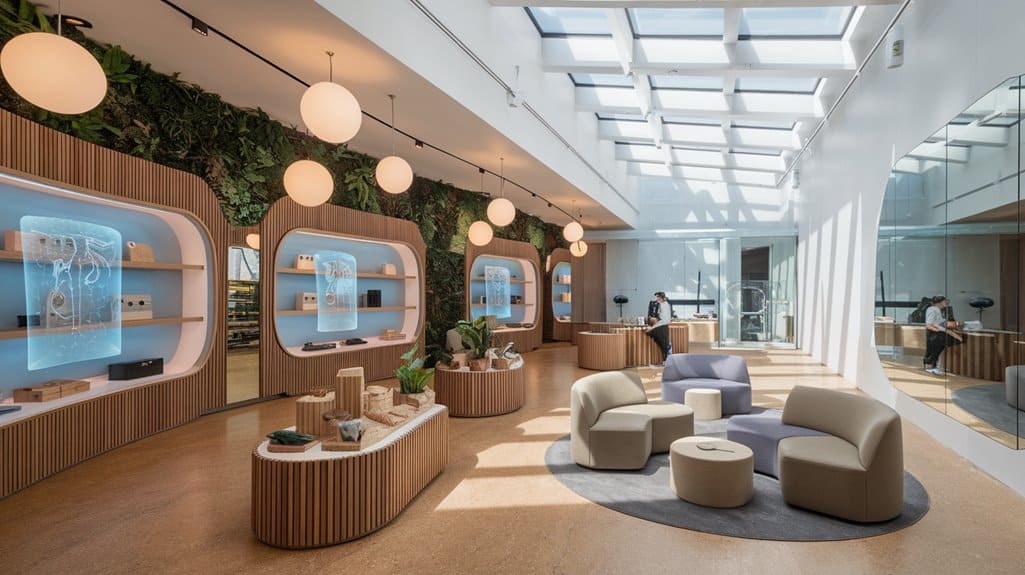
Contemporary design interior for Designer Charrette, highlighting innovative workspace with modern furniture, natural light, and creative display zones.
Flexible Furniture: Construction That Enables Reconfiguration
What “Modular” Actually Means
Modular furniture refers to pieces with interchangeable, movable components that can be easily configured and reconfigured. But implementation varies wildly.
True Flexibility Indicators:
- Connection systems: Mechanical connectors (not just alignment pins) that lock securely without tools
- Weight distribution: Individual modules under 40 lbs for single-person repositioning
- Finish protection: Rounded corners and protective bumpers at contact points
- Structural independence: Each module supports itself; losing one connection doesn’t collapse the configuration
Material Considerations:
- Frame construction: Powder-coated steel or heavy-gauge aluminum. Wood frames are beautiful but heavy and prone to damage during reconfiguration.
- Top materials: Laminate furniture offers cost-effective alternatives with considerable durability. Choose laminates with enhanced impact resistance at connection points.
- Edge treatment: Impact-resistant TFL with enhanced resin systems provides higher ratings than standard options, critical for furniture that moves frequently.
Mobile vs. Modular: Different Material Demands
Mobile Furniture (Casters):
- Base stability: Wide footprints prevent tipping during movement
- Caster quality: Locking casters on all legs, not just two. Budget casters fail in months with daily movement.
- Surface protection: Rounded metal corners with vinyl or rubber bumpers
- Handle integration: Designated grab points built into structure, not afterthought handles
Modular Systems (Connect/Disconnect):
- Connection durability: Metal-to-metal connections, not plastic clips
- Alignment precision: Self-aligning systems that don’t require perfect positioning
- Finish continuity: Color matching across panels, edge banding, and HPL ensures uniformity across modular pieces
The Weight Problem
ABW promises easy reconfiguration. But furniture weighing 80+ lbs per module requires facilities staff for every change, defeating flexibility’s purpose.
Weight Reduction Strategies:
- Core selection: Specify lightweight cores (honeycomb or foam) for mobile elements. TFL is available in multiple core types, each engineered for specific performance needs.
- Frame engineering: Tubular steel (not solid) for structural frames
- Size limits: Maximum 4-foot modules for individual pieces; longer spans create multi-person-lift requirements
Real-World Test: Can one person lift and reposition the module? If not, it’s not truly flexible furniture—regardless of what the spec sheet claims.
Acoustic Materials: Beyond Pretty Panels
Understanding Acoustic Performance Metrics
Acoustic design focuses on how sound travels, reflects, and is absorbed to create comfortable environments. But most designers never verify actual performance.
Key Metrics:
- NRC (Noise Reduction Coefficient): Measures sound absorption from 0.0 (reflects all sound) to 1.0 (absorbs all sound). Target NRC 0.80+ for focus zones, 0.60+ for collaboration areas.
- STC (Sound Transmission Class): Measures sound isolation through barriers. Soundproof office pods achieve STC 30-35 ratings, significantly reducing voice transmission.
- Speech Level Reduction: Premium pods provide 30 dB speech level reduction—the difference between normal conversation and library quiet.
The Photo vs. Performance Gap: Perforated metal panels photograph beautifully but provide minimal acoustic benefit (NRC 0.15-0.30). Fabric-wrapped fiberglass panels look institutional but deliver NRC 0.85-1.0. Choose performance over Instagram appeal.
Material-by-Material Acoustic Performance
High Performers:
- Fabric-wrapped fiberglass/mineral wool: NRC 0.85-1.0 when properly installed
- Acoustic felt (PET fiber): NRC 0.65-0.85, sustainable option for panels and baffles
- Perforated acoustic gypsum: NRC 0.50-0.70, paintable for design flexibility
- Carpet with cushion backing: NRC 0.40-0.60 depending on pile and pad
Low Performers:
- Exposed drywall: NRC 0.05 (reflects nearly all sound)
- Glass: NRC 0.05 (beautiful but acoustically terrible)
- Hard-surface flooring: NRC 0.01-0.05 (amplifies sound problems)
- Wood panels: NRC 0.10-0.15 unless specifically engineered for acoustics
Strategic Placement
Focus zones with acoustic treatment support deep concentration. But not all surfaces need treatment.
Priority Surfaces:
- First reflection points: Walls/ceilings where sound first bounces between speaker and listener
- Barrier locations: Between noisy collaboration zones and quiet focus areas
- Ceiling planes: Often the largest untreated surface reflecting sound downward
- Hard surface adjacencies: Acoustic panels near glass walls counteract glass’s poor acoustic performance
Where to Skip Treatment: Social and collaboration zones benefit from moderate reverberation—it creates energy and liveliness. Over-treating these spaces creates the “dead room” effect that suppresses social interaction.
Surface Materials That Support Activity Variety
The TFL Advantage in ABW Environments
Thermally Fused Laminate fuses décor paper directly to substrate through heat and pressure, creating finished panels ready for fabrication. For ABW environments, TFL delivers specific advantages:
Design Consistency: TFL manufacturers publish cross-reference guides for matching designs in HPL, 3DL, and edge treatments. This coordination matters in ABW where one project might use:
- HPL for high-abuse collaboration tables
- TFL for vertical panels and storage
- Matching edge banding throughout
The visual continuity reinforces wayfinding and zone identity.
Cost-Performance Balance: In large ABW projects with hundreds of workpoints, TFL components easily outlast wood and veneered components in commercial settings while controlling costs. Reserve HPL for true high-impact zones; use TFL everywhere else.
Sustainability Alignment: KML’s TFL can be among the most sustainable building products depending on specification details. ABW projects emphasizing environmental goals benefit from TFL’s recyclable substrate options and low-VOC resin systems.
Texture Strategy: Specialized embossing creates textures from reclaimed wood roughness to subtle linen feels. Use texture strategically:
- Heavy texture: Masks scratches and wear in high-traffic touchdown areas
- Subtle texture: Reduces glare in focus zones with task lighting
- Smooth finish: Facilitates quick cleaning in breakout/social zones
Material Combinations That Work
Hybrid Surface Strategy:
- Collaboration tables: HPL horizontal, TFL verticals (storage pedestals, privacy screens)
- Focus pods: TFL panels with acoustic fabric inserts
- Social zones: Solid surface/quartz featured elements, TFL background surfaces
- Touchdown points: TFL throughout for cost-effectiveness
This approach concentrates investment where abuse occurs while maintaining design continuity.
Finish Selection for Multi-User Environments
Matte/Low-Gloss Finishes:
- Hide fingerprints, scratches, and normal wear
- Reduce glare for users at varying heights
- Photograph less dramatically but maintain appearance longer
High-Gloss Finishes:
- Show every fingerprint and micro-scratch
- Beautiful initially but require constant maintenance
- Appropriate only for low-touch applications (upper storage, accent panels)
Textured Finishes:
- Provide tactile interest and design depth
- Mask minor surface damage better than smooth finishes
- Clean easily when properly sealed
KML offers 8+ finishes with varying textures—specify based on actual use patterns, not renderings.
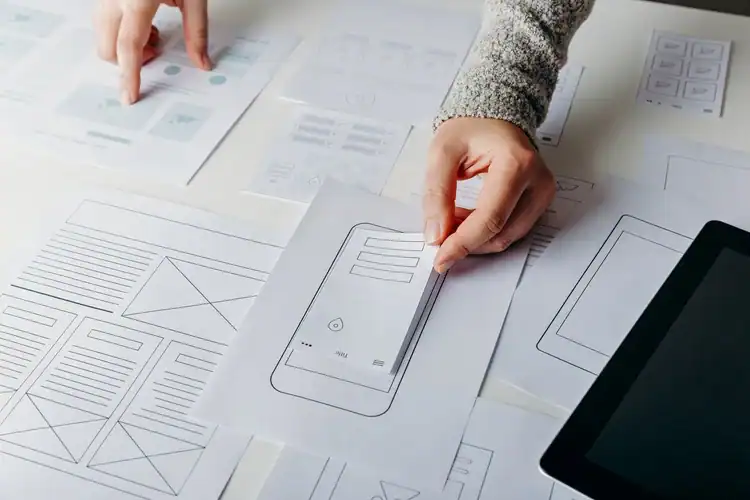
Creative mobile app wireframes and UI design sketches prepared during a designer charrette workshop.
Maintenance Considerations: Design for the Long Haul
The ABW Maintenance Reality
Traditional offices clean assigned desks overnight. ABW requires constant, real-time maintenance as users rotate through spaces hourly.
Material Selection for Maintainability:
- Non-porous surfaces: Resist staining and harbor fewer bacteria. Laminate, vinyl, treated fabrics outperform untreated natural materials.
- Sealed edges: Moisture penetration destroys substrate. Proper edge treatments prevent the most common failure mode.
- Removable components: Cushion covers that zip off for washing, not permanent upholstery
- Uniform cleaning methods: Specify materials cleanable with standard commercial products, not specialty treatments
Cleanability Testing
Before specifying, ask:
- Can this surface be wiped with standard disinfectant and water?
- Will repeated cleaning dull or damage the finish?
- Can spilled coffee be removed without leaving stains?
- Does the material support electrostatic disinfection if needed?
TFL is considered non-repairable—damage requires component replacement. But proper specification prevents damage: moisture-resistant cores in wet areas, impact-resistant formulations in heavy-use zones, quality edge banding throughout.
Replacement Strategy
ABW components will fail. Plan for it.
Modular Replacement:
- Specify systems where individual components replace without disturbing entire assemblies
- Maintain finish samples for future matching (manufacturers discontinue lines)
- Order extra panels/cushions during initial purchase while exact matches are available
Wear Pattern Monitoring: Track which zones see heaviest use. Upgrade materials proactively in these areas before failure creates user dissatisfaction.
Real-World ABW Material Specifications
Case Study: Tech Company Headquarters
Challenge: 40,000 square feet of ABW serving 300 employees in hybrid model. Budget constraints precluded premium materials throughout.
Material Strategy:
- Focus pods: TFL panels with fabric-wrapped acoustic inserts (NRC 0.85)
- Collaboration zones: HPL benching with powder-coated steel frames
- Social areas: Performance-fabric lounge seating, solid-surface featured counters, TFL storage
- Touchdown points: TFL throughout with smooth finishes for quick cleaning
Results After 18 Months:
- 94% employee satisfaction with material performance
- Zero surface replacements required
- Cleaning time reduced 30% vs. initial fabric-heavy specification
- Material costs 22% under budget due to strategic TFL use
Key Learning: Invest in durability where contact occurs (horizontal surfaces, seating), use cost-effective options for verticals and backgrounds.

Case Study: Financial Services Firm
Challenge: Converting traditional private offices to ABW. Executive resistance to “looking cheap.”
Material Strategy:
- Executive enclave: Wood veneer accents with TFL wood-grain panels that can be mistaken for real wood
- Collaboration zones: HPL with sophisticated textures and edge details
- Focus areas: High-end acoustic pods with premium finishes
- Support spaces: Standard TFL throughout
Results:
- Executive buy-in achieved through material quality perception
- 15-year projected lifespan for primary surfaces
- Hybrid materials strategy saved $180,000 vs. all-premium specification
Wrapping Up: Materials That Enable Behavior
Activity-based working succeeds or fails based on whether materials support intended behaviors. Those beautiful renderings of flexible, collaborative, focused workspaces? They only function when:
Materials withstand constant turnover without showing wear that makes spaces feel second-rate. Commercial-grade materials ensure longevity through hundreds of users.
Acoustic performance delivers measurable results rather than decorative gestures. Proper acoustic treatment supports concentration where it matters.
Flexibility actually works because materials and construction enable easy reconfiguration without damage.
Maintenance keeps spaces fresh through cleaning methods that don’t destroy finishes or require specialized treatment.
The designers getting ABW right understand that material selection isn’t about first-cost or Instagram appeal—it’s about enabling the behaviors your workspace promises. That means:
TFL from KML Designer Finishes for cost-effective durability across vertical surfaces and low-impact horizontals. HPL for true abuse zones. Premium acoustic materials where performance matters. Mobile furniture light enough to actually move. Cleanable surfaces throughout.
Start your next ABW project by documenting how people will actually use each zone. Then select materials with proven performance in those specific applications. That collaboration table seeing 50 users weekly? It needs different materials than the executive enclave used by three people.
Those renderings you’re presenting? They’ll still look that good three years from now—but only if materials support the promise.
Frequently Asked Questions
How do I balance durability with the residential aesthetic clients want for activity-based workspaces?
Specify commercial-grade materials with residential aesthetics. KML’s wood-grain TFL can be mistaken for real wood while delivering commercial durability. Use premium materials as accents (real wood elements, luxury textiles in low-contact zones) combined with durable bases. Performance fabrics now include options matching high-end residential textiles. The key is selecting materials engineered for commercial use that don’t look obviously commercial.
Should I specify the same materials throughout an ABW environment, or vary by zone?
Vary strategically. Maintain visual continuity through coordinated finishes (use TFL/HPL matching systems), but adjust performance specifications by zone. Focus areas need acoustic materials; collaboration zones need impact resistance; social areas need cleanability. Activity-based design aligns space with usage patterns—material specs should follow the same logic.
How do I specify modular furniture that will actually reconfigure without failing?
Demand physical testing before specifying. Request that vendors demonstrate multiple reconfigurations in your presence. Check: connection mechanisms (metal-to-metal), individual module weight (under 40 lbs for one-person moves), edge protection at contact points, and structural independence of modules. True modular systems allow easy reconfiguration without requiring tools or causing damage. Verify warranty coverage includes reconfiguration-related wear.
What acoustic performance should I actually specify—and how do I verify manufacturers deliver it?
Target NRC 0.80+ for focus zones, 0.60+ for collaboration areas, 0.40+ for social zones. Verify by requesting third-party test reports showing NRC ratings according to ASTM C423 standards. Premium acoustic solutions deliver 30-40 dB sound reduction when properly installed. Don’t accept “acoustic” claims without documentation. For critical applications, specify field verification testing post-installation.
How do I maintain ABW materials across multiple user types and constant turnover?
Specify maintenance-friendly materials from the start: non-porous surfaces, sealed edges, removable/washable components. Create zone-specific cleaning protocols aligned with material specifications. Train facilities staff on proper cleaning methods—TFL requires different care than solid surface. Implement real-time cleaning for high-turnover areas rather than overnight-only service. Stock replacement components (cushion covers, modular panels) for rapid response to damage.
For a deeper breakdown of how acoustic materials impact productivity and ROI, see: The Sound of Silence (Profitability): Solving Open Office Acoustics Without Killing Collaboration.