
Laminate Durability: Ratings and Certifications Guide
Laminate durability ratings often determine whether your specification performs in real-world conditions—or leads to costly mistakes and compliance issues. The specification says “high-pressure decorative laminate meeting NEMA LD3 standards”—but do you actually know what that means, or are you trusting that someone upstream figured it out?
We’ve seen it happen too many times. A designer specifies laminate for a healthcare project without understanding GREENGUARD Gold requirements. The millwork shop substitutes a product that looks identical but lacks the certification. Six months later, the client fails an indoor air quality audit, and everyone points fingers.
Certifications and durability ratings exist for good reasons. They protect occupants from harmful emissions. They ensure surfaces survive the abuse of daily use. They give you objective criteria for evaluating products and defending your specifications. Understanding what these ratings actually mean transforms you from someone who copies manufacturer boilerplate into someone who specifies with confidence.
In this article, you’ll learn:
- How different laminate types (HPL, TFL, LPL, CPL) differ in construction, performance, and appropriate applications
- What NEMA LD3 standards actually test and what the type designations mean
- Why GREENGUARD Gold certification matters for schools, healthcare, and commercial projects
- How CARB Phase 2 and EPA TSCA Title VI regulate formaldehyde emissions in composite wood products
- What fire ratings (Class A, B, C) measure and where building codes require them
- How AWI grades determine which laminate types are acceptable for architectural woodwork
- Sample specification language that properly calls out certifications and standards

Why Laminate Certifications Matter
Beyond the Pretty Pattern
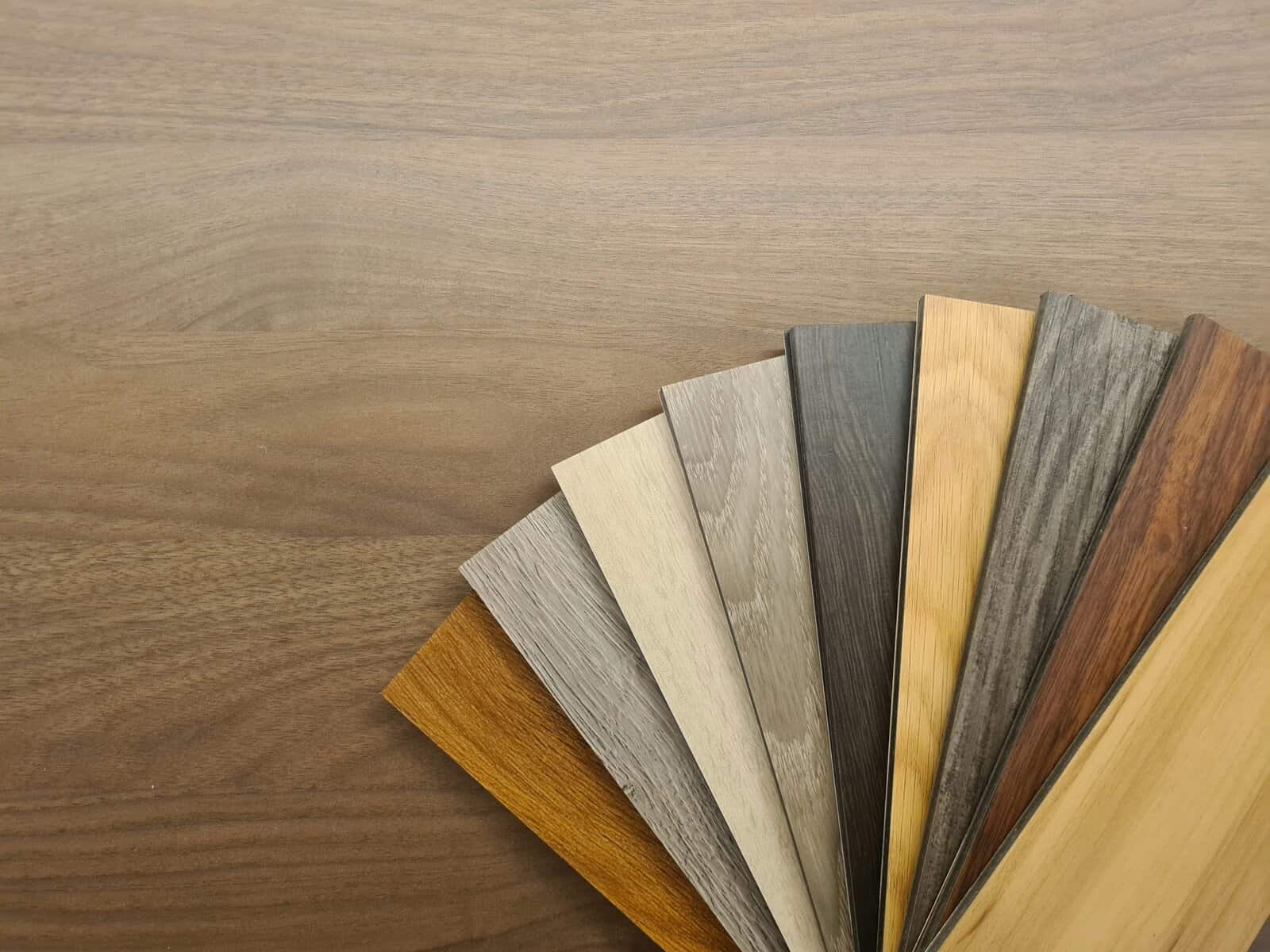
Every laminate sample looks great in the showroom. The pattern is crisp, the color is perfect, the texture feels right. But that sample hasn’t survived three years of hospital-grade disinfectant wipe-downs. It hasn’t endured a decade of coffee spills in a break room. It hasn’t been tested for the chemicals it releases into indoor air.
Certifications and ratings tell you how a product performs beyond first impressions. They provide objective, third-party verification that a product meets specific performance thresholds. Without them, you’re relying on marketing claims and hoping for the best.
What’s at Stake
Poor laminate selection creates real consequences. Surfaces that wear prematurely generate warranty claims and replacement costs. Products with high VOC emissions compromise occupant health and fail sustainability certifications. Non-compliant materials trigger code violations and project delays.
Your professional reputation rides on specifications that perform as promised. Understanding certifications helps you select products that meet project requirements and defend those selections when questioned.
How to Read a Technical Data Sheet
Manufacturer technical data sheets contain the certification information you need—if you know where to look. Key elements include NEMA type designations, test results for specific performance criteria, certification logos (GREENGUARD, FSC, etc.), and compliance statements for regulatory requirements like CARB and TSCA Title VI.
Don’t just look for checkmarks. Understand what each certification requires and verify that the product meets your specific project needs.
The Laminate Family — Understanding Product Categories
High-Pressure Laminate (HPL) — The Industry Standard
High-pressure laminate has been the workhorse of commercial interiors for decades. According to the Composite Panel Association, HPL is manufactured by saturating multiple layers of kraft paper with phenolic resin, topping with a decorative paper layer saturated with melamine resin, and curing under high heat and pressure (approximately 1,000-1,400 PSI).
The result is a durable sheet material typically 0.028” to 0.050” thick that gets bonded to a substrate (particleboard, MDF, or plywood) during fabrication. HPL offers excellent wear resistance, chemical resistance, and design flexibility. It’s the standard choice for horizontal work surfaces, high-traffic areas, and applications requiring maximum durability.
Thermally Fused Laminate (TFL) — Efficiency Meets Performance
Thermally fused laminate takes a different approach. As the Composite Panel Association explains, TFL is made by fusing a resin-impregnated décor paper directly to a substrate using heat and pressure. The décor paper—typically weighing 60-130 g/m²—is the same paper used in HPL production, enabling exact pattern matching between product lines.
TFL panels arrive ready to fabricate, eliminating the laminating step required with HPL. This efficiency translates to cost savings without sacrificing performance for appropriate applications. TFL panels offer excellent scratch and wear resistance for vertical surfaces, furniture components, cabinet interiors, and retail fixtures.
The key distinction: TFL is a finished panel product, while HPL is a sheet material requiring application to a separate substrate.
Low-Pressure Laminate (LPL/Melamine) — Economy Applications
Low-pressure laminate, often called melamine, uses lighter-weight decorative paper applied to substrate at lower pressures than TFL. LPL costs less but offers reduced durability compared to TFL and HPL. It’s appropriate for concealed surfaces, temporary installations, and budget-driven projects where appearance matters more than longevity.
Per AWI Standards for casework, LPDL (low-pressure decorative laminate) is permitted for exposed exterior surfaces only at Economy Grade. Custom and Premium Grade require HPDL for exposed surfaces.
Continuous Pressure Laminate (CPL) — Flooring and High-Wear
Continuous pressure laminate is manufactured in a continuous process rather than in individual sheets. CPL is commonly used for laminate flooring and other high-wear applications. The manufacturing process creates a thinner, more flexible product that works well for flooring systems.
Compact Laminate (Solid Phenolic) — Structural Applications
Compact laminate, or solid phenolic, is HPL manufactured at greater thickness (typically 1/8” to 1” or more). Because it’s solid laminate throughout—no substrate required—it’s self-supporting and moisture-resistant. Common applications include toilet partitions, lockers, laboratory surfaces, and exterior cladding.
Choosing the Right Product for the Application
Product selection depends on application requirements:
- Horizontal high-traffic surfaces (countertops, desktops, transaction tops): HPL
- Vertical surfaces and furniture components (cabinet doors, panels, fixtures): TFL or HPL
- Cabinet interiors and concealed surfaces: TFL or LPL
- Flooring: CPL
- Wet environments and partitions: Compact laminate
- Budget-constrained, low-wear applications: LPL
NEMA Standards — The Performance Baseline
What NEMA LD3 Covers
The National Electrical Manufacturers Association publishes NEMA LD3, the North American standard for high-pressure decorative laminates. The standard establishes test methods and minimum performance values for properties including:
- Wear resistance — measured in cycles using a Taber abraser
- Dimensional stability — change in length/width under humidity variations
- Boiling water resistance — ability to withstand exposure without damage
- High-temperature resistance — resistance to damage from hot objects
- Light resistance — color retention under UV exposure
- Stain resistance — ability to resist common staining agents
- Chemical resistance — performance against household and commercial chemicals
- Impact resistance — resistance to damage from falling objects
- Radiant heat resistance — resistance to damage from heat sources
NC State University’s Wood Products Technical Services has tested laminates to NEMA LD3 since 1982, providing the independent verification that backs manufacturer claims.

HPL Type Designations
NEMA LD3 classifies HPL into types based on intended application. Common designations include:
- HGS — Horizontal General Purpose, Standard
- HGP — Horizontal General Purpose, Postforming
- VGS — Vertical General Purpose, Standard
- VGP — Vertical General Purpose, Postforming
- HGF — Horizontal General Purpose, Fire-Rated
The first letter indicates orientation (H for horizontal, V for vertical). Horizontal grades meet higher wear and impact standards for countertops and work surfaces. Vertical grades are optimized for wall panels, cabinet faces, and other vertical applications where wear requirements are lower.
How TFL Relates to NEMA Standards
TFL panels use decorative facers that qualify as NEMA LD3 Type VGL (Vertical General Purpose, Low-pressure). According to Wilsonart’s TFL technical data, TFL panel assemblies comply with NEMA and ISO test standards for Type VGL laminate panels.
When specifying TFL, reference NEMA LD3 Type VGL to establish performance expectations. This ensures the product meets recognized industry standards for vertical applications.
Reading NEMA Test Results
Manufacturer technical data sheets report NEMA test results. Look for values meeting or exceeding minimum requirements for the type designation. Higher numbers indicate better performance for most metrics. “No effect” or “slight effect” ratings on stain and chemical resistance tests indicate good performance.
Indoor Air Quality Certifications
Why IAQ Matters More Than Ever
According to the U.S. Environmental Protection Agency, VOC concentrations indoors may be two to 1,000 times higher than outdoors. Americans spend approximately 90% of their time indoors. Poor indoor air quality contributes to headaches, respiratory issues, and long-term health problems.
Building materials—including laminates and their substrates—release VOCs into indoor air. Certification programs establish emission limits that protect occupant health.
GREENGUARD vs. GREENGUARD Gold
UL’s GREENGUARD Certification program establishes emission limits for building products. Two certification levels exist:
GREENGUARD Certified products meet baseline emission limits for VOCs. This level is appropriate for general commercial applications.
GREENGUARD Gold Certified products meet stricter limits, including requirements for additional chemicals and lower total VOC emissions. GREENGUARD Gold also complies with California Department of Public Health Standard Method Section 01350. This level is required for products used in schools, healthcare facilities, and environments with children or sensitive populations.
According to My Chemical-Free House’s analysis, GREENGUARD Gold allows formaldehyde levels of just 9 μg/m³—lower than typical outdoor urban air concentrations.
California Section 01350 — The Gold Standard Baseline
California Section 01350 establishes the testing protocol for low-emitting materials used in schools and public buildings. GREENGUARD Gold certification requires compliance with this standard. When specifications require “Section 01350 compliant” materials, GREENGUARD Gold certified products meet the requirement.
FloorScore and Other IAQ Certifications
FloorScore certification, developed by the Resilient Floor Covering Institute, applies primarily to flooring products. It tests for VOC emissions using California Section 01350 methodology. As BuildDirect notes, FloorScore is widely used for laminate flooring certification.
For panel products used in casework and furniture, GREENGUARD Gold remains the primary IAQ certification referenced in specifications.

Specifying for LEED and WELL
LEED v4 and WELL Building Standard both reference low-emitting materials. GREENGUARD Gold certification provides documentation supporting credit achievement. When pursuing these certifications, verify that specified laminates hold current GREENGUARD Gold certification and request certificates for project documentation.
Formaldehyde Emission Standards
The CARB Story — How California Led the Way
California led the nation in regulating formaldehyde emissions from composite wood products. The California Air Resources Board’s Airborne Toxic Control Measure (ATCM), implemented in phases beginning in 2009, established emission limits for particleboard, MDF, and hardwood plywood sold in California.
The Composite Panel Association notes that the North American composite panel industry voluntarily adopted CARB standards for all 50 states, even before federal requirements existed.
EPA TSCA Title VI — Now a Federal Requirement
In 2010, the Formaldehyde Standards for Composite Wood Products Act added Title VI to the Toxic Substances Control Act. The EPA’s implementing regulations went into effect in phases beginning June 2018.
Today, all composite wood products—including particleboard and MDF substrates used in laminate panels—sold in the United States must be TSCA Title VI compliant. The emission standards are identical to CARB ATCM Phase 2 limits.
NAF and ULEF Resins — Going Beyond Compliance
Some manufacturers exceed minimum requirements by using no-added-formaldehyde (NAF) or ultra-low-emitting-formaldehyde (ULEF) resins. These designations indicate products substantially below regulatory limits.
When specifying for sensitive environments like healthcare or early childhood education, NAF or ULEF products provide additional assurance beyond standard compliance.
What the Labels Mean
TSCA Title VI requires labeling of compliant products. Labels must include the panel producer name, lot number, and a compliance statement. Look for “TSCA Title VI compliant” or equivalent language on panel edges or documentation.
Substrate Matters
Formaldehyde regulations apply to the substrate, not the laminate surface. When specifying TFL or HPL on particleboard or MDF, the substrate must be TSCA Title VI compliant. Verify compliance for both the laminate and the substrate.
Quality TFL manufacturers like KML Designer Finishes supply panels with compliant substrates, simplifying specification and documentation requirements.
Fire Performance Ratings
ASTM E84 — The Steiner Tunnel Test Explained
ASTM E84, also known as the Steiner Tunnel Test, is the standard method for measuring surface burning characteristics. A 24” x 24’ sample is mounted in a tunnel-like chamber and exposed to controlled flame for 10 minutes.
The test measures two things: how far and fast flames spread across the surface, and how much smoke the material produces. These measurements generate the Flame Spread Index (FSI) and Smoke Developed Index (SDI).
Flame Spread Index vs. Smoke Developed Index
The Flame Spread Index quantifies flame travel speed. Lower numbers indicate slower flame spread. The scale uses cement board (FSI = 0) and red oak flooring (FSI = 100) as reference points.
The Smoke Developed Index measures smoke production during burning. All fire-rated interior finish materials must have SDI of 450 or less, regardless of classification.
Class A, B, and C — What Each Means
According to the International Building Code, interior finish materials are classified as follows:
- Class A: FSI 0-25, SDI 0-450 — highest fire performance, required for most commercial applications
- Class B: FSI 26-75, SDI 0-450 — moderate fire performance, acceptable in some applications
- Class C: FSI 76-200, SDI 0-450 — lowest acceptable rating, limited applications
Most HPL products achieve Class A fire ratings when tested per ASTM E84. According to Fossil Graphics’ technical specifications, typical HPL achieves flame spread of 10 and smoke developed of 95—well within Class A requirements.
Fire Rating vs. Fire Resistance
Fire rating (Class A/B/C) measures surface burning characteristics—how the material contributes to fire spread. Fire resistance rating (1-hour, 2-hour) measures how long an assembly prevents fire from passing through a wall or floor.
These are different tests with different purposes. Laminate surfaces receive fire ratings. Wall and floor assemblies receive fire resistance ratings. Don’t confuse them in specifications.
Where Fire Ratings Apply
The International Building Code requires Class A, B, or C interior finish materials based on occupancy type and building location. Generally:
- Exit enclosures and exit passageways: Class A or B required
- Corridors: Class A or B required for most occupancies
- Rooms and enclosed spaces: Requirements vary by occupancy
Verify local code requirements. Healthcare, assembly, and institutional occupancies typically require Class A throughout public areas.
Sustainability Certifications
FSC Chain of Custody — Responsible Forest Management
The Forest Stewardship Council certifies that wood products come from responsibly managed forests. FSC certification addresses environmental protection, indigenous peoples’ rights, and economic viability of forest management.
Chain of Custody certification tracks FSC-certified materials from forest through manufacturing to finished product. According to Formica’s sustainability documentation, manufacturers holding Chain of Custody certification can supply products with FSC labels.
FSC Labels Explained
Three FSC labels indicate different material compositions:
- FSC 100%: Made entirely from FSC-certified virgin forest materials
- FSC Mix: Combination of FSC-certified, recycled, and/or controlled wood
- FSC Recycled: Made from 100% recycled materials
For LEED and other green building programs, FSC-certified products contribute to materials credits. Specify “FSC certified” or “FSC Mix” and require Chain of Custody documentation.
PEFC and SFI — Alternative Forestry Certifications
The Programme for Endorsement of Forest Certification (PEFC) and Sustainable Forestry Initiative (SFI) provide alternative forestry certifications. Per West Fraser’s certification documentation, many panel manufacturers hold multiple forestry certifications.
LEED recognizes FSC as the primary forestry certification. Other programs may accept PEFC or SFI. Verify requirements for your specific certification target.
EPDs and HPDs — Transparency Documentation
Environmental Product Declarations (EPDs) provide lifecycle environmental impact data. Health Product Declarations (HPDs) disclose material ingredients and associated health hazards. Both documents support transparency requirements in green building programs.
Major laminate manufacturers publish EPDs and HPDs for their products. Request these documents for projects pursuing Living Building Challenge, WELL, or LEED credits requiring material transparency.
Recycled Content Claims
Many composite panel substrates contain recycled wood fiber. According to Stevens Industries’ specifications, TFL panels may contain 100% post-industrial recovered wood fiber in the substrate.
When specifying recycled content, distinguish between pre-consumer (post-industrial) and post-consumer content. Verify percentages and request documentation for credit calculations.
AWI Standards for Architectural Woodwork
The Three Grades
The Architectural Woodwork Institute’s Standards establish three quality grades for interior woodwork:
- Economy Grade: Minimum quality, typically for non-public areas like utility rooms
- Custom Grade: Default standard for most high-quality commercial woodwork
- Premium Grade: Highest quality for executive areas, boardrooms, and high-profile spaces
These grades address materials, workmanship, and installation quality.
What AWI Says About Laminate Selection
AWI Standards specify laminate requirements by grade. Per AWI Section 10 — Casework:
- Economy Grade exposed exterior surfaces: LPDL of specified color or pattern permitted
- Custom and Premium Grade exposed exterior surfaces: HPDL of specified color or pattern required
This distinction matters. If your project specifies Custom Grade casework, the contractor cannot substitute low-pressure laminate for exposed surfaces—regardless of appearance.
Surface Definitions
AWI Standards define surfaces based on visibility:
- Exposed exterior surfaces: Visible surfaces on cabinet exteriors
- Exposed interior surfaces: Visible surfaces inside cabinets when doors are open
- Semi-exposed surfaces: Less visible surfaces like cabinet backs
- Concealed surfaces: Hidden surfaces not normally visible
Laminate requirements vary by surface definition and grade. Economy Grade permits more flexibility; Premium Grade requires consistent materials throughout.
How AWI Grades Interact with Laminate Specifications
When your specification references AWI grades, laminate selection follows automatically. Specifying “Custom Grade casework per AWI Standards” requires HPDL for exposed surfaces without stating it explicitly.
Conversely, if you specify a specific laminate type, ensure it aligns with the AWI grade. Specifying Premium Grade with LPDL creates a conflict the contractor must resolve—usually through an RFI.
Putting It All Together — Specification Language That Works
Sample HPL Specification
PART 2 — PRODUCTS

2.1 HIGH-PRESSURE DECORATIVE LAMINATE

A. Performance Standard: ANSI/NEMA LD3, Type HGS
   for horizontal applications, Type VGS for vertical
   applications.

B. Thickness: 0.048 inches (1.2 mm) minimum for
   horizontal surfaces; 0.028 inches (0.7 mm) minimum
   for vertical surfaces.

C. Indoor Air Quality: GREENGUARD Gold Certified.

D. Fire Performance: Class A per ASTM E84 when tested
   as a composite with specified substrate.

E. Sustainability: FSC Chain of Custody certified
   available upon request.

F. Color and Pattern: As selected by Architect from
   manufacturer's full range.
Sample TFL Specification
PART 2 — PRODUCTS

2.1 THERMALLY FUSED LAMINATE PANELS

A. Manufacturers: KML Designer Finishes
   (www.kmldesignerfinishes.com/tfl-panels) or
   approved equal.

B. Laminate Performance Standard: ANSI/NEMA LD3,
   Type VGL.

C. Panel Core: Particleboard conforming to ANSI A208.1,
   Grade M-2, minimum 45 lb/cf density.

D. Formaldehyde Emissions: EPA TSCA Title VI compliant.
   NAF or ULEF core available where specified.

E. Indoor Air Quality: GREENGUARD Gold Certified.

F. Fire Performance: ASTM E84, Class C or better.

G. Sustainability: FSC Mix certified; recycled content
   documentation available.

H. Color and Pattern: As selected by Architect from
   manufacturer's standard range. Coordinate with HPL
   and edgebanding selections.
Coordinating with Substrate Requirements
When specifying HPL applied to substrate, both components require specification:
- HPL: NEMA type, thickness, fire rating, IAQ certification
- Substrate: ANSI grade, density, formaldehyde compliance
TFL simplifies this coordination because laminate and substrate arrive as a unified product. Verify that the TFL manufacturer’s substrate meets project requirements.
Submittal Requirements for Certification Documentation
Include submittal requirements for certification documentation:
1.4 SUBMITTALS

A. Product Data: Manufacturer's technical data sheets
   including NEMA test results.

B. Certifications: Current certificates for GREENGUARD
   Gold, TSCA Title VI compliance, and FSC Chain of
   Custody as applicable.

C. Samples: Minimum 3" x 5" samples of each color and
   pattern specified.
Quick Reference Checklist
Before finalizing laminate specifications, verify:
- Product type (HPL, TFL, LPL) matches application requirements
- NEMA type designation aligns with horizontal or vertical use
- GREENGUARD Gold certification confirmed for schools, healthcare, or LEED/WELL projects
- Substrate meets TSCA Title VI formaldehyde requirements
- Fire rating meets code requirements for occupancy type and location
- AWI grade requirements align with laminate type specified
- FSC certification available if required for sustainability credits
- Color and pattern coordination confirmed across HPL, TFL, and edgebanding
- Submittal requirements include certification documentation
- Manufacturer technical data sheet reviewed and filed
FAQs
What’s the difference between HPL and TFL? HPL is a separate sheet material bonded to substrate during fabrication. TFL arrives as a finished panel with decorative surface already fused to substrate. Both use similar decorative papers but serve different applications. HPL offers maximum durability for horizontal surfaces; TFL provides efficiency for vertical applications and furniture components.
Do I need GREENGUARD Gold for all commercial projects? Not all projects require GREENGUARD Gold, but it’s increasingly expected. Schools, healthcare facilities, and projects pursuing LEED or WELL certification typically require it. For general commercial applications, standard GREENGUARD certification may suffice. When in doubt, specify GREENGUARD Gold—it provides maximum flexibility and protects occupant health.
How do I verify TSCA Title VI compliance? Look for compliance statements on panel labels or in manufacturer documentation. Labels must include producer name, lot number, and compliance statement. Manufacturers should provide certificates upon request. All composite wood products sold in the United States must be compliant as of March 2019.
Can TFL be specified for AWI Premium Grade projects? Yes, but with limitations. AWI Standards require HPDL for exposed exterior surfaces at Custom and Premium grades. TFL qualifies for exposed interior surfaces, semi-exposed surfaces, and concealed surfaces at all grades. Many Premium Grade projects use TFL for cabinet interiors while specifying HPL for exposed faces.
What fire rating do I need for interior wall panels? Requirements vary by occupancy and location. Exit enclosures and corridors typically require Class A or B. Rooms and enclosed spaces have varying requirements. Healthcare and assembly occupancies generally require Class A throughout public areas. Always verify requirements with local code officials.